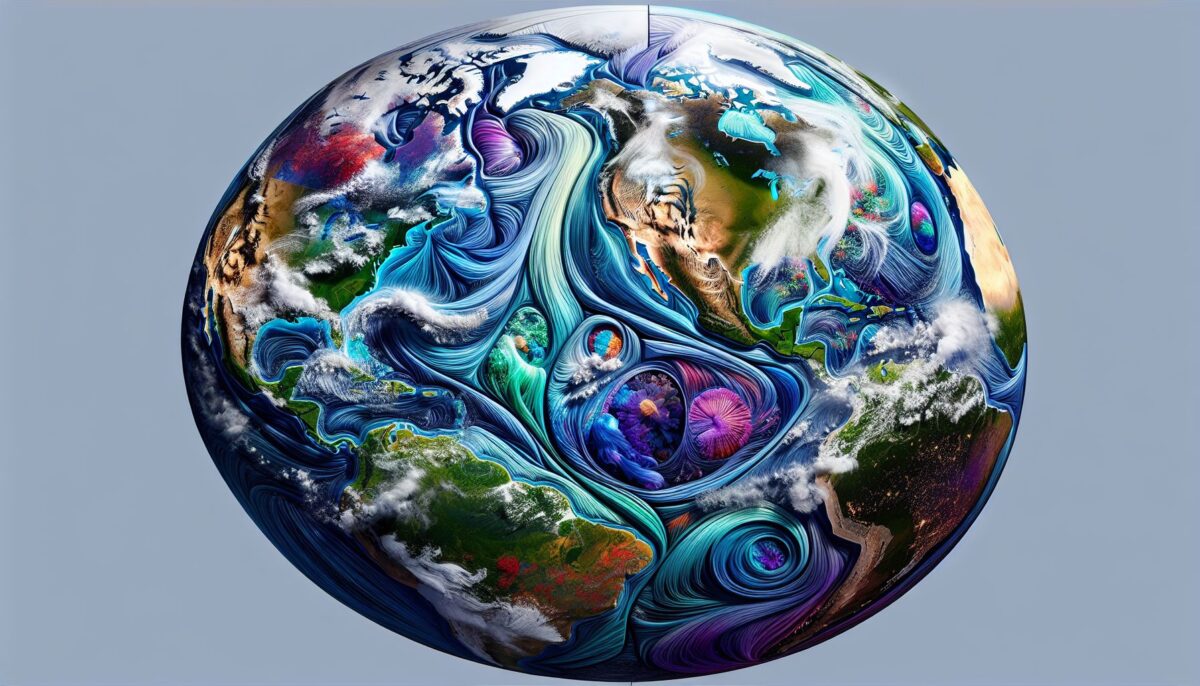
The ocean covers more than 70% of the Earth’s surface, a vast body of water that is essential for life as we know it. Among the many features of this incredible ecosystem, ocean currents stand out as one of the most powerful and influential systems. These currents are responsible for the movement of water around the globe, distributing heat, nutrients, and organisms, and have a significant impact on weather patterns, marine life, and human activities. In this comprehensive look at ocean currents, we will unravel the layers of complexity behind these dynamic forces of nature, their significance, roles, and challenges.
Understanding Ocean Currents
Ocean currents are horizontal and vertical movements of seawater that are propelled by various forces, including wind, the Earth’s rotation, temperature and salinity differences, and tides. These currents can be categorized into two main types:
Surface Currents
Surface currents make up about 10% of all the water in the ocean and are primarily driven by global wind patterns. The Earth’s rotation also influences them, resulting in a phenomenon known as the Coriolis effect, which deflects the path of the currents. An example of a major surface current is the Gulf Stream in the North Atlantic, which transports warm water from the Gulf of Mexico towards Europe, contributing to milder climates in those regions.
Deepwater Currents
Below the surface, deepwater currents are driven by differences in water density, which is affected by temperature (thermohaline) and salinity. These currents form a global conveyor belt, moving cold, salty water from the polar regions to the equator and vice versa, playing a critical role in regulating the Earth’s climate.
The Forces Behind the Flow
Several factors work in tandem to create and shape ocean currents:
Wind
Wind currents are caused by the heating and cooling of the Earth’s atmosphere, coupled with the planet’s rotation. Winds such as the trade winds and westerlies are responsible for the movement of surface currents across the vast ocean basins.
Coriolis Effect
The Coriolis effect, a result of the Earth’s rotation, causes moving objects, including wind and water, to turn to the right in the Northern Hemisphere and to the left in the Southern Hemisphere, creating swirling patterns in the currents.
Salinity and Temperature
The ocean’s salinity and temperature affect water density, with colder, saltier water being denser than warmer, less salty water. These differences in density drive the thermohaline circulation, a deep ocean process.
Tides
Tidal forces, primarily due to the gravitational pull of the moon and, to a lesser extent, the sun, cause the ocean to bulge out in different locations, generating tidal currents as the Earth rotates.
The Role of Ocean Currents
The influence of ocean currents extends across numerous areas:
Climate Regulation
Ocean currents distribute heat around the globe, playing a vital role in establishing climates and weather patterns. For example, the North Atlantic Drift, an extension of the Gulf Stream, warms the air above it, giving Western Europe a temperate climate compared to other regions at similar latitudes.
Marine Ecosystems
Currents are responsible for upwelling, a process that brings nutrient-rich waters from the depths to the surface, supporting diverse marine ecosystems. This supply of nutrients is crucial for the growth of phytoplankton, which forms the foundation of the marine food web.
Human Activities
Ocean currents impact maritime trade by providing natural conduits that can significantly speed up or slow down shipping. Historical trade routes like the Agulhas Current off the coast of Africa and the Kuroshio Current near Japan have been used by sailors for centuries to navigate the seas more efficiently.
Current Challenges
While ocean currents are a natural part of Earth’s functioning, they face challenges due to human activity:
Climate Change
As greenhouse gas emissions increase, changes in ocean temperature and salinity could disrupt current patterns. This can lead to alterations in weather systems, affect marine biodiversity, and impact global climate regulation.
Pollution
Marine debris, oil spills, and chemicals can be transported by currents over long distances, spreading the impact of localized pollution events across vast areas of the ocean.
Ocean Acidification
The absorption of excess atmospheric CO2 by the oceans leads to ocean acidification, which can weaken thermohaline circulation and affect the health of marine ecosystems.
Future Directions
Understanding and protecting ocean currents is critical for the future of our planet. Technologies like autonomous underwater vehicles (AUVs) and satellite monitoring are improving our knowledge of this complex system. Efforts to mitigate climate change and reduce marine pollution are becoming increasingly important.
Sources
To learn more about the intricacies of ocean currents and their global impact, consider checking out the following resources:
- National Oceanic and Atmospheric Administration (NOAA) – Ocean Currents [https://oceanservice.noaa.gov/education/currents.html]
- Ocean Motion – Wind Driven Surface Currents: Gyres [http://oceanmotion.org/html/background/gyres.htm]
- Woods Hole Oceanographic Institution – Ocean & Climate Change [https://www.whoi.edu/science/po/climate-change/ocean/]
Ocean currents represent only a fraction of the complex processes at work in our oceans. However, their pivotal role in shaping life on Earth cannot be overstated. They are more than just streams of water; they are conveyors of life, climate moderators, and silent navigators significantly influencing our world. Protecting these currents and the ecosystems they support is an indispensable part of preserving the health of our planet for future generations.
