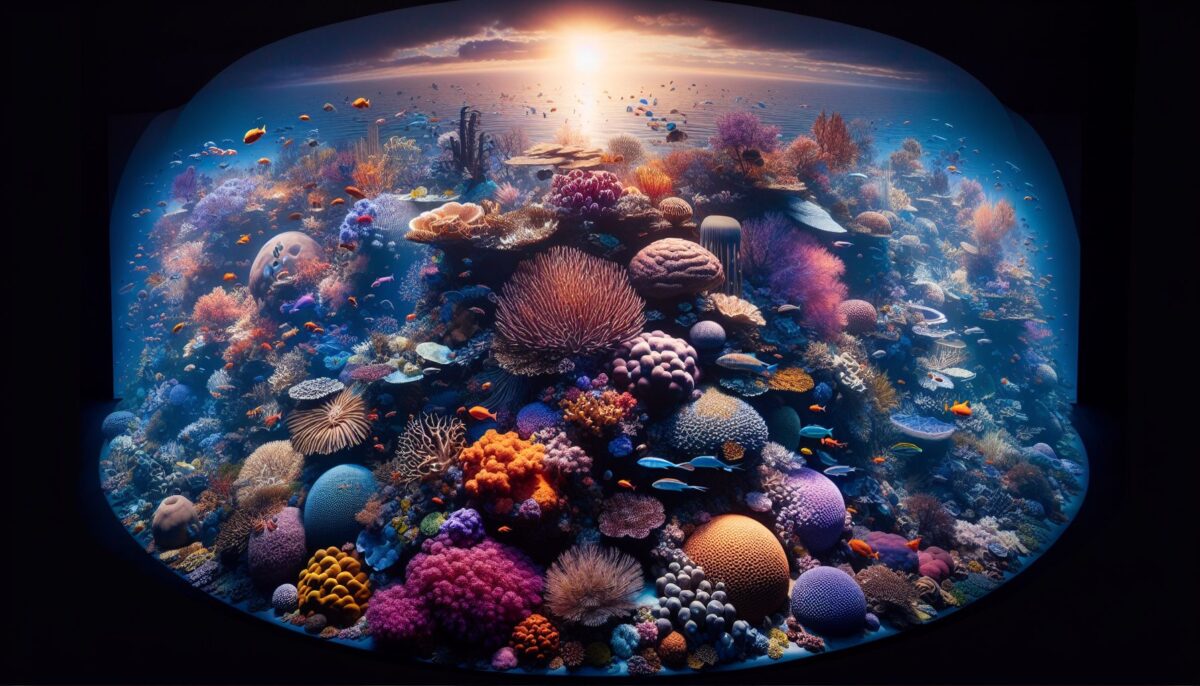
Coral reefs, often referred to as “rainforests of the sea,” are among the most diverse and valuable ecosystems on Earth. Their vibrant hues and bustling marine life draw in not just a myriad of creatures but also humans who marvel at their beauty. However, these marine marvels are under threats that jeopardize their existence and the vast biodiversity they support. This article delves deep into the myriad aspects of coral reefs, from their formation and ecological importance to the dire challenges they face and the hopeful endeavors for their preservation.
What are Coral Reefs?
Coral reefs are underwater structures made from calcium carbonate secreted by corals, which are tiny marine invertebrates belonging to the phylum Cnidaria. Corals live in symbiotic relationships with algae called zooxanthellae, which provide them with energy through photosynthesis and contribute to the vibrant colors for which reefs are known.
Formation and Types
The creation of a coral reef can take thousands to millions of years. It begins with a single coral polyp attaching to a rock on the sea floor. Over time, these polyps reproduce and create colonies that grow into reefs. There are mainly three types of reefs:
- Fringing reefs: These are the most common, forming along coastlines and surrounding islands. They are separated from the shore by shallow lagoons.
- Barrier reefs: These lie parallel to the coastline but are further out to sea, with deeper, wider lagoons between.
- Atolls: These are circular reefs that arise around sunken islands, with a central lagoon.
Distribution and Hotspots
Coral reefs thrive in warm, shallow waters of the tropics and subtropics. The Coral Triangle, located in the western Pacific Ocean, hosts the highest diversity of marine life and is a hotspot for coral biodiversity. Other significant reef systems include the Great Barrier Reef in Australia, the Mesoamerican Reef in the Caribbean, and the Red Sea Coral Reef.
The Importance of Coral Reefs
Reefs are critical to marine life, serving as breeding and feeding grounds for hundreds of species. They protect coastlines from storms and erosion, support fishing communities, and contribute to local and global economies through tourism.
Ecological Significance
The productivity of coral reefs supports a complex food web, from microscopic plankton to apex predators like sharks. They are vital nursery grounds for many species of fish, and their complex structures provide shelter, enabling a multitude of creatures to thrive.
Economic and Cultural Value
Globally, coral reefs contribute billions of dollars to the economy through fishing, tourism, and medicine. Many cultures have deep-rooted connections to reefs, often playing central roles in traditions and livelihoods.
Challenges Faced by Coral Reefs
Despite their ecological and economic significance, coral reefs face numerous threats, predominantly driven by human activities.
Climate Change and Coral Bleaching
Coral bleaching occurs when corals, stressed by warmer-than-average water temperatures, expel their zooxanthellae, leading to a loss of color and essential nutrients. Mass bleaching events have become more frequent and severe due to climate change, often leading to coral death.
Pollution and Overfishing
Runoff containing pesticides, sediments, and nutrients from agriculture can smother reefs and spur harmful algal blooms. Additionally, unsustainable fishing practices, like using cyanide or dynamite, devastate coral communities.
Ocean Acidification
The absorption of excess carbon dioxide by oceans is causing ocean acidification. This lowers the waters’ pH, making it difficult for corals to calcify and maintain their skeletons, thus impeding reef growth.
Destructive Practices and Development
Coastal development, unregulated tourism, and illegal coral mining for construction or souvenirs contribute to physical damage to reefs. Anchor drops and contact with divers or snorkelers can also cause breakages.
Conservation Efforts
The sobering state of the world’s reefs has spurred global initiatives and conservation efforts aimed at protecting and restoring these vital ecosystems.
Marine Protected Areas (MPAs)
Establishing MPAs restricts human activities, allowing coral reefs to recuperate and regenerate. Notable MPAs include the Northwestern Hawaiian Islands Marine National Monument and the Great Barrier Reef Marine Park.
Responsible Tourism
Eco-friendly tourism practices and education help minimize damage to coral reefs. Tour operators and local communities are increasingly recognizing the importance of sustainable interactions.
Restoration Projects
Projects like coral farming and transplantation are increasingly common. By growing corals in nurseries and transplanting them onto degraded reefs, conservationists help to speed up the recovery process.
International Agreements
Agreements like the Convention on Biological Diversity and the Paris Agreement aim to tackle climate change and biodiversity loss, indirectly benefiting reef systems.
The Future for Coral Reefs
The fight to save coral reefs is ongoing. Cutting-edge research in coral genetics and stress resilience, along with international cooperation and strict conservation measures, offers hope.
Advancements in Science
Researchers are seeking to identify and breed corals that are naturally more resistant to warming and acidifying oceans, with hopes of creating robust stocks that can withstand future climate scenarios.
Global Collaboration
Initiatives such as the International Coral Reef Initiative and the Coral Triangle Initiative on Coral Reefs, Fisheries, and Food Security involve multiple countries working together to manage reefs more effectively.
Public Awareness
Increased education and awareness regarding coral reefs and their plight can lead to greater public support for conservation measures. Social media and documentaries play crucial roles in this aspect.
Conclusion
Coral reefs represent some of the most spectacular natural wonders on our planet. They are a critical part of the marine ecosystem, essential for biodiversity, and invaluable to people around the globe. The array of threats they face is significant, but through concerted efforts combining science, policy, and community engagement, there is hope for the future of these vital living structures.
Sources
- Great Barrier Reef Marine Park Authority. “Great Barrier Reef Outlook Report 2019.” https://www.gbrmpa.gov.au/__data/assets/pdf_file/0020/33302/GBR-Outlook-Report-2019.pdf
- NOAA. “What is coral bleaching?” https://oceanservice.noaa.gov/facts/coral_bleach.html
- The Coral Triangle Initiative on Coral Reefs, Fisheries & Food Security. https://www.coraltriangleinitiative.org/
