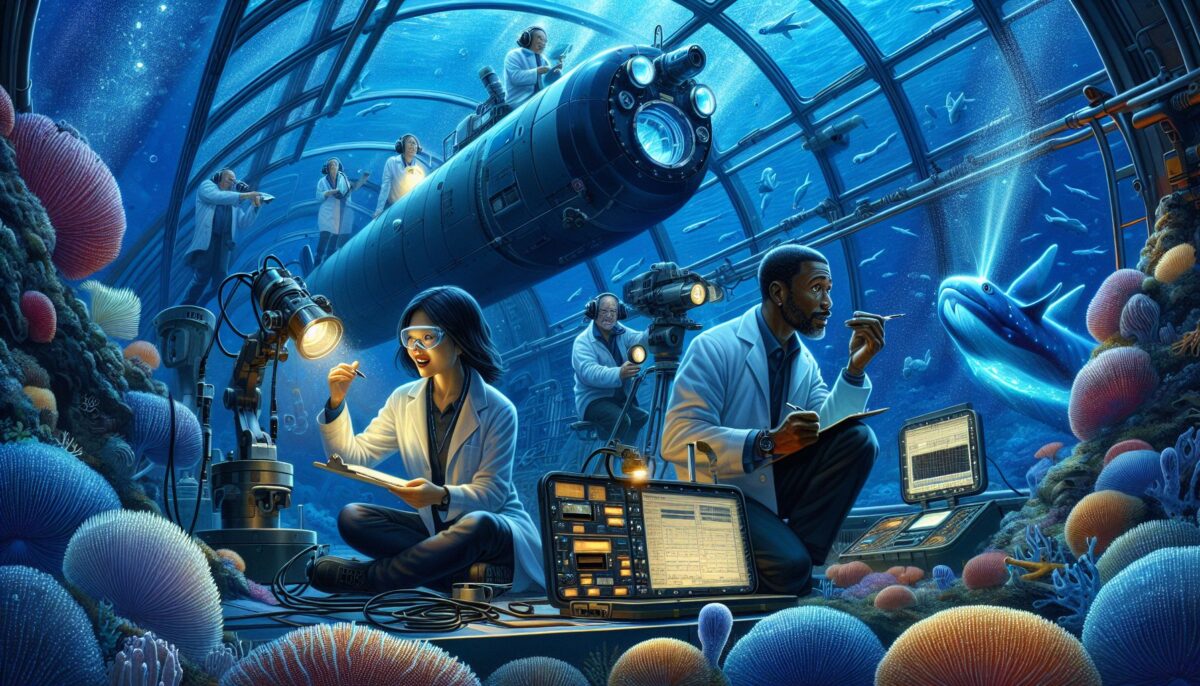
The ocean, a vast and enigmatic expanse, has captivated humanity for millennia. The allure of its boundless waters, complex ecosystems, and the life it harbors has spurred a variety of scientific endeavors aimed at understanding and preserving this vital component of our planet. Among the numerous fields of study, oceanography stands out as a pivotal discipline, providing insights into the ocean’s dynamics, its relationship with Earth’s climate, and the myriad of organisms that call it home. In this comprehensive article, we will delve into the depths of oceanography, exploring its importance, the technology driving it forward, and the challenges it faces amid the changing climate.
Contents:
- Understanding Oceanography
- Technology in Ocean Exploration
- Oceanography and Climate Change
- The Challenge of Ocean Pollution
- Preserving Marine Biodiversity
- The Future of Oceanography
- Conclusion
- Sources
Understanding Oceanography
Oceanography is the science of oceans, encompassing the physical, chemical, biological, and geological aspects of the marine environment. It is divided into several branches:
- Physical oceanography: Studies the properties and dynamics of ocean currents, waves, and tides.
- Chemical oceanography: Examines the chemical composition of seawater and the biochemical cycles within the ocean.
- Biological oceanography: Focuses on the diversity of marine organisms and their ecosystems.
- Geological oceanography: Explores the structure of the seafloor and the processes shaping it.
Oceanography is not a standalone discipline; it intersects with other scientific fields such as meteorology, climate science, and ecology, making it a multidisciplinary endeavor.
Technology in Ocean Exploration
To unravel the secrets of the ocean, scientists employ a variety of cutting-edge technologies:
- Submersibles and ROVs (Remotely Operated Vehicles): These vehicles can withstand extreme pressures and temperatures, allowing researchers to reach the ocean’s most inaccessible regions.
- Satellites: Providing a bird’s eye view, satellites help in mapping the oceans, tracking sea surface temperatures, sea level rise, and monitoring ocean currents.
- Acoustic technology: Sonar systems map the seafloor, while hydrophones listen to the movements of marine life and geological events.
- Data buoys: These floating devices collect a wealth of data ranging from temperature to salinity, contributing to our real-time understanding of ocean conditions.
These technological advancements have expanded our ability to monitor marine environments, enabling better predictions of phenomena like El Niño events, hurricanes, and tsunamis.
Oceanography and Climate Change
Oceanography plays a crucial role in understanding climate change:
- Ocean currents act as conveyer belts, redistributing heat around the globe and affecting weather patterns.
- The ocean is a major carbon sink, absorbing about 30% of CO2 emitted by human activities, which has led to issues such as ocean acidification.
- Melting ice caps and glaciers, as a result of global warming, contribute to sea level rise, threatening coastal communities.
Researchers rely on oceanographic data to predict how climate change will continue to impact these processes, critical for the development of mitigation and adaptation strategies.
The Challenge of Ocean Pollution
Marine pollution is a growing concern:
- Plastic debris is a significant pollutant, with millions of tons entering the ocean annually, harming wildlife and ecosystems.
- Oil spills, such as the Deepwater Horizon disaster, have severe, lasting effects on marine and coastal environments.
- Chemical pollutants, including agricultural runoff and industrial waste, contribute to the degradation of marine habitats.
Oceanographers are at the forefront of tracking pollution levels and understanding how these contaminants move through and impact marine ecosystems.
Preserving Marine Biodiversity
The ocean is home to an estimated two million species, many of which are yet to be described. Oceanography aids in the conservation of this biodiversity through:
- Mapping and monitoring of habitats such as coral reefs, mangroves, and seagrass beds.
- Studying the impact of human activities like overfishing, habitat destruction, and climate change on marine life.
- Identifying and establishing Marine Protected Areas (MPAs) to safeguard crucial ecosystems and species.
Marine biodiversity not only has intrinsic value but also provides essential services like food, medicine, and coastal protection.
The Future of Oceanography
The future of oceanography is shaped by innovations in technology, data analysis, and international collaboration. Emerging trends include:
- Autonomous underwater vehicles (AUVs) and gliders that can collect data over extended periods and in challenging conditions.
- Big data and machine learning are revolutionizing the analysis and interpretation of vast oceanographic datasets.
- Citizen science initiatives that engage the public in data collection and ocean stewardship.
As the field continues to evolve, the integration of traditional knowledge and community involvement will play an increasingly significant role in ocean management and conservation efforts.
Conclusion
Oceanography offers invaluable insights into one of Earth’s most critical and diverse environments. Through the collaboration of scientists around the world and the aid of sophisticated technology, we can continue to explore and understand the complexities of the oceans. The knowledge gained not only quenches human curiosity but is essential for the preservation of marine habitats and the well-being of our planet as a whole.
The ocean’s mysteries still abound, urging us forward in the quest for understanding and protection of the blue heart of Earth. As Sylvia Earle, an esteemed oceanographer, once remarked, “With every drop of water you drink, every breath you take, you’re connected to the sea.”
Sources
- National Oceanic and Atmospheric Administration (NOAA) – Ocean Exploration and Research
- Intergovernmental Oceanographic Commission of UNESCO – Ocean Biodiversity Information System
- The Ocean Cleanup – The Impact of Plastic Pollution on Our Oceans
