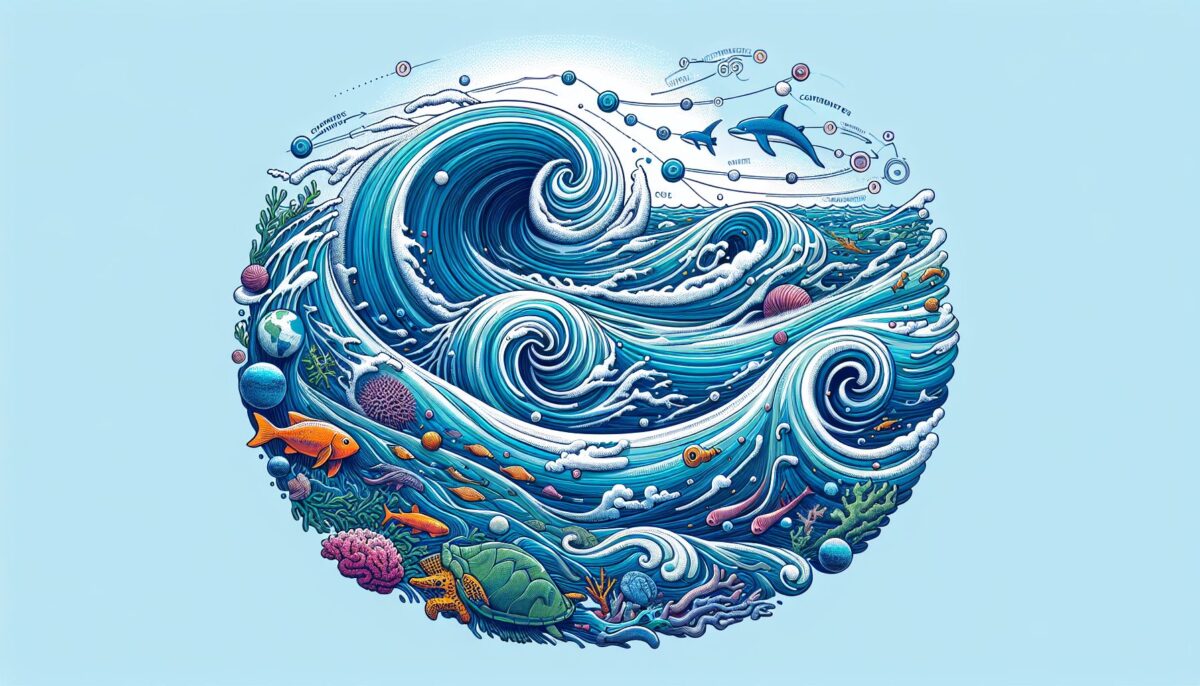
When we think of the ocean, it’s easy to imagine a vast expanse of water, with waves rhythmically breaking on the shore, the call of seagulls punctuating the air, and an untold diversity of creatures lurking below. However, there is an unseen force that plays a pivotal role in shaping the ocean’s character and the Earth’s climate: ocean currents. In this deep dive into the workings of currents, we will explore their origin, their influence on climate, and their critical role in sustaining marine biodiversity.
The Origin and Nature of Ocean Currents
Ocean currents are continuous, directed movements of seawater generated by various forces acting upon the water, including wind, Coriolis effect, breaking waves, cabbeling, and temperature and salinity differences. Currents are composed of multiple layers, each driven by different forces and moving in different directions. At the surface, they can travel thousands of kilometers, crossing entire ocean basins and climatic zones.
Wind-Driven Currents: The Surface Layer
The most well-known are the surface currents, which make up about 10% of all the water in the ocean. These currents are primarily driven by the wind and are what sailors have relied upon for centuries. Winds like the trade winds, westerlies, and polar easterlies propel the surface waters, giving rise to the major oceanic gyres – vast, circular currents in the world’s oceans.
The Coriolis Effect
The Coriolis effect, a result of the Earth’s rotation, causes moving objects like air or ocean currents to veer to the right in the Northern Hemisphere and to the left in the Southern Hemisphere. This effect bends the path of the wind-driven currents, shaping them into circular motion.
Thermohaline Circulation: The Deep Water Currents
Beneath the surface, the thermohaline circulation, often referred to as the “global conveyor belt,” is a deep-water current driven by differences in the water’s density, which is controlled by temperature (thermo) and salinity (haline). This circulation plays a major role in regulating the Earth’s climate by redistributing heat around the globe.
Understanding Density and Upwelling
Cold, salty water is dense and sinks to the ocean floor, while warmer, less salty water is lighter and remains at the surface. Upwelling is an important process associated with ocean currents, where cold, nutrient-rich water is brought to the surface. This influx of nutrients is crucial for the growth of phytoplthen, which lie at the base of the marine food chain.
How Ocean Currents Affect Climate
Currents are responsible for vast movements of heat across our planet. The Gulf Stream, a well-known warm-water surface current in the North Atlantic, is responsible for the relatively mild climate in Northwestern Europe. Similarly, the cold Benguela current contributes to the arid climate of southwestern Africa.
El Niño and La Niña
Ocean currents are also at the heart of complex climate phenomena, such as El Niño and La Niña, which can cause drastic changes in weather patterns worldwide. El Niño is characterized by unusually warm ocean temperatures in the Equatorial Pacific, while La Niña features unusually cold ocean temperatures in this same region. These events can lead to severe weather conditions, including droughts, floods, and even hurricanes.
Ocean Currents and Marine Biodiversity
Marine biodiversity is significantly affected by ocean currents. Currents transport heat, oxygen, and nutrients around the globe, creating habitats for various aquatic species. The rich biodiversity found in upwelling areas, such as around the coasts of Peru and Namibia, is a testament to the critical role of currents in providing the necessary resources for marine life.
Critical Habitats for Marine Life
Coral reefs and kelp forests, for example, rely on currents for the steady supply of nutrients and the maintenance of suitable temperature ranges. These ecosystems are home to thousands of marine species, from the tiniest plankton to large fish, turtles, and marine mammals.
The Plankton Highway
Currents also act as a “plankton highway,” carrying these microscopic organisms across vast distances. Plankton serve as the foundation of the marine food web, with everything from the smallest fish to the largest whales depending on them for survival.
Human Interaction with Ocean Currents
The Importance for Navigation and Shipping
For centuries, sailors have taken advantage of ocean currents to facilitate travel and trade. Understanding currents allows for more efficient planning of shipping routes, which can save time and fuel, reducing the shipping industry’s environmental footprint.
Renewable Energy Potential
There is growing interest in harnessing the kinetic energy of ocean currents for generating renewable energy. Technologies for tidal and wave energy are being developed and have the potential to contribute significantly to the global energy mix.
Ocean Current Challenges
Despite their importance, ocean currents face several challenges, including climate change and human activities.
Climate Change
Warming seas are affecting the behavior of currents, with potential consequences for global climate patterns and marine ecosystems. Changes in the strength and direction of currents can disrupt the delicate balance of marine environments and the communities that rely on them for food and income.
Pollution and Marine Debris
Pollution and marine debris can also become entangled in ocean currents, leading to the concentration of pollutants in certain areas. The Great Pacific Garbage Patch is a sobering example of how currents can amass human-created waste in a region of the ocean.
The Future of Ocean Currents
Understanding and protecting this vital system is essential for mitigating the effects of climate change and sustaining the Earth’s diverse marine life. Scientists continue to study and monitor ocean currents using satellites, buoys, and submersible drones to collect data that can inform policy and conservation efforts.
Conclusion
Ocean currents are much more than just a means of transportation for water within our planet’s vast oceans. They are profound forces that shape our weather, climate, and the health of our marine ecosystems. As we look toward the future, the sustainable management and protection of our oceans and their currents will be vital in ensuring the continued health and wellbeing of our planet.
References
- National Oceanic and Atmospheric Administration (NOAA). (n.d.). Ocean Currents. https://oceanservice.noaa.gov/education/kits/currents/
- United Nations Educational, Scientific and Cultural Organization (UNESCO). (2021). Ocean currents and climate change. http://www.unesco.org/new/en/natural-sciences/ioc-oceans/priority-areas/rio-20-ocean/ocean-and-climate/
- The Ocean Cleanup. (n.d.). The Great Pacific Garbage Patch. https://theoceancleanup.com/great-pacific-garbage-patch/
Remember, the health of our oceans and the currents that flow within them are crucial to the overall balance of our ecosystem. By studying, respecting, and protecting them, we can ensure that they continue to support the incredible diversity of life they currently sustain and regulate the climatic systems that keep our planet habitable.
