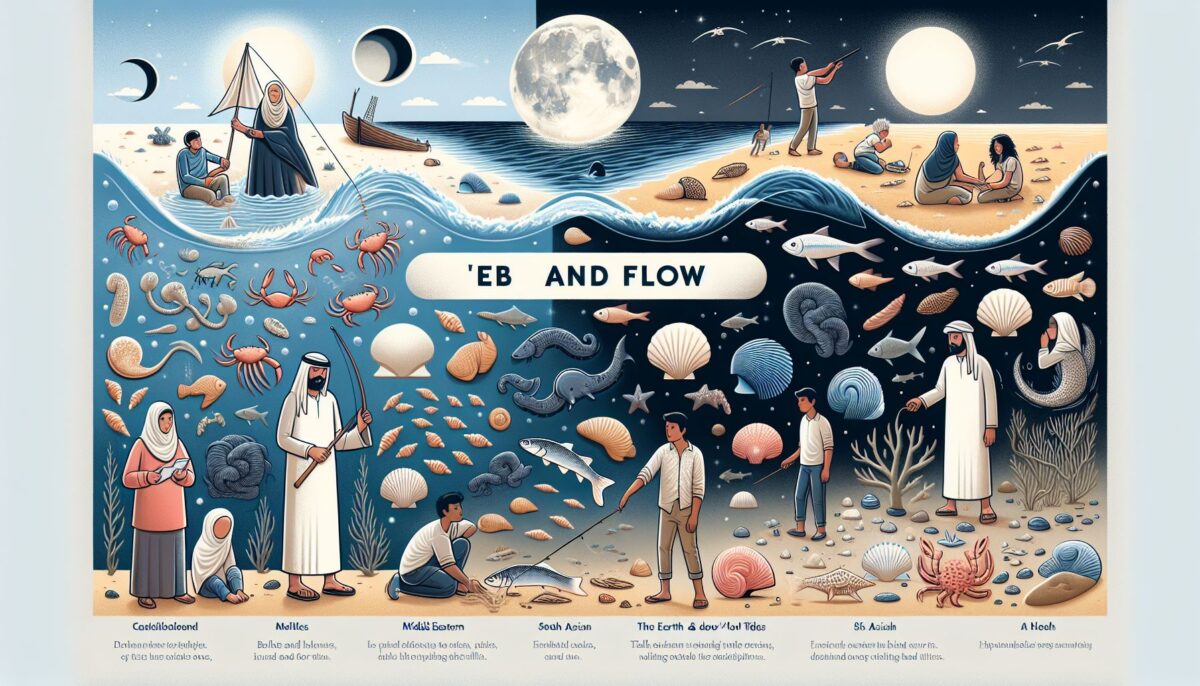
The ocean is an ever-changing environment, influenced by a variety of factors, including the Earth’s rotation, gravitational forces, and the ongoing dance between the moon and the sun. Among these factors, tides play an incredibly significant role, shaping the rhythm of life both in the sea and on the coast. In this article, we will delve into the world of tides: how they are created, their types, their impact on marine life and ecosystems, and finally, how tides affect human activities such as navigation, fishing, and renewable energy production.
The Science of Tides
Tides are the rising and falling of sea levels caused by the gravitational forces exerted by the moon and the sun, and the rotation of the Earth. Unlike waves, which are caused by the wind, tides are predictable and occur in regular cycles. The level of complexity in tidal patterns, however, arises from the interaction of these gravitational forces with the varying shapes of coastlines, the depth of the ocean, and other local features.
Gravitational Pull and the Tidal Forces
The moon’s gravitational pull is the main force behind tides. As the Earth rotates, the moon’s gravity pulls on different parts of the ocean, creating a bulge — known as a tidal bulge — causing water levels to rise, which we experience as high tide. On the opposite side of Earth, there is a secondary high tide, caused by the centrifugal force of the Earth’s rotation.
The sun also plays a role, although its influence is smaller due to its greater distance from Earth. When the sun and moon are aligned during new and full moons, their gravitational forces combine to produce the highest high tides and the lowest low tides, known as spring tides. In contrast, when the sun and moon are at right angles to each other (during the first and last quarter moons), we experience neap tides, which are tides with the smallest difference between high and low tide.
Types of Tides
There are three basic types of tidal patterns, known as tidal regimes, which vary depending on location around the world:
- Semidiurnal: Characterized by two high and two low tides of approximately equal height every lunar day (24 hours and 50 minutes).
- Diurnal: Features a single high and a single low tide each lunar day.
- Mixed: Displays variability in height and timing, typically with two high tides and two low tides of different heights.
The type of tide can greatly influence the habitat and behavior of marine life in the region as well as human activities.
Impact of Tides on Marine Life
Tides create a unique environment for various forms of marine life. They are essential for nutrient distribution and the maintenance of many coastal and estuarine ecosystems.
Intertidal Zones and Biodiversity
The intertidal zone, which is the area between the high tide and low tide marks, is home to a diverse range of species that have adapted to the changing environment. Organisms such as barnacles, mussels, and many types of seaweed have special adaptations that allow them to survive the alternation of exposure to the air and submersion under water.
Tidal Flows and Nutrient Distribution
Tidal flows are also crucial for the dispersal of nutrients and larvae throughout the ocean, supporting various stages of life cycles for numerous marine species. Rich nutrient upwelling occurs as a result of the movement of tides, benefiting coastal fisheries and ecosystems.
Tides and Human Activity
Navigation and Port Operations
Tides are essential for navigation and the operation of ports and harbors. Knowledge of tidal patterns allows ship captains to plan safe routes and take advantage of tidal currents to save fuel. Tides can also affect the availability of depths needed for large ships to enter and leave ports and harbors, making tidal predictions invaluable for trading and commerce.
Fishing Industry
Fishermen depend on understanding tides to predict the movement and behavior of their target species. Many fish are known to feed actively during the change in water levels, making the hours around high and low tide crucial for successful fishing.
Renewable Energy Production
In recent years, tides have gained attention as a source of renewable energy. Tidal energy harnesses the power of tidal flows to generate electricity. The predictability of tides makes tidal energy a promising alternative to fossil fuels.
Environmental Concerns
Understanding the ebb and flow of tides is also becoming increasingly important in light of environmental concerns. Sea level rise due to climate change has the potential to alter tidal regimes, which can lead to coastal erosion and affect marine habitats. Tides also play a role in the distribution of marine pollution and the aftermath of oil spills.
Conclusion
Tides are not just a fascinating natural phenomenon; they are a vital part of marine ecosystems and human activities. Understanding the complex interplay between tides, marine life, and human enterprise is essential for the sustainable use and preservation of our ocean resources. As we continue to explore the depths of our oceans and seek harmony with their natural rhythms, the study of tides will continue to be an essential component of marine science and coastal management.
References
- “Tides and Water Levels.” NOAA’s National Ocean Service. https://oceanservice.noaa.gov/education/tutorial_tides/welcome.html
- “Tidal Energy.” Ocean Energy Council. http://www.oceanenergycouncil.com/ocean-energy/tidal-energy/
- “Intertidal Zone.” MarineBio Conservation Society. https://marinebio.org/oceans/intertidal-zone/
By advancing our knowledge in the science of tides and their effects, we are not only preserving the integrity of our coastal ecosystems but also opening up new avenues for innovation and stewardship that can lead to a more sustainable future for our planet.
