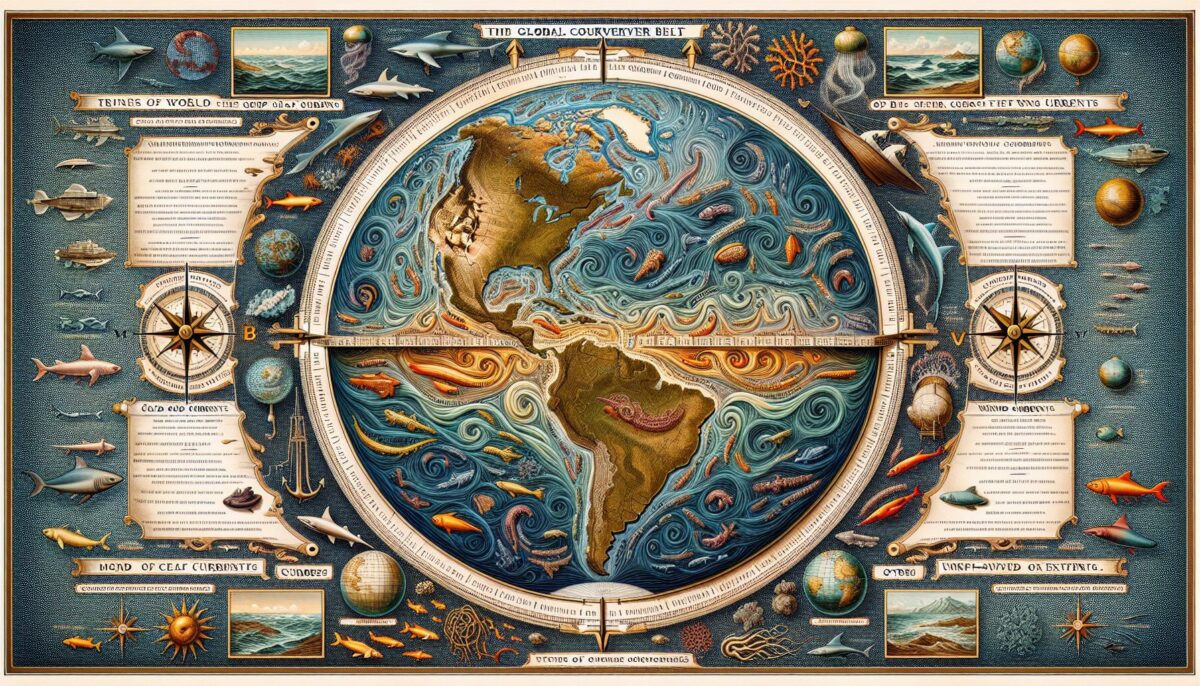
The ocean is a vast and complex entity, covering over 70% of the Earth’s surface. It influences climate, shapes ecosystems, and supports a rich diversity of life. Hidden beneath the waves, a dynamic system of currents moves enormous volumes of water around the globe. This system, often described as the planet’s “global conveyor belt,” regulates temperatures, distributes nutrients, and has a profound impact on marine life and human activities. In this article, we will embark on an in-depth exploration of ocean currents: their types, causes, importance, and the challenges they face in a changing climate.
Understanding Ocean Currents
Ocean currents are horizontal movements of seawater that can vary in size, strength, and temperature. They are essential to maintaining the Earth’s climate and are driven by several factors, including wind, water density differences, and the Earth’s rotation.
Types of Ocean Currents
There are two primary types of ocean currents: surface currents and deep-water currents.
-
Surface currents are driven primarily by wind and are most noticeable as the continuous movement of water in the ocean’s upper layers. They tend to follow predictable patterns and are largely responsible for the circulation of warm and cold water across the ocean’s surface.
-
Deep-water currents are driven by differences in water density caused by variations in temperature and salinity. These currents move more slowly than surface currents but transport large volumes of water across vast distances.
Causes of Ocean Currents
-
Wind Driven: Surface currents arise mainly due to prevailing winds. The Coriolis effect, a consequence of the Earth’s rotation, also influences how these currents move, causing them to curve to the right in the Northern Hemisphere and to the left in the Southern Hemisphere.
-
Thermohaline Circulation: Deep-water currents are part of the thermohaline circulation, which is affected by water temperature (thermo) and salinity (haline). Cooler, saltier water is denser and sinks, while warmer, less salty water is more buoyant and rises, creating a global scale flow.
-
Tidal Forces: The gravitational pull of the moon and, to a lesser extent, the sun generate tides, which can give rise to certain types of tidal currents.
The Significance of Ocean Currents
The movement of water carries heat from the tropics to the poles and back, modulating global climate conditions. Currents also distribute nutrients and oxygen, sustaining marine ecosystems from surface waters down to the darkest depths of the ocean.
Impact on Climate
Currents like the Gulf Stream have a major impact on regional climates. For example, Western Europe’s relatively mild climate, compared to other regions at similar latitudes, is largely due to the warm water transported by the Gulf Stream.
Marine Life
Plankton and other organisms rely on currents for transport and nourishment. These microscopic organisms are the foundation of the marine food web, supporting species from tiny fish to massive whales.
Human Activities
Currents play a crucial role in human activities such as navigation, shipping, and fishing. Mariners have utilized currents for centuries, saving time and energy on voyages across the oceans.
Threats to Ocean Currents in a Changing Climate
As the Earth’s climate changes, there are growing concerns that ocean currents could be disrupted by alterations in temperature and salinity patterns. A significant change in ocean circulation could have profound effects on weather patterns, sea levels, fishing industries, and even global food security.
Ocean Warming
Rising global temperatures are causing the oceans to warm, which can disrupt the delicate balance that drives the thermohaline circulation.
Melting Ice Caps
Freshwater from melting ice caps can decrease salinity levels in the oceans, potentially slowing down or even halting the global conveyor belt in some areas.
Acidification and Deoxygenation
Increased carbon dioxide levels are leading to ocean acidification, affecting marine life and altering the chemical composition of seawater. Deoxygenation, the loss of oxygen from ocean waters, further threatens marine ecosystems and affects current patterns.
Exploring the Depths: Oceanography and Hydrography
Oceanography and hydrography are scientific disciplines dedicated to the study of the ocean’s physical properties, seabed, and coastal environments. They provide valuable insights into current patterns and help predict changes in the marine environment.
Oceanographers use a variety of tools to study currents, such as buoys, satellites, and water sampling instruments. Hydrographers, on the other hand, focus on the measurement and description of navigable waters, producing charts and maps used for safe mariner navigation.
Safeguarding the Future
To protect ocean currents and the critical roles they play, several strategies can be employed:
-
Marine Protected Areas: Establishing marine protected areas can help safeguard ecosystems that are crucial for maintaining healthy current systems.
-
Reducing Greenhouse Gas Emissions: Limiting global warming through the reduction of greenhouse gas emissions is essential to prevent further changes to current patterns.
-
Sustainable Practices: Encouraging sustainable fisheries, reducing pollution, and ensuring responsible coastal development can mitigate negative impacts on ocean currents.
Conclusion
Ocean currents are the lifeblood of our planet’s oceans. They provide critical services, from regulating the world’s climate to sustaining marine life. As our understanding of these currents continues to evolve, we must take action to preserve the delicate balance that makes life on Earth possible. Through research, conservation, and sustainable practices, we can ensure that ocean currents continue to flow, undisturbed and bountiful, for generations to come.
References
- National Oceanic and Atmospheric Administration (NOAA). (n.d.). Currents: NOAA’s National Ocean Service Education. oceanservice.noaa.gov/education/kits/currents/
- United Nations Educational, Scientific and Cultural Organization (UNESCO) – Intergovernmental Oceanographic Commission. (n.d.). Ocean currents and climate change. ioc.unesco.org/
- National Geographic Society. (2019). Ocean Currents, the Global Conveyor Belt and Climate Change. nationalgeographic.org/encyclopedia/ocean-currents-and-climate-change/
Oceanography is not only about understanding the ocean’s movements but also about respecting and preserving its countless contributions to our planet’s stability. Let us commit to continual learning and take conscious steps to ensure the ocean’s rhythms endure.
