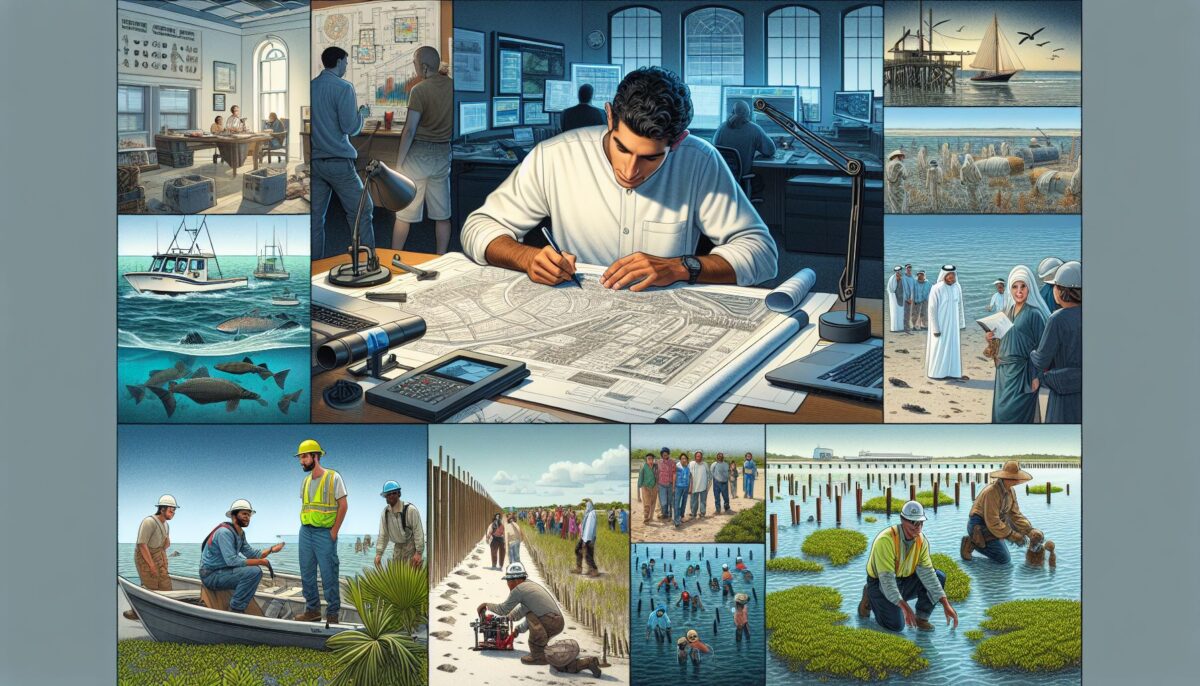
The coast is more than just the meeting point of land and sea; it’s a dynamic interface that supports biodiversity, economies, and human habitats. Yet, with global change accelerating and human activities increasing, our coastal zones are under constant threat. Coastal management emerges as a crucial practice to balance the complex mix of challenges facing coastal areas. This article explores what coastal management entails, the challenges it seeks to address, and the various strategies applied to ensure the sustainability and resilience of our coastal zones.
The Importance of Coastal Zones
Coival zones are diverse ecosystems that provide numerous benefits:
- Ecological Benefits: They are hotspots for biodiversity, supporting a wide array of animal and vegetation species.
- Economic Benefits: Coastlines contribute to economies through tourism, fisheries, and maritime trade.
- Protection: They buffer inland areas from storms and erosion.
- Cultural Significance: Many communities have cultural ties with the coast.
Challenges Facing Coastal Zones
Despite their importance, coastal areas are facing an array of challenges:
- Climate Change: A leading concern with effects like sea level rise and increased frequency of extreme weather events.
- Coastal Erosion: Resulting from a combination of natural and human-induced factors.
- Habitat Destruction: Due to urbanization, infrastructure development, and resource extraction.
- Marine Pollution*: Plastics, oil spills, and other pollutants damage marine environments and wildlife.
- Resource Depletion: Overfishing and unsustainable practices threaten marine life and the livelihoods of communities.
What Is Coastal Management?
Coastal management is a strategic approach to dealing with the issues facing coastal zones. It involves the governance, legislation, and on-the-ground measures designed to protect coastal ecosystems while promoting sustainable development.
Integrated Coastal Zone Management (ICZM)
One widely recognized strategy within coastal management is ICZWeM, which adopts a holistic approach to coordinating the management of coastal resources, recognizing the interconnections within the ecosystem and the need for cooperation among various stakeholders.
Strategies for Effective Coastal Management
Comprehensive coastal management involves various strategies tailored to regional challenges and characteristics. Here are some important strategies:
Habitat Restoration and Conservation
Protecting and restoring habitats such as mangroves, beaches, and wetlands is critical. This not only supports biodiversity but also enhances natural coastal defenses against erosion and extreme weather.
Sustainable Development Planning
Ensuring new development is carried out sustainably, with minimal impact on the coastal environment, is key. This includes enforcing buffer zones, adopting eco-friendly building codes, and implementing land-use controls.
Pollution Control
Addressing marine pollution entails both prevention and cleanup measures. Regulations to limit agricultural runoff, industrial discharges, and improve waste management systems are necessary steps.
Climate Adaptation
Coastal management must incorporate climate adaptation strategies such as building sea walls, promoting natural buffers, and planning for sea level rise.
Community Engagement and Education
Local communities play a central role in coastal management. Empowering and educating residents about sustainable practices helps in the stewardship of coastal resources.
Policy and Legislation
Implementing and enforcing policies that protect coastal areas are foundational to any coastal management strategy. Regional cooperation is also vital, as many coastal challenges transcend political borders.
Case Studies and Examples of Successful Coastal Management
The Great Barrier Reef, Australia
The Great Barrier Reef Marine Park is considered a success story in terms of comprehensive coastal management. It includes a zoning plan that balances conservation and sustainable use, setting an example for large-scale ecosystem management.
The Dutch Coastline
The Netherlands is famous for its proactive coastal defense strategies, including the construction of sophisticated sea barriers and the ongoing ‘Sand Motor’ project, which uses nature-based solutions to reinforce the coastline.
The Mangroves of Sundarbans, Bangladesh and India
The Sundarbans mangrove forest, a significant protective barrier against cyclones and a rich habitat for wildlife, showcases the importance of conservation efforts in maintaining vital coastal ecosystems.
Challenges in Implementing Coastal Management
Despite the clear benefits of effective coastal management, there are significant barriers to its implementation:
- Lack of resources and funding in many regions.
- Conflicts of interest among stakeholders and industry.
- Insufficient data and monitoring for informed decision-making.
- Political challenges, ranging from local opposition to international disputes.
The Way Forward
To advance the goals of coastal management, the following steps are integral:
-
Strengthened International Cooperation: Sharing knowledge, technology, and best practices can significantly enhance the effectiveness of coastal management globally.
-
Investment in Research and Monitoring: Continuous scientific research and monitoring provide the data necessary to adapt and improve coastal management practices.
-
Engaging the Public: Building awareness and involving communities in decision-making leads to more inclusive and sustainable outcomes.
-
Integrating Coastal Management into National Policies: Incorporating coastal management into broader national and regional policies ensures a consistent approach to environmental protection and resource management.
Conclusion
Our coastlines are precious natural assets that require our concerted efforts to protect and manage sustainably. Coastal management is multifaceted, addressing diverse challenges through integrated strategies that blend science, policy, and community action. By prioritizing coastal management, we can navigate a path that respects and preserves the integrity of these ecosystems for future generations.
Sources
- United Nations Environment Programme (UNEP): Integrated Coastal Zone Management [https://www.unep.org/]
- Intergovernmental Panel on Climate Change (IPCC): Reports on Climate Change and Land [https://www.ipcc.ch/]
- The World Bank: Coastal Zone Management [https://www.worldbank.org/en/topic/environment/brief/coastal-zone-management]
Through informed and concerted efforts, respecting both human needs and the delicate balance of coastal ecosystems, we can ensure the sustainability of our shorelines – a treasure that once lost, could prove irreplaceable.
