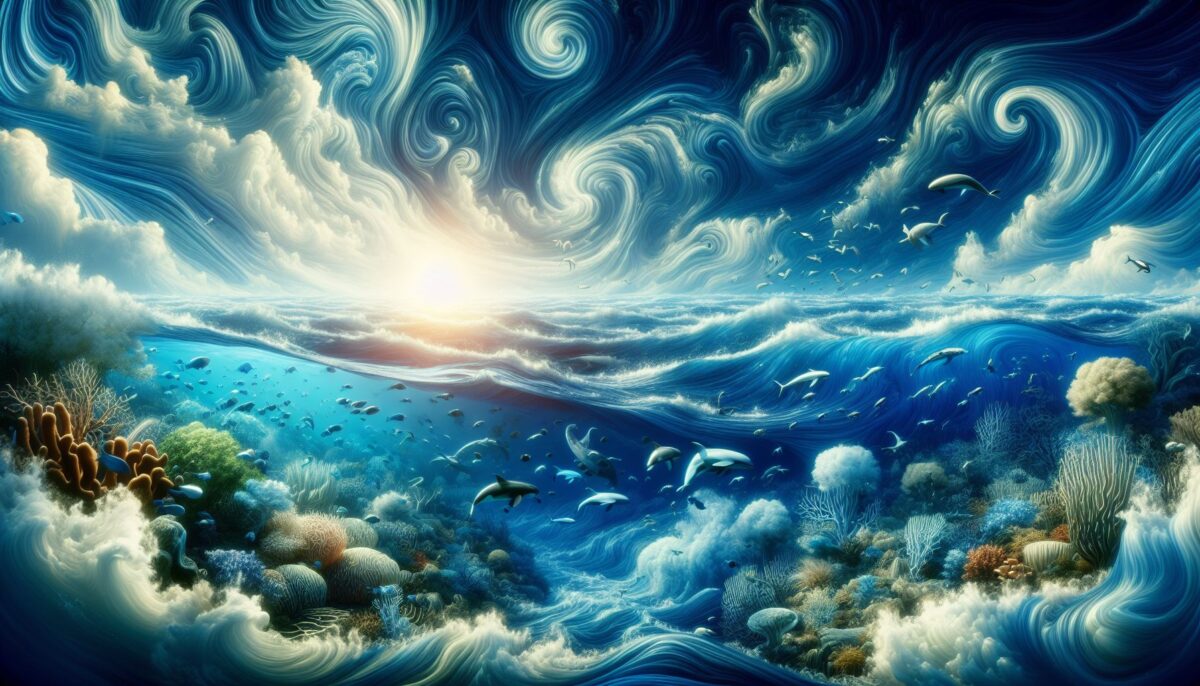
The ocean is a complex, dynamic, and influential force on planet Earth. Among its manifold characteristics, the currents that flow through its vast expanses stand out as pivotal elements in the regulation of climate, the shaping of marine ecosystems, and the facilitation of human endeavors, such as maritime trade. In this in-depth article, we will dive into the world of ocean currents, explore their origins and impacts, and understand why these relentless flows of water are much more than mere ripples on the surface.
What are Ocean Currents?
Ocean currents are continuous, directed movements of sea water generated by a variety of forces acting upon the water, including wind, the Coriolis effect, breaking waves, cabbeling, and temperature and salinity differences. As key components of the Earth’s climate system, they distribute heat from the equatorial regions to higher latitudes, affecting weather patterns and marine life habitats.
Surface vs. Deep Water Currents
Ocean currents come in two main types: surface currents and deep water currents. Surface currents, comprising about 10% of all the water in the ocean, are primarily driven by wind and largely follow global wind patterns. The Coriolis effect, a result of the Earth’s rotation, also influences their direction, leading to the characteristic clockwise flow in the Northern Hemisphere and counterclockwise in the Southern Hemisphere.
Conversely, deep water currents are driven by differences in water density, caused by variations in temperature (thermohaline circulation) and salarity. As dense, salty, and cold water sinks at the poles, it sets up a slow conveyor belt-like current that moves vast amounts of water around the globe, with profound effects on global climate.
The Forces Behind Ocean Currents
Understanding ocean currents requires an exploration of the forces and the physical principles behind their movement.
Wind Patterns
Winds are the primary force creating surface currents. The major wind belts — the trade winds, the westerlies, and the polar easterlies — push the surface waters, creating current patterns that approximately mirror the wind patterns above them.
The Coriolis Effect
The rotation of the Earth causes moving water to veer to the right in the Northern Hemisphere and to the left in the Southern Hemisphere. This apparent deflection is known as the Coriolis effect and plays a pivotal role in the direction currents take.
Differences in Water Density
Differences in salinity and temperature create changes in the density of seawater, leading to the movement of water masses. As cold water is denser than warm water, and saltier water is denser than fresh water, these variances drive the slow-moving deep water currents that play a significant role in regulating the Earth’s climate.
The Major Ocean Currents
The world’s oceans are home to a number of major currents, such as the Gulf Stream in the Atlantic, the Kuroshio in the Pacific, and the Antarctic Circumpolar Current in the Southern Ocean. These currents have a profound influence on marine life and coastal climates.
The Gulf Stream
The Gulf Stream is one of the most well-known currents, transporting warm, tropical water up the eastern coast of the United States and across the Atlantic toward Europe. Its warmth significantly moderates the climate of Western Europe, making it much milder than other regions at similar latitudes.
The Antarctic Circumpolar Current
Encircling Antarctica, this current is the only one that flows completely around the Earth and connects the Atlantic, Pacific, and Indian Oceans. It serves as a barrier that limits the northward drift of Antarctic waters, preserving the unique climate and ecosystem of the continent.
The Impact of Ocean Currents
The influence of ocean currents extends far beyond their physical presence in the seas. They impact climate, marine life, and human activities in multiple ways.
Climate Regulation
Currents act as conveyer belts, moving warm and cold water around the globe. They help to regulate the Earth’s climate by influencing temperatures on land. For instance, the Gulf Stream keeps Europe significantly warmer than other countries at the same latitude.
Marine Life
Currents also play an essential role in the life cycles of many marine species by distributing nutrients and affecting water temperature. The upwelling of cold, nutrient-rich water along coastlines supports some of the world’s most productive fisheries.
Maritime Trade
Navigators have used ocean currents for centuries to aid in maritime travel and trade. Understanding these currents allows for more efficient and fuel-effective routing of ships, which is vital for the global economy.
Environmental Concerns
Ocean currents can also spread pollutants wider and faster than they would otherwise move. From oil spills to marine debris, currents can carry these hazardous materials across vast stretches of ocean, impacting marine ecosystems far from the original source of the pollution.
Renewable Energy Source
The kinetic energy of ocean currents represents an untapped resource for generating clean, renewable energy. Tidal and wave energy projects are increasingly being investigated and developed to harness this potential.
The Challenges of Ocean Currents
Despite their benefits, ocean currents also present challenges, particularly in the face of climate change.
Ocean Acidification
The increased absorption of CO₂ due to global climate change is leading to ocean acidification. This, in turn, affects the ability of marine organisms like corals and shellfish to construct their calcium carbonate shells and skeletons, disrupting ecosystems.
Rising Sea Levels
As global temperatures rise, polar ice melts and sea levels increase, a process that can be exacerbated by currents that bring warm water to polar regions, further melting the ice. Rising sea levels pose a threat to coastal communities and habitats.
Changing Currents
Climate change is also affecting the strength and patterns of ocean currents. Variations in these currents can have wide-reaching consequences for weather patterns, sea levels, and the distribution of marine species.
Navigating the Future
Advancements in oceanography are crucial for improving our understanding of how ocean currents affect the climate, ecosystems, and human activities. By utilizing satellites, buoys, and autonomous underwater vehicles, scientists can monitor current patterns and predict changes more accurately.
The Importance of Marine Protected Areas
Establishing marine protected areas (MPAs) can help mitigate some of the negative impacts on marine ecosystems by preserving biodiversity and providing a refuge for marine life in the face of changing currents and environmental stressors.
Sustainable Coastal Management
Developing sustainable coastal management practices is key to protecting our shorelines and the livelihoods of communities that depend on them from erosion, pollution, and the effects of changing currents.
The Blue Economy
Investment in the blue economy, which includes industries such as sustainable fisheries, maritime transport, and renewable energy, can promote the sustainable use of ocean resources while capitalizing on the potential offered by the world’s oceans and their currents.
Conclusion
The intricate network of currents that sweep across our oceans are highways connecting distant shores, circulating life-giving nutrients, and moderating climates across the globe. As we gain greater insight into these dynamic forces, their importance to the health of our planet and our lives becomes ever clearer. Our task now is to navigate these waters with care, protecting and harnessing their energies for future generations.
Sources
- National Oceanic and Atmospheric Administration (NOAA): [https://www.noaa.gov](https://www.no
