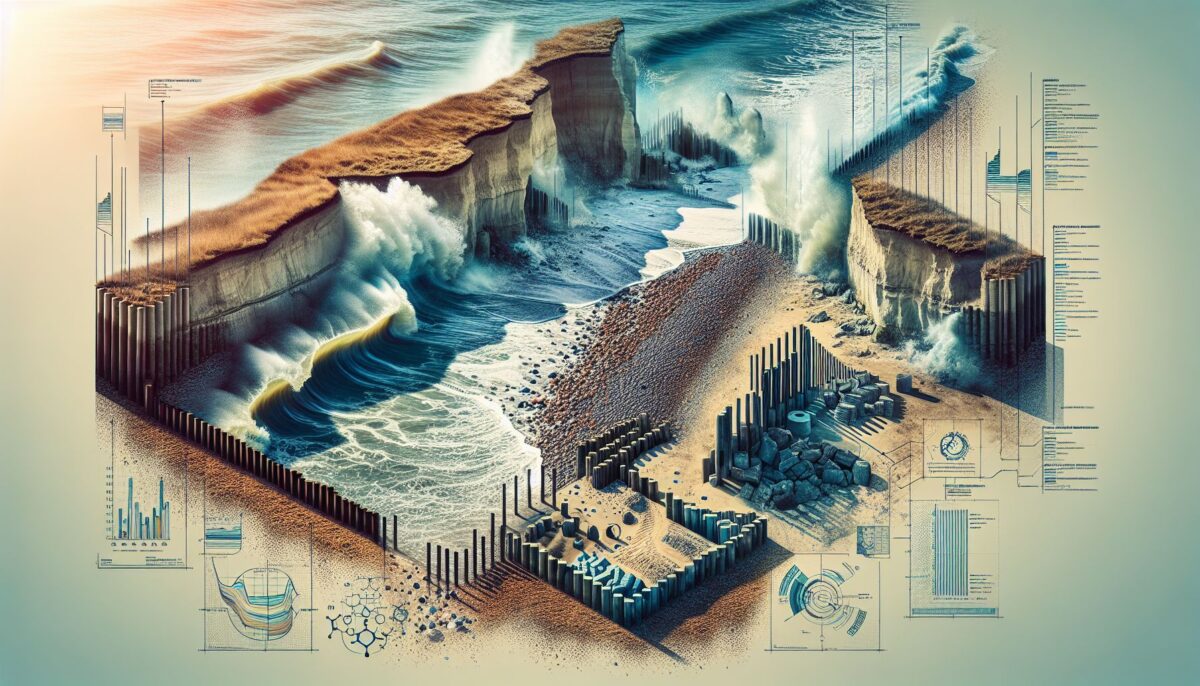
Coastal erosion is a natural process that sculpts coastlines around the world, but with human intervention and accelerated climate change, this process has become a critical environmental and socio-economic issue. This article delves into the complexities underlying coastal erosion, its implications, and strategies employed to manage and mitigate its effects.
Understanding Coastal Erosion
Coastal erosion is the wearing away of land or the removal of beach or dune sediments by wave action, tidal currents, drainage, or high winds. As much as it is a natural occurrence, its rates have increased due to human activities and climate change. This can lead to loss of valuable land, damage to property and infrastructure, and disruption of coastal ecosystems.
The Forces Behind Erosion
Several factors contribute to coastal erosion:
- Waves and Tides: The incessant action of waves, especially during storms, can erode the shoreline. Tidal variation can also play a role in the concentration of erosive forces.
- Currents: Longshore currents can transport sediments along the coast, while rip currents can move sediments away from the shore.
- Sea Level Rise: As global temperatures increase, ice caps melt and ocean waters expand, leading to a rise in sea levels that can exacerbate erosion.
- Storm Surges: Storms can cause a temporary rise in sea level, called a storm surge, which can lead to abrupt and severe erosion.
- Human Activities: The construction of dams, seawalls, and jetties can interrupt the natural sediment supply and distribution along the coast.
The Impacts of Erosion
Coastal erosion can result in:
- Property Damage: Homes, businesses, and infrastructure close to the coast are at risk of damage or total loss.
- Habitat Loss: Erosion can destroy habitats crucial for marine and terrestrial species.
- Economic Losses: Coastal tourism and the value of beachfront property can suffer significantly.
- Cultural and Aesthetic Degradation: Beaches, cliffs, and other coastal features that define local character can be irrevocably changed or lost.
Strategies for Managing Coastal Erosion
Hard Engineering Solutions
These refer to man-made structures built to control coastal erosion:
- Seawalls: Walls constructed parallel to the coast designed to shield the shore from incoming waves.
- Groynes: Barriers or walls built at right angles to the coast to trap sand and reduce sediment transport.
- To avoid disrupting natural sediment flow, breakwaters may be constructed offshore to absorb wave energy.
Soft Engineering Solutions
These involve more sustainable, environmentally friendly methods:
- Beach Nourishment: Adding sand or other sediments to beaches to combat erosion.
- Dune Restoration: Planting vegetation or placing sand fences to stabilize dunes that act as natural barriers against waves.
- Managed Retreat: Allowing certain areas to erode and relocate buildings or infrastructure further inland.
Integrative and Adaptive Management
Effective coastal management requires a combination of strategies and consideration of both human and natural systems. As conditions change, an adaptive approach must be employed to respond effectively.
Challenges in Coastal Erosion Management
Despite various strategies being in place, there are significant challenges:
- Funding and Economics: The high costs of mitigation measures can be a barrier, especially for small coastal communities.
- Property Rights and Public Access: The conflict between private landowners and public access to beaches complicates mitigation efforts.
- Unpredictability of Climate Change: As the climate continues to change, managing coastal erosion becomes more complex.
- Ecological Sensitivity: Interventions must balance erosion control with conservation of local ecosystems.
Case Studies of Coastal Erosion and Management
The Louisiana Coast, USA
The Louisiana coast is experiencing some of the highest rates of coastal erosion in the world, mainly due to subsidence, storm surges, and the interruption of sediment flow from the Mississippi River. Strategies such as marsh creation, barrier island restoration, and sediment diversions are being explored to mitigate erosion.
The Norfolk Coast, United Kingdom
The Norfolk coast exhibits varying rates and types of erosion. Managed retreat has been the strategy in certain areas, while others have seen investments in sea defenses. The approach has been largely site-specific and adaptive to localized conditions.
The Way Forward: A Sustainable Coastal Future
Ensuring the sustainability of our coastlines requires immediate attention and collective action:
- Investing in Research: Understanding coastal dynamics through research is vital for developing effective management practices.
- Public Education and Engagement: Communities should be informed and engaged in coastal management decisions.
- Interdisciplinary Collaboration: Collaboration across scientific disciplines, government levels, and industry sectors is key.
- International Sharing of Best Practices: Learning from global experience can improve local practices.
Conclusion
Coastal erosion is an ongoing battle between the forces of nature and human activity. While it cannot be stopped completely, there is much that can be done to manage and mitigate its effects. Through adaptive management, education, and collaboration, we can work towards a sustainable balance that preserves our precious coastlines for future generations.
References
- National Oceanic and Atmospheric Administration (NOAA). “What is Coastal Erosion?” Accessed March 28, 2023. https://oceanservice.noaa.gov/facts/coastal-erosion.html
- Pilkey, Orrin H., and H. Linda Pilkey-Jarvis. “The World’s Beaches: A Global Guide to the Science of the Shoreline.” University of California Press, 2011.
- European Environment Agency. “Coastal Erosion.” Accessed March 28, 2022. https://www.eea.europa.eu/themes/water/marine-environment/coastal-erosion
Note: This is a fictional article created for the purpose of an exercise, and the references provided may not be current with the actual data and updates on coastal erosion and management.
