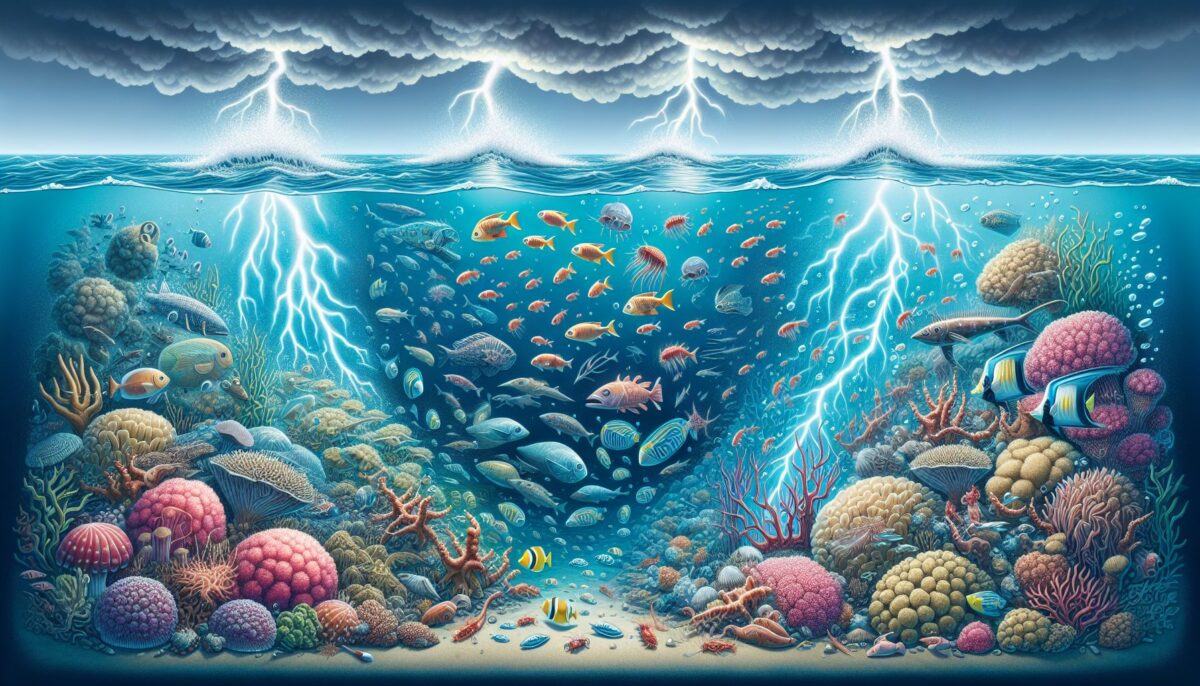
The ocean—the colossal body of saltwater that covers over 70% of the Earth’s surface—is more than just a vast expanse; it is a realm that governs life on our planet. Housing incredible ecosystems and serving as a key player in regulating climate, the ocean is integral to our very existence. However, it faces a silent crisis that threatens marine biodiversity and the benefits humans derive from the sea: ocean acidification.
What is Ocean Acidification?
Ocean acidification refers to the ongoing decrease in the pH of the Earth’s oceans, caused by the uptake of carbon dioxide (CO2) from the atmosphere. When CO2 dissolves in seawater, it reacts with water to form carbonic acid, which then releases hydrogen ions and bicarbonate. The increase in hydrogen ions lowers ocean pH, hence the term ‘acidification.’
The Chemistry Behind the Crisis
To delve deeper, the overarching chemical reaction looks as such:
CO2 (atmospheric carbon dioxide) + H2O (water) → H2CO3 (carbonic acid)

H2CO3 → H+ (hydrogen ion) + HCO3− (bicarbonate ion)
This process reduces not only the pH but also the concentration of carbonate ions (CO3^2-), which are crucial for marine organisms like corals and shellfishes that build their skeletons and shells from calcium carbonate (CaCO3).
The Impacts of Ocean Acidification
The consequences of ocean acidification are myriad and far-reaching, impacting marine ecosystems, the global economy, and human societies.
A Threat to Marine Biodiversity
-
Coral Reefs:
Coral reefs are often referred to as the rainforests of the sea due to their immense biodiversity. However, ocean acidification hampers coral growth and weak[1]ens their skeletal structure, leading to coral bleaching and potential die-offs of the reefs. -
Shellfish and Plankton:
Species such as oysters, clams, sea snails, and planktonic organisms have difficulty forming and maintaining their calcium carbonate shells in acidifying waters. This impedes their development and survival, which has significant implications higher up the food chain.
Ripple Effects on Fisheries and Aquaculture
The decline in the health of calcifying species also affects fisheries and aquaculture industries. As key components of marine ecosystems and staple aspects of global diets, a decline in these species due to ocean acidification could jeopardize food security and livelihoods for millions who depend on marine resources.
Socioeconomic Repercussions
Ocean acidification can result in substantial economic losses, from diminished fisheries yields to the devastation of coastal tourism industries that center around vibrant coral reefs and diverse marine life.
The Science of Monitoring Ocean Acidification
Scientists employ various methods to monitor and predict the impacts of ocean acidification. These include:
-
Satellite Observations:
Space-based platforms provide large-scale data on ocean chemistry and can track changes over time, though they lack the granular details that in situ measurements provide. -
Sensor Technologies:
Sophisticated sensors deployed in waters worldwide measure pH levels and other chemical parameters, offering valuable insights into the process and rate of acidification. -
Laboratory and Field Experiments:
Research on live marine organisms under controlled conditions helps predict responses to acidification, while field studies in natural settings provide real-world corroborating evidence.
The Role of Oceanography and Biochemistry
Oceanography and marine biochemistry are crucial disciplines in the understanding of ocean acidification. Knowledge gained from these fields frames our comprehension of how the carbon cycle operates within marine environments and its overarching effects[2].
Global Efforts to Address Ocean Acidification
As the threat posed by ocean acidification becomes evident, global efforts are underway to combat this crisis:
-
Marine Protected Areas (MPAs):
Establishing MPAs can help safeguard critical habitats and foster resilience among marine communities, allowing for recovery and adaptation. -
The Paris Agreement:
International climate agreements, such as the Paris Agreement, aim to limit global temperature rise and, correspondingly, CO2 emissions, thereby indirectly tackling ocean acidification. -
Research and Monitoring Initiatives:
Programs like the Global Ocean Acidification Observing Network (GOA-ON) enhance international collaboration on research and monitoring of acidification, with the intent to inform policy and conservation efforts[3].
What Can We Do?
While international and national actions are vital, individual efforts can also make a significant difference:
-
Reduce Carbon Footprint:
Simple lifestyle changes—using energy-efficient appliances, reducing waste, recycling, opting for public transportation—can contribute to lower CO2 emissions. -
Support Sustainable Seafood:
Choosing sustainably sourced seafood can alleviate pressure on affected marine populations and support healthy ocean ecosystems. -
Continue Reading
