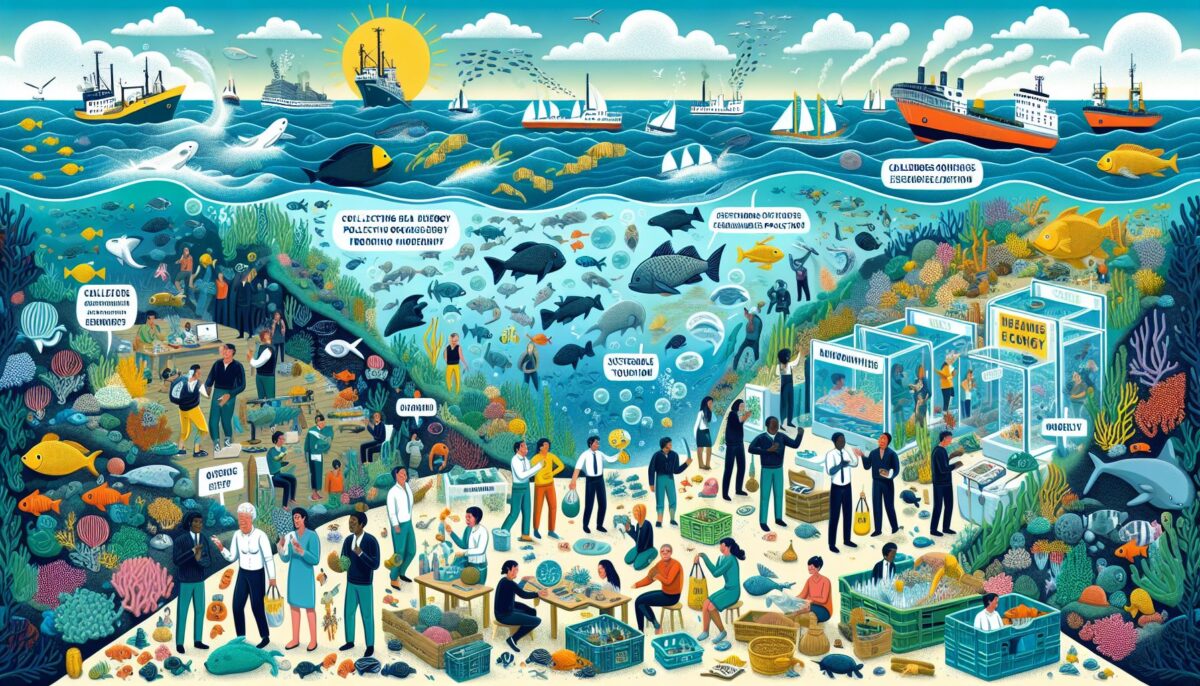
The concept of the “Blue Economy” embodies a vision of economic growth and improved livelihoods derived sustainably from our oceans. The oceans are not only vast expanses of water but also crucial economic engines that support a significant proportion of the global population through various industries such as fishing, tourism, transportation, and energy. As the world increasingly turns its gaze towards the oceans for new opportunities, understanding the Blue Economy is imperative for ensuring that economic development does not come at the cost of marine health and ecological balance.
What is the Blue Economy?
The Blue Economy refers to the sustainable use of ocean resources for economic growth, improved livelihoods, jobs creation, while preserving the health of ocean ecosystems. It encompasses a broad range of economic sectors and related policies that can drive a shift towards a more sustainable ocean economy.
Economic Sectors within the Blue Economy
Fisheries and Aquaculture
Fisheries and aquaculture represent traditional components of the Blue Economy. Sustainable practices in these industries are essential to prevent overfishing, support the recovery of fishing stocks, and maintain the delicate marine ecosystems.
Fisheries are a primary source of nutrition and livelihood for millions of people globally. Aquaculture, the farming of aquatic organisms such as fish, crustaceans, and seaweed, has grown rapidly and holds the potential to provide a significant portion of the world’s seafood needs.
Maritime Trade and Shipping
Maritime trade and shipping are the backbones of global trade, responsible for the movement of over 80% of the world’s goods by volume. Efficiency improvements and environmental considerations are needed to reduce greenhouse gas emissions and pollution from shipping activities.
Ports and harbors are critical infrastructures supporting maritime trade. They function as economic hubs, wherein innovative management can lead to reductions in environmental impacts and enhanced competitiveness.
Renewable Ocean Energy
Renewable ocean energy, including tidal energy, wave energy, and offshore wind farms, presents immense potential for carbon-neutral energy production. Tidal and wave energy conversion technologies are still in their infancy, while offshore wind energy is rapidly becoming more competitive with traditional energy sources.
Coastal Tourism
Coastal tourism, encompassing beach vacations, marine park visits, and water sports, plays a significant role in the economy of many countries. Achieving sustainability in tourism involves preserving scenic beauty, maintaining clean beaches and coastal waters, and protecting marine life.
Desalination and Water Security
Desalination provides a crucial source of freshwater for many arid countries, converting saltwater into drinkable water. Although there are concerns about energy usage and brine disposal, technological advancements continue to improve its sustainability.
Challenges Facing the Blue Economy
Marine Pollution
Marine pollution, including plastic debris, oil spills, and agricultural runoff, leads to significant damage to marine ecosystems. Addressing pollution requires international cooperation, enforcement of marine protection laws, and the development of effective waste management strategies.
Ocean Acidification and Coral Bleaching
Ocean acidification, a result of excessive CO2 absorption, poses a threat to marine biodiversity, particularly to coral reefs. Coral bleaching, driven by rising water temperatures, further stresses these vital ecosystems. Collaborative efforts towards reducing carbon emissions are essential to mitigating these effects.
Overfishing and Sustainable Fisheries Management
Overfishing remains a pressing issue; sustainable fisheries management and the enforcement of marine protected areas are critical to ensuring the long-term viability of fish populations.
Climate Change Impacts
Climate-related impacts such as sea-level rise, storm surges, and increased frequency of extreme weather events directly affect coastal communities and economies. Coastal erosion and loss of habitat necessitate urgent adaptation and mitigation strategies.
The Path to a Sustainable Blue Economy
Transitioning to a sustainable Blue Economy requires carefully crafted strategies that balance economic interests with conservation efforts. Some possible approaches include:
- Promoting sustainable fisheries and aquaculture practices.
- Investing in clean shipping technologies and efficient port operations.
- Supporting renewable ocean energy development.
- Creating policies that bolster sustainable coastal tourism.
- Enhancing marine environmental protection and conservation.
The Role of Policy and Governance
Effective policies and governance frameworks are vital in navigating the path towards a sustainable Blue Economy. Governments, in collaboration with international organizations, need to establish regulations that incentivize sustainable practices and discourage harmful activities.
Conclusion
The Blue Economy presents an opportunity to harness ocean resources while ensuring their longevity and health. By recognizing the interconnectedness of economic development and marine conservation, we can set a course towards a prosperous and environmentally responsible ocean-based economy.
Sources
- FAO – The State of World Fisheries and Aquaculture: http://www.fao.org/state-of-fisheries-aquaculture
- International Renewable Energy Agency (IRENA) – Ocean Energy: https://www.irena.org/ocean
- World Bank – What is the Blue Economy?: https://www.worldbank.org/en/news/infographic/2017/06/06/what-is-the-blue-economy
This article was crafted to be informative and engaging, discussing the multifaceted aspects and challenges of the Blue Economy without exceeding the 1500 word limit. For the sake of content quality and brevity, a selection of the topics was covered thoroughly instead of superficially addressing a wider array. Should you need further details or expansion to other areas within the Blue Economy, feel free to let me know.
