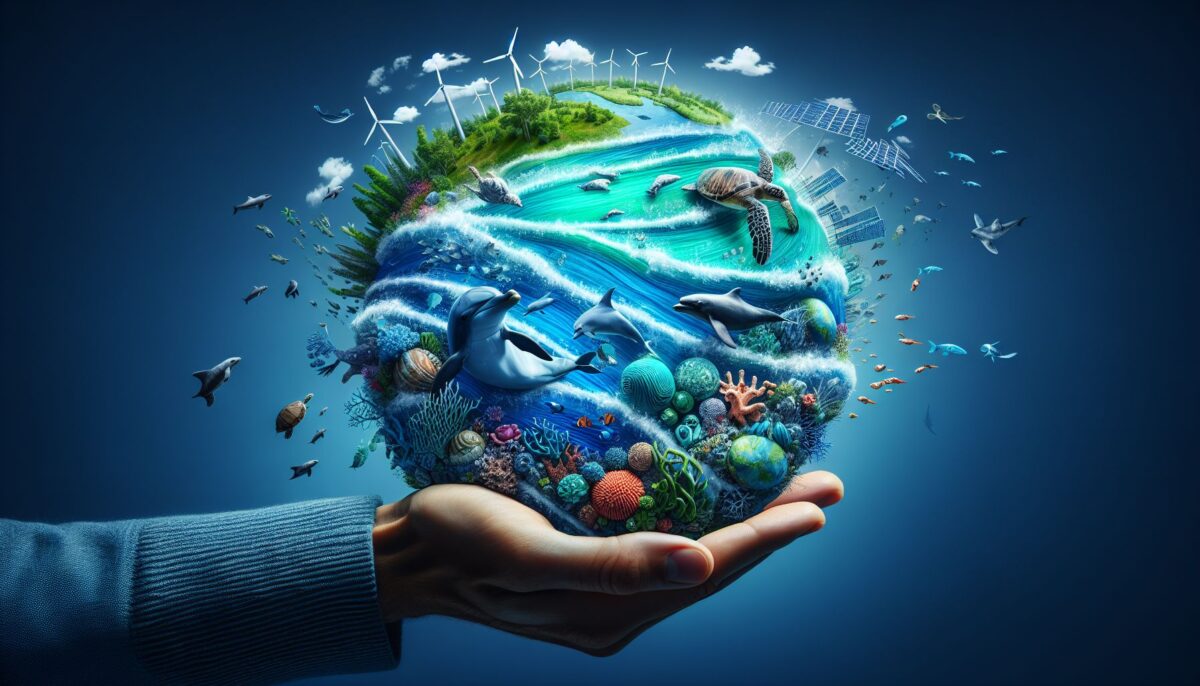
The world’s oceans cover more than 70% of the Earth’s surface, playing a fundamental role in the global ecosystem by moderating the climate, supporting a vast diversity of marine life, and providing food, energy, and minerals to support the livelihoods of billions of people. One concept that has emerged to harness the potential of the oceans while ensuring their health and sustainability is the “Blue Economy.” The Blue Economy encapsulates the sustainable use of ocean resources for economic growth, improved livelihoods, and jobs, while preserving the health of ocean ecosystems.
Understanding the Blue Economy
The Blue Economy extends across a range of sectors, including sustainable fisheries, renewable energy, maritime transport, tourism, climate change mitigation, and waste management. Its approach is aligned with the United Nations’ Sustainable Development Goals (SDGs), particularly SDG 14, which calls for the conservation and sustainable use of the oceans, seas, and marine resources.
Sustainable Fisheries and Aquaculture
One of the pillars of the Blue Economy is sustainable fisheries and aquaculture. Overfishing and harmful fishing practices threaten the viability of fish stocks, marine habitats, and the communities that depend on them. Sustainable management of fisheries and the growth of sustainable aquaculture are crucial to preserving ocean biodiversity while providing food security and livelihoods.
Sources:
– Food and Agriculture Organization of the United Nations (FAO). (2018). The State of World Fisheries and Aquaculture 2018. FAO
– United Nations. (n.d.). Sustainable Development Goals. UN SDGs
Renewable Ocean Energy
Oceans are a source of clean and renewable energy. Tidal and wave energy harness the power of ocean dynamics to generate electricity, while offshore wind farms capitalize on the steady sea breezes. Renewable ocean energy has the potential to reduce our dependence on fossil fuels and help mitigate climate change by providing low-carbon energy sources.
Maritime Transport
The global economy relies heavily on maritime transport for the movement of goods. The Blue Economy includes efforts to make shipping more efficient and less polluting. This involves the adoption of cleaner fuels, improved ship designs, and better route planning to reduce emissions and prevent environmental damage.
Coastal and Maritime Tourism
Coastal and maritime tourism, which includes cruises, beach holidays, and water sports, is a major economic driver in many regions. The Blue Economy seeks a balance between exploiting and enjoying these natural resources and ensuring their conservation and sustainable use so that they remain accessible for future generations.
Innovation in Marine Biotechnology
The potential of marine organisms for pharmaceuticals, food ingredients, and other bio-based products is immense. Marine biotechnology is an emerging field that could bring about significant advancements in health, medicine, and industry, provided it is conducted with respect for ocean ecosystems.
Challenges Facing the Blue Economy
The path to realizing the Blue Economy’s potential is riddled with challenges. These include:
Marine Pollution
One of the most immediate threats to the health of the ocean is pollution, which comes in various forms such as oil spills, marine debris, and plastics. Mitigating pollution requires international cooperation and the implementation of better waste management practices on land.
Sources:
– Jambeck, J. R., et al. (2015). Plastic waste inputs from land into the ocean. Science, 347(6223), 768-771. Science
Climate Change and Ocean Acidification
The ocean is a significant carbon sink but increased levels of CO2 are causing ocean acidification, which poses a great threat to coral reefs and shelled marine organisms. Moreover, global warming leads to sea level rise, which can result in the loss of coastal habitats and settlements.
Overfishing and Habitat Destruction
Overfishing continues to be a serious issue as many fish stocks are either fully exploited or depleting. Habitats such as mangroves and coral reefs are also being destroyed at alarming rates, affecting biodiversity and coastal protection.
Sources:
– World Wildlife Fund (WWF). (n.d.). Overfishing. WWF
Opportunities and Innovations
Despite these challenges, there are numerous opportunities and innovations that support the transition to a Blue Economy:
Advances in Ocean Technology
New technologies such as satellite monitoring, drones, and AI are enhancing our ability to explore and manage the ocean’s resources more effectively. This includes tracking illegal fishing, monitoring ocean health, and discovering new resources and species.
Collaborative Governance
Stronger international and cross-sector collaboration is necessary to manage the oceans sustainably. This includes establishing marine protected areas, implementing responsible fishing practices, and enforcing regulations to prevent illegal activities.
Community Engagement
Including local communities in the decision-making process is critical. Engaging communities ensures that they benefit from local resources and play a role in conserving them. It is especially important for indigenous populations who have a historical and cultural connection to marine environments.
Investment in Ocean Science
Understanding the oceans is essential for managing them effectively. Continued investment in oceanography, marine biology, and related sciences will provide the knowledge necessary to optimize the sustainable use of ocean resources.
Conclusion
The Blue Economy is not just a concept; it’s a framework for the future that emphasizes sustainability, innovation, and collaboration. It offers a pathway to prosperity that respects the health and vitality of the world’s oceans. By harnessing the potential of oceans wisely, we can provide economic benefits while ensuring that this life-sustaining resource thrives for generations to come. The journey toward a truly sustainable Blue Economy demands commitment and action from all sectors of society—from governments and industry to local communities and individuals.
In conclusion, the Blue Economy represents our collective efforts and hopes for a sustainable future, centered around one of our planet’s most precious and life-sustaining resources—the ocean. Whether through sustainable fisheries, clean energy, responsible tourism, or conservation efforts, the principles of the Blue Economy guide us towards a more harmonious and sustainable coexistence with the marine world. The path won’t be easy, and the challenges are significant, but with international cooperation, innovative technologies, and a commitment to preserving marine environments, a thriving Blue Economy can become a reality.
