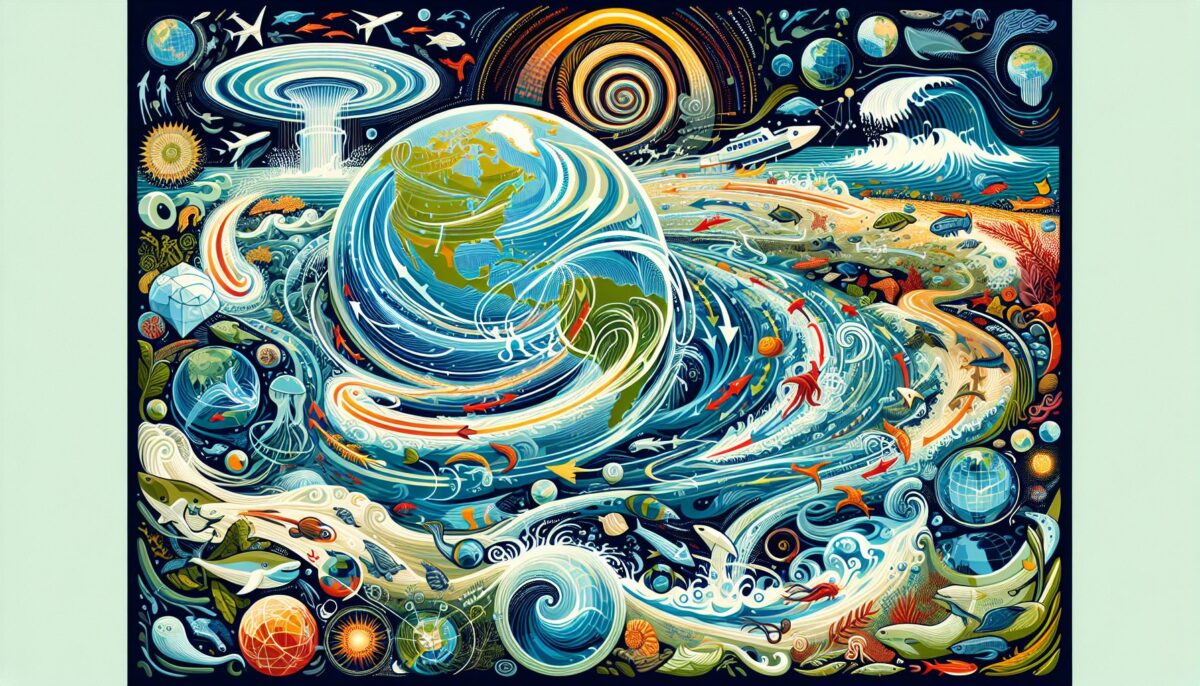
The ocean is a vast, mysterious world that covers more than 70% of our planet’s surface. It’s home to complex ecosystems and plays a critical role in Earth’s climate system. Among the many fascinating aspects of the ocean are its currents – the continuous, directed movement of sea water generated by a number of forces acting upon the water, including wind, the Coriolis effect, breaking waves, cabbeling, and temperature and salinity differences. In this article, we will explore the intricate world of ocean currents, their formation, types, importance for marine life and climate, and the challenges they face from human activities and climate change.
What are Ocean Currents?
Ocean currents are horizontal and vertical movements of seawater that flow like vast rivers through the oceans. They range from large-scale circulations that traverse ocean basins to smaller-scale coastal currents that can affect local weather and marine life. These currents are primarily driven by the sun, which heats different parts of the Earth unevenly, creating temperature gradients that set water in motion.
Surface Currents
Surface currents, which make up about 10% of all the water in the ocean, are primarily driven by wind. These currents tend to follow the large-scale patterns of the planet’s atmospheric circulation. Factors such as the Earth’s rotation, the shape of ocean basins, and the position of the continents influence their paths.
Deep Water Currents
Below the surface, deeper currents are driven by differences in water density, which are controlled by temperature (thermo) and salinity (haline), leading to the term ‘thermohaline circulation.’ This can result in massive movements of water known as deep water currents, which can be much slower than surface currents but carry a large volume of water.
The Importance of Ocean Currents
Ocean currents play a vital role in regulating the world’s climate by redistributing heat around the globe. They transport warm water from the equator towards the poles and cold water from the poles toward the tropics. Without these currents, regional temperatures would be more extreme—far hotter at the equator and much colder at the poles.
Marine Ecosystems and Wildlife
In addition to moderating climate, currents also shape marine ecosystems. They affect the availability of nutrients in the water, which in turn influences the distribution of marine life, including plankton, fish, and all the way up to top predators like whales. Currents carry organisms to new areas, facilitate breeding, and support food webs.
Economic and Human Impact
Human societies depend on ocean currents for many aspects of life. Currents affect shipping routes, fisheries, and even recreational activities. Fishing industries, for example, are intricately linked to the strength and movement of ocean currents, as they bring nutrients to surface waters, feeding the small marine organisms that are the foundation of the ocean food chain.
Mapping the Major Currents
The world’s oceans feature several major current systems:
- The Gulf Stream in the North Atlantic is one of the most well-known currents, renowned for its role in heating the climate of Western Europe.
- The Kuroshio Current off the coast of Japan is similar to the Gulf Stream in its impact on climate.
- The Antarctic Circumpolar Current is the largest ocean current, encircling the continent and connecting the Atlantic, Pacific, and Indian Oceans.
- The Great Ocean Conveyor Belt is a global-scale system of ocean currents that has a major influence on climate.
Threats Presented by Climate Change
As climate change accelerates, its impact on ocean currents becomes more pronounced. Melting polar ice is infusing freshwater into the oceans, potentially disrupting the delicate salt balance that drives deep ocean currents. Changes in wind patterns, due to the warming atmosphere, also have the potential to alter surface currents. This can have profound effects on climate, marine ecosystems, and sea levels.
Rising Temperatures and Currents
A warmer atmosphere heats the ocean surface, leading to increased stratification and potentially hampering the mixing of water layers. This could slow down or even halt some aspects of thermohaline circulation, which would have significant climate impacts. Recent research has suggested that some of these currents may be weakening, although more data is needed to understand the full implications.
The Human Influence
Beyond climate change, human activities are affecting ocean currents as well. The alteration of coastlines, through activities such as dredging and construction, can change local currents and sedimentation patterns. Pollution and the discharge of wastewater also impact currents and the health of marine ecosystems.
Mitigating Human Impact
To mitigate these human impacts, conservation efforts such as marine protected areas (MPAs) are critical. They help to preserve important sections of ocean currents and the biodiversity they support. Sustainable practices in shipping, fishing, and coastal development are also vital to maintaining the health of currents.
The Drive for Understanding
Scientific understanding of ocean currents is crucial for the future of our planet. Oceanographers and climate scientists use satellites, buoys, and underwater drones to track and model ocean currents. Innovations in sensing technology and data analysis are constantly improving our ability to predict and respond to changes in the ocean environment.
Expanding Technologies
As the blue economy grows, industries from shipping to renewable energy are expanding into the ocean. Innovative technologies, such as tidal and wave energy, rely on understanding and harnessing the power of ocean currents. Sustainable development in these areas requires a deep knowledge of how currents function and how they are changing.
Looking Forward: The Future of Our Ocean Currents
As we expand our knowledge and build our technological capability, the future of our relationship with ocean currents holds both promise and peril. The decisions made today will determine the health of our climate system and marine environments for generations to come.
Through research and responsible stewardship, there is hope for maintaining the balance of these vital components of our planet’s life support system. Ocean currents are a testament to the dynamic, interconnected nature of Earth’s environment, flowing from the equator to the poles, touching every corner of the globe, and sustaining life both in the water and on land.
Ocean currents are not just fascinating natural phenomena; they are essential to the health of our planet and the prosperity of humanity. By deepening our understanding and respect for these powerful flows, we can work towards a sustainable future where ocean currents continue to nurture the diversity of life on Earth.
Sources
- National Oceanic and Atmospheric Administration (NOAA) – Climate: Ocean Currents
- U.S. National Park Service – Ocean Currents and Climate
- Intergovernmental Panel on Climate Change (IPCC) – Special Report on the Ocean and Cryosphere in a Changing Climate
By continuing to learn, adapt, and mitigate the human impact on these forces of nature, we stand a better chance of protecting the integrity and diversity of life in our ocean currents and beyond.
