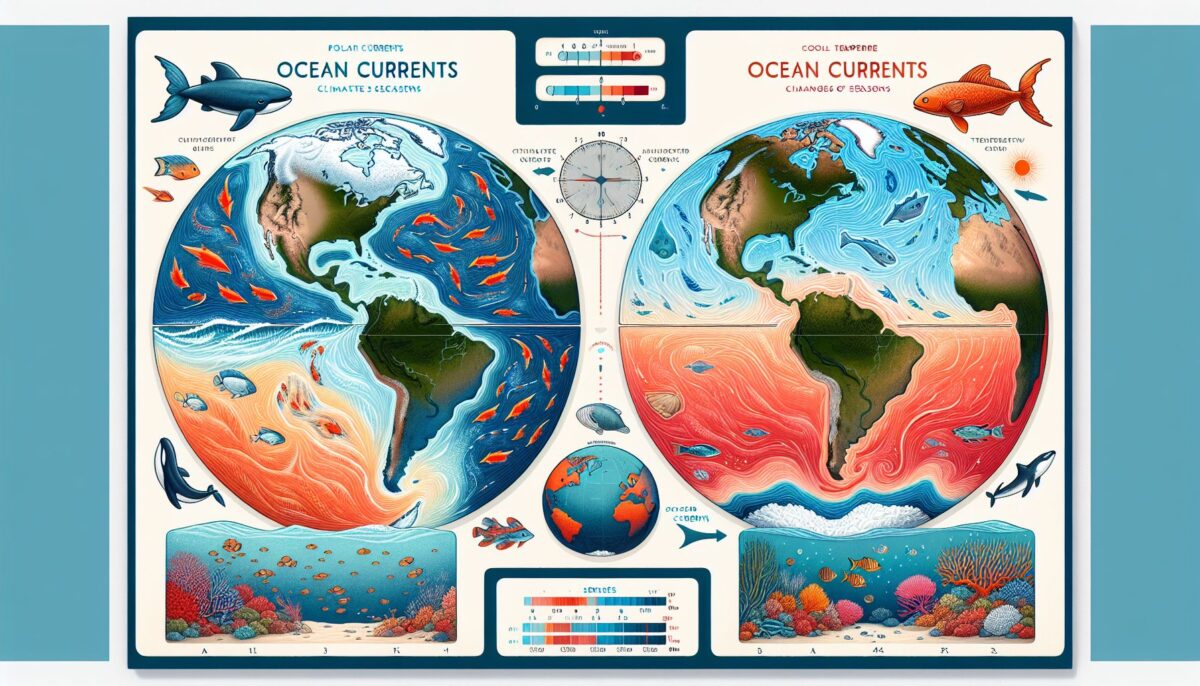
The ocean is a vast and mysterious entity that has captivated humanity for millennia. A complex network of forces that interact in intricate ways governs it. Among these forces are ocean currents – mighty rivers within the sea – invisible but powerful factors shaping our world’s climate, marine life, and human activities. This article will dive into the depths of ocean currents, exploring their origins, how they function, and their fundamental role in our planet’s health and human enterprise.
What Are Ocean Currents?
Ocean currents are continuous, directed movements of seawater generated by various factors, including wind, temperature, salinity, the Earth’s rotation, and the position of continents. Currents can flow for thousands of kilometers and reach great depths, influencing not just marine ecosystems but the global climate as well.
The Drivers of Ocean Currents
The primary drivers of ocean currents are:
- Wind: Surface winds drive the surface currents, often following the Earth’s major wind patterns, such as the trade winds and westerlies.
- Thermohaline Circulation: Differences in water density, caused by variations in temperature and salinity, lead to deep ocean currents. Warm, salty water is denser and sinks, while colder, fresher water tends to rise.
- Coriolis Effect: The Earth’s rotation causes moving water to shift to the right in the Northern Hemisphere and to the left in the Southern Hemisphere, influencing the direction of current flow.
- Landmasses: Continents and other landmasses impact ocean currents by blocking and redirecting flow patterns.
A Closer Look at Major Ocean Currents
Notable ocean currents include:
- The Gulf Stream: A warm Atlantic ocean current emanating from the Gulf of Mexico, which keeps the climate of Northwest Europe milder than other regions at similar latitudes.
- The Antarctic Circumpolar Current: The largest ocean current that flows from west to east around Antarctica, influencing global climate and nutrient upwelling.
- The Kuroshio Current: A warm Pacific current flowing northeasterly off the coast of Japan, contributing to the temperate climate on land.
The Impacts of Ocean Currents on Climate
Ocean currents act as conveyor belts of heat and moisture around the globe:
- Regulate Temperatures: Currents transport warm water from the equator toward the poles and bring cold water back toward the equator, which helps moderate regional climates.
- Influence Weather Patterns: Currents can affect weather systems by interacting with atmospheric pressures, shaping rainfall and storm patterns.
Ocean Currents and Marine Life
The movement of currents also has profound effects on marine biodiversity:
- Nutrient Distribution: Currents transport nutrients from the deep ocean to the surface, supporting the growth of phytoplankton, the base of the marine food web.
- Migration Routes: Many marine species rely on currents for navigation and to find food during migration.
The Role of Currents in Human Activities
Ocean currents have historically been crucial for human enterprise:
- Navigation and Shipping: From ancient mariners to modern ships, seafarers have harnessed currents for navigation and speed.
- Fishing Industries: Fisheries often align their activities with currents to maximize their catch due to the abundance of marine life.
- Climate Research: Understanding currents is key for predicting climate change and for modeling weather phenomena.
The Risks Associated with Ocean Currents
Despite their benefits, currents can also pose risks:
- Marine Pollution: Currents can carry pollutants over vast distances, affecting marine ecosystems far from the source.
- Spread of Invasive Species: Ships can unintentionally introduce non-native organisms to new areas, and currents can facilitate their distribution.
- Climate Change Effects: Changes in currents due to global warming can drastically alter weather patterns and marine ecosystems.
Ocean Currents in the Age of Climate Change
Climate change is impacting ocean currents in ways that are not fully understood:
- Shifting Patterns: Rising temperatures can lead to changes in current strength and direction, potentially disrupting climate systems.
- Ocean Acidification: Increased CO2 levels from burning fossil fuels acidify seawater, affecting marine life and altering current flow.
- Sea Level Rise: Melting polar ice affects ocean salinity and can lead to changes in thermohaline circulation.
The Scientific Study of Ocean Currents
Oceanography, the study of oceans, involves several disciplines to understand currents:
- Hydrography: The measurement of physical characteristics of bodies of water, which is crucial for safe navigation.
- Marine Geology: The study of seafloor structure and processes, helping predict shifts in currents.
Towards Sustainable Use of Ocean Currents
To maintain the benefits and mitigate the risks associated with ocean currents, actions are needed:
- Marine Protected Areas: Establishing zones that limit human activity can preserve marine ecosystems.
- Sustainable Fishing Practices: Regulations can help prevent overfishing and the destruction of habitats.
- International Collaboration: Joint efforts are required to tackle issues such as marine pollution and climate change.
Conclusion
The silent but formidable force of ocean currents is a testament to the interconnectedness of our planet’s systems. As our understanding of these currents continues to evolve, so too must our strategies for coexisting with them. The need for sustainable interaction with our oceans has never been more acute, and in the balance hangs the health of our climate, the diversity of marine life, and the prosperity of human society.
Sources:
- National Geographic Society, “Ocean Currents and Climate,” https://www.nationalgeographic.org/encyclopedia/ocean-currents-and-climate/
- Woods Hole Oceanographic Institution, “The Ocean and its Role in the Earth’s Climate System,” https://www.whoi.edu/know-your-ocean/ocean-topics/ocean-circulation/the-ocean-and-its-role-in-the-earths-climate-system/
- National Oceanic and Atmospheric Administration, “How Currents Work,” https://oceanservice.noaa.gov/education/tutorial_currents/03currents1.html
