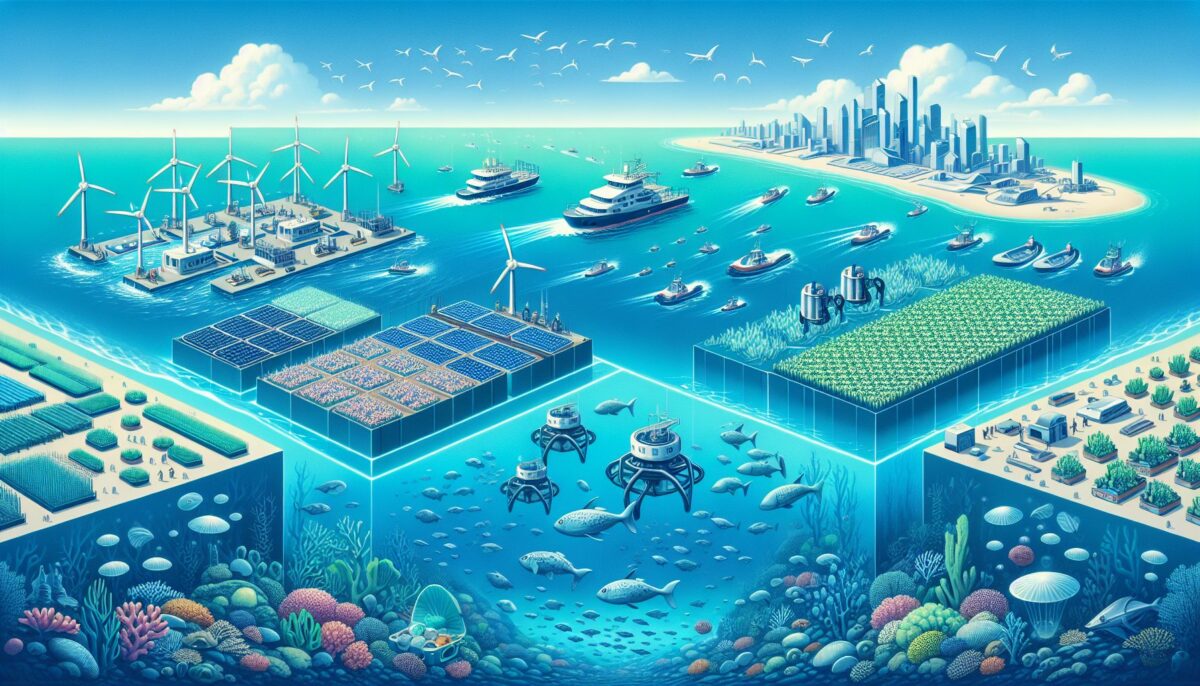
The ocean has been a cornerstone of human civilization for millennia, providing food, transport, recreation, and even inspiration. Today, as we grapple with the twin challenges of environmental sustainability and economic development, the concept of the Blue Economy has emerged as a crucial framework for understanding and nurturing the myriad ways we interact with oceanic systems.
Understanding the Blue Economy
The Blue Economy encompasses all economic activities related to oceans, seas, and coasts. It ranges from traditional sectors like fishing and maritime transport to emerging sectors like offshore renewable energy. It takes into account the health of the marine environment, the livelihoods of coastal communities, and the necessity of protecting our oceans for future generations.
A Dive into Economic Contributions
Oceans contribute significantly to the global economy. According to the Organisation for Economic Co-operation and Development (OECD), the ocean economy is projected to double in size by 2030, reaching a total value of over $3 trillion.
- Fisheries and Aquaculture: This sector remains the linchpin of ocean-based food production, responsible for providing a significant portion of the global population’s protein intake.
- Maritime Trade: With approximately 90% of the world’s trade carried by sea, maritime routes are the lifelines of international commerce.
- Tourism: Coastal and marine tourism is one of the fastest-growing areas of the global leisure economy.
- Renewable Energy: Ocean energy sources, including wind, tidal, and wave energy, offer promising alternatives to fossil fuels.
Environmental Sustainability
To tap into the Blue Economy sustainably, it is critical to balance economic growth with the ecological limits of the ocean. This balance involves addressing challenges such as:
- Marine Pollution: From plastics to chemical runoffs, keeping pollutants out of our seas is essential for the health of marine ecosystems.
- Overfishing: Sustainable fisheries management is key to preventing the collapse of fish stocks.
- Ocean Acidification and Coral Bleaching: Oceans absorb a large part of the CO2 emitted into the atmosphere, leading to acidity levels that can harm marine life.
- Habitat Destruction: Protecting sensitive areas, such as coral reefs and mangroves, is crucial for biodiversity.
Blue Economy Sectors: Current State and Future Prospects
Fisheries and Aquaculture
Fisheries and aquaculture are traditional components of the Blue Economy. However, they face severe sustainability challenges, such as overfishing and the environmental impacts of aquaculture operations. Solutions include sustainable fishing practices, improved aquaculture technologies, and traceability of seafood from catch or harvest to consumer.
Marine Renewable Energy
The push for renewable energy has brought ocean-based sources to the forefront. Wind farms, tidal barrages, and wave energy converters harness the power of marine forces to generate electricity. A challenge in this sector is the development of technologies that are economically viable and have minimal impact on marine life.
Sustainable Maritime Transport
The shipping industry is a significant contributor to global CO2 emissions. Transitioning to more sustainable forms of maritime transport can include using cleaner fuels, improving operational efficiencies, and designing advanced ship hulls to reduce resistance.
Coastal Tourism
A sustainable approach to tourism involves the development of eco-friendly resorts, conservation of natural habitats, and promotion of responsible tourism practices. This sector’s future lies in its ability to contribute to conservation efforts while providing economic opportunities.
Ocean-Based Drug Discovery
Marine bioprospecting involves exploring the sea for novel compounds that can be used in pharmaceuticals. The ongoing discovery of unique marine-derived drugs is an exciting frontier within the Blue Economy.
Deep-Sea Mining
Technological advancements have made the idea of mining the seafloor for minerals such as nickel, cobalt, and rare earth elements a possibility. The environmental implications of such ventures remain a contentious issue that requires careful management.
Desalination
With freshwater scarcity becoming a pressing issue for many countries, the process of desalinating seawater to make it potable is a growing industry within the Blue Economy. The challenge lies in reducing the energy consumption and environmental impact of desalination plants.
Challenges and Governance
Despite the potential benefits, there are significant challenges that must be overcome to ensure that the Blue Economy remains sustainable:
- International Cooperation: Oceans do not adhere to national borders. As such, international cooperation is essential for managing shared resources and environmental challenges.
- Regulation and Enforcement: Robust legal frameworks, along with effective enforcement mechanisms, are required to manage ocean activities sustainably.
- Climate Change: The Blue Economy must adapt to and mitigate the impacts of climate change, which poses a significant threat to marine environments.
Strategies for Sustainable Development
Developing a sustainable Blue Economy requires strategic planning and international cooperation. Here are some initiatives that can help promote sustainability:
- Marine Protected Areas (MPAs): Expanding MPAs to cover critical marine habitats helps protect biodiversity and support fisheries recovery.
- Investment in Research and Development (R&D): Innovations in maritime technologies can lead to more environmentally friendly and cost-effective uses of ocean resources.
- Education and Capacity Building: Equipping coastal communities with the knowledge and tools to manage their marine resources can help foster sustainability.
Looking Ahead
The Blue Economy stands at the crossroads of human need and ecological responsibility. Sustainable practices can unlock the full potential of ocean resources while protecting the marine environment for posterity. Moving forward, it will be essential to harness the collective efforts of governments, industries, NGOs, and communities to chart a course towards a truly sustainable and economically vibrant Blue Economy.
Sources:
- Organisation for Economic Co-operation and Development (OECD). (2016). The Ocean Economy in 2030. https://www.oecd.org/ocean/oceaneconomy2030.htm
- The World Bank. (2017). What is the Blue Economy? https://www.worldbank.org/en/news/infographic/2017/06/06/blue-economy
- United Nations. (2020). Sustainable Development Goals – 14 Life Below Water. https://www.un.org/sustainabledevelopment/oceans/
