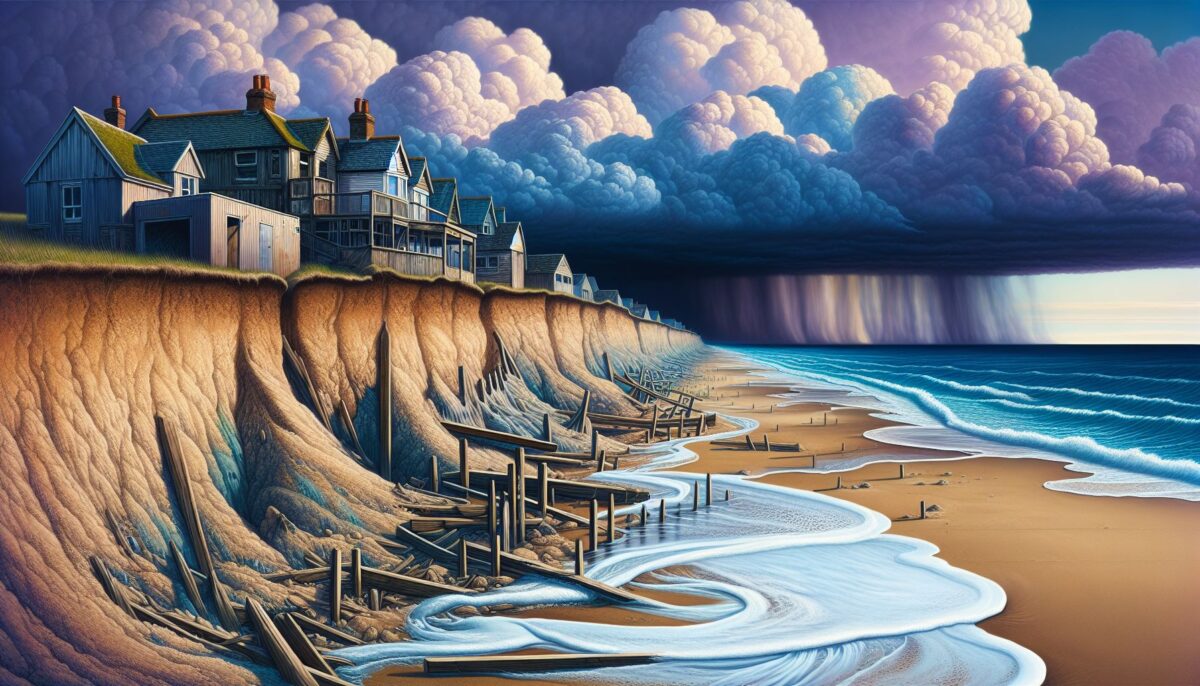
When it comes to the race between man and nature, coastal erosion is a telling example of how nature is an opponent not easily tamed. Coastal erosion is a critical and natural process that continuously reshapes our world’s coastlines. However, human-induced pressures have exacerbated this phenomenon, and its impact is no longer solely in nature’s hands. This article explores coastal erosion, its causes, impacts, and possible ways to address this issue that threatens coastal communities, wildlife, and economies worldwide.
What is Coastal Erosion?
Coastal erosion is a natural process where wind, waves, and the flow of sediments erode, or wear down, land along the shoreline. This leads to the permanent loss of coastline, which can have significant impacts on coastal communities and economies. Not only does it displace human populations, but it also destroys habitats for countless species of plants and animals — some of which are already endangered due to other ecological pressures.
The Causes of Coastal Erosion
Coastal erosion is driven by two broad categories of factors: natural forces and human activities.
Natural Forces
Among the natural influences are waves, tides, currents, and weather events like hurricanes and storms. Waves, driven by the wind, are a pervasive erosive force, persistently assaulting the shoreline. Tides, the daily rise and fall of sea levels, contribute to erosion by facilitating the action of waves. Coastal currents, both long-shore and rip currents, move sand along the shoreline and out to sea, further facilitating erosion.
Significant weather events like hurricanes and storms have a profound impact on the rate of coastal erosion. The strong winds drive large, powerful waves onto the shore, and heavy rains increase the amount of run-off, carrying more sediment away from the coast.^[1^]
Human Influences
While natural forces have been shaping coastlines for millions of years, human activities have dramatically accelerated the rate of coastal erosion. Construction at or near shorelines, sand mining for construction activities, deforestation, and poorly managed agriculture all significantly affect coastal erosion rates.
Moreover, climate change and associated sea-level rise exacerbate the erosion problem. With rising seas, shores are exposed to more regular and powerful wave action — wearing away coastlines at an increased pace.
The Impact of Coastal Eosion
The loss of coastline has far-reaching environmental, economic, and social impacts.
In terms of environmental implications, coastal erosion threatens critical habitats, including wetlands, mangroves, and sand dunes — all of which house a wealth of biodiversity. These environments also play a vital role in carbon sequestration, which is critical for battling climate change. Coastal erosion also disrupts sediment flows and changes the makeup of local beaches — affecting both local ecosystems and human use of these areas.
From an economic perspective, the impacts of coastal erosion can be devastating. The direct loss of properties and infrastructure can lead to substantial financial loss. The indirect effects on economies are equally significant with potential declines in tourism and impacts on local businesses.
For the people living in coastal areas, the threats are immediate and personal. Homes, livelihoods, cultural heritage — coastal erosion threatens all of these and more. In extreme cases, entire communities may need to relocate, causing huge disruptions to people’s lives and livelihoods.
Addressing Coastal Erosion
Addressing coastal erosion requires a multidisciplinary approach, combining science, policy, engineering, and community engagement.
Hard engineering solutions, such as seawalls and groynes, have traditionally been used to protect coastal areas. However, these methods often have significant environmental impacts and may not be sustainable in the long term.
Soft engineering solutions, like beach nourishment and managed retreat, aim to work with natural systems rather than against them. However, these can be expensive and often require ongoing management.
On a policy level, effective coastal management strategies and land use planning can help mitigate the impacts of erosion. This includes implementing regulations around development in coastal areas as well as investing in climate change mitigation and adaptation measures.
It’s important to remember that every coastline is unique; hence there isn’t a one-size-fits-all solution to coastal erosion. Successful strategies will need to take into account local geology, climate, wave conditions, human influences, and other factors.
Conclusion
Coastal erosion is a global issue that requires urgent attention. Both a result of natural processes and accelerated by human activity, it impacts every aspect of life along our coastlines. It’s an issue that demands a global and concerted effort towards mitigation and adaptation strategies. This problem is not just about the loss of beautiful beaches and scenic views; it’s about our planet’s health, our economies, and our future.
Sources:
-
“Coastal Erosion – Causes and Solutions”. US Geological Survey. https://www.usgs.gov/special-topic/water-science-school/science/coastal-erosion-causes-and-solutions
-
“Coastal Erosion and Loss”. National Oceanic and Atmospheric Administration. https://www.fisheries.noaa.gov/national/habitat-conservation/coastal-erosion-and-loss
-
“Coastal Management”. United Nations Environment Programme. https://www.unep.org/explore-topics/oceans-seas/what-we-do/coastal-management
