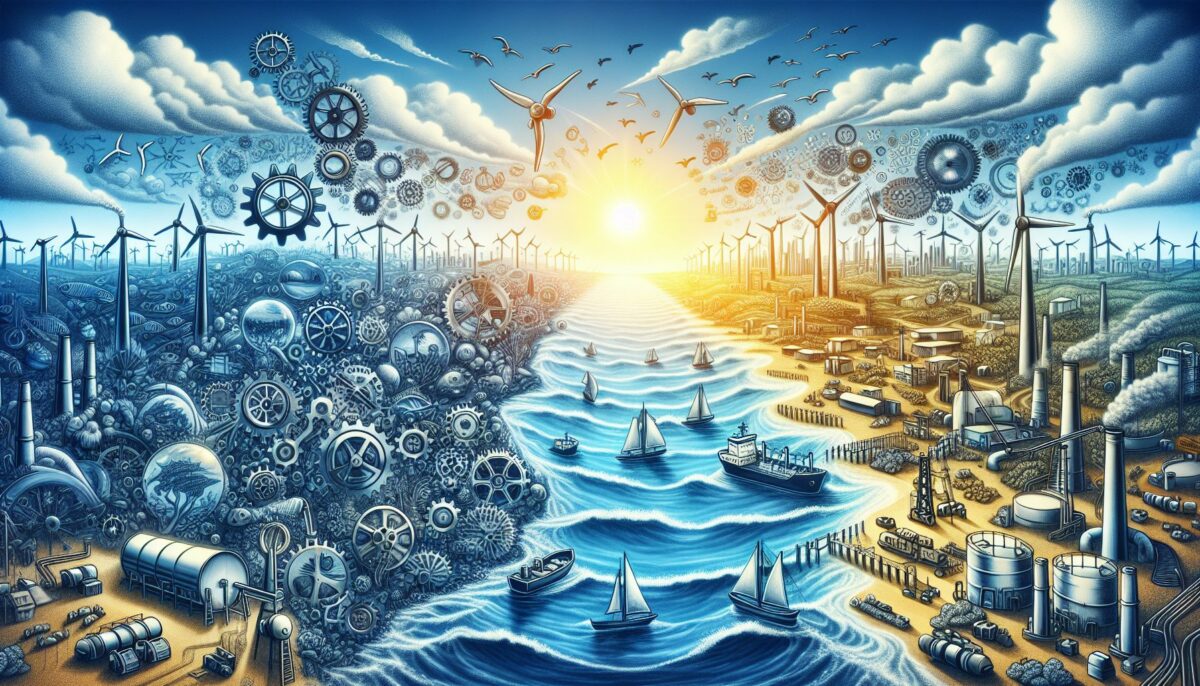
Our planet is not just a green entity but a blue one, enveloped by sprawling oceans covering about 71% of the earth’s surface, providing a home to a rich biodiversity and serving as the livelihood source for millions. One aspect of harnessing the potential of these vast water bodies is the concept of the ‘Blue Economy’. This article delves into the concept of the Blue Economy, its components, benefits and challenges. It aims to shed light on the importance of sustainable management of marine resources, and the oceans’ significant role in global economic prosperity.
What is the Blue Economy?
The ‘Blue Economy’ concept came to global attention in 2012 during the United Nations Conference on Sustainable Development, or Rio+20. The World Bank defines the Blue Economy as the “sustainable use of ocean resources for economic growth, improved livelihoods and jobs, while preserving the health of the ocean ecosystem”[^1^].
This economy encompasses several sectors including seafood and marine fisheries, aquaculture, marine tourism, bio-prospecting, renewable energy sources, and maritime trade. It also considers the value of the ecological health of the oceans. Hence, balancing the economic utilization of the sea while maintaining its health is key to the blue economy.
Components of the Blue Economy
The industry segments of the blue economy generally fall under two primary categories: traditional and emerging sectors.
Traditional Sectors
-
Seafood and Fisheries: The ocean has been a source of seafood since time immemorial, with fishing being a major economic activity for coastal communities globally.
-
Marine Transportation: This sector is crucial as about 80% of the world’s trade volume is moved by sea[^2^].
Emerging Sectors
-
Renewable Energy: With advancements in technology, tides, waves, and offshore wind are seen as promising sources of renewable energy.
-
Blue Biotechnology: The oceans are a treasure trove of biological materials, with huge potential for the pharmaceutical industry. Blue biotechnology is the exploration and application of these marine bio-resources.
-
Marine Tourism and Recreation: Beaches, coastal areas, cruises, and recreational fishing form a significant part of the global tourism industry.
The Economic Value of the Blue Economy
The blue economy is a significant contributor to the world’s economy and a major employment driver. According to the Organisation for Economic Co-operation and Development (OECD), the ocean’s economic output was $1.5 trillion in 2010, and this figure is expected to grow to $3 trillion by 2030[^3^].
While all sectors contribute to this, the shipping industry stands out for its economic impact. It’s estimated that more than 90% of the world’s trade is seaborne[^4^]. Aquaculture is another rapidly growing sector due to the increased demand for seafood. With the advent of technological advancements, sectors like offshore renewable energy and blue biotechnology are also expected to contribute significantly in the future.
The Importance of Sustainability in the Blue Economy
While the blue economy can offer substantial economic benefits, it is not without challenges. Overfishing, pollution, loss of coastal habitats, and climate change pose serious threats to the health of our oceans. Therefore, it is essential to ensure the sustainability of the blue economy – exploiting the economic potential of our oceans without compromising their health.
Developing policies that promote sustainable fishing practices, reducing pollution, boosting waste management systems, promoting renewable energy, and establishing marine protected areas could play a critical role in ensuring the sustainability of the blue economy.
Conclusion
The blue economy, while relatively uncharted, offers boundless potential for economic development while preserving marine biodiversity. If managed sustainably, it can ensure the well-being of the vast oceans that cover the majority of our planet. It is, therefore, time to dive deeper and explore this novel economic sphere that promises a better and more sustainable future, not just for the marine ecosystem, but also for the world economy.
[^1^]: World Bank on Blue Economy
[^2^]: UNCTAD Review of Maritime Transport
[^3^]: OECD on The Ocean Economy in 2030
[^4^]: International Maritime Organization on Importance of Shipping
