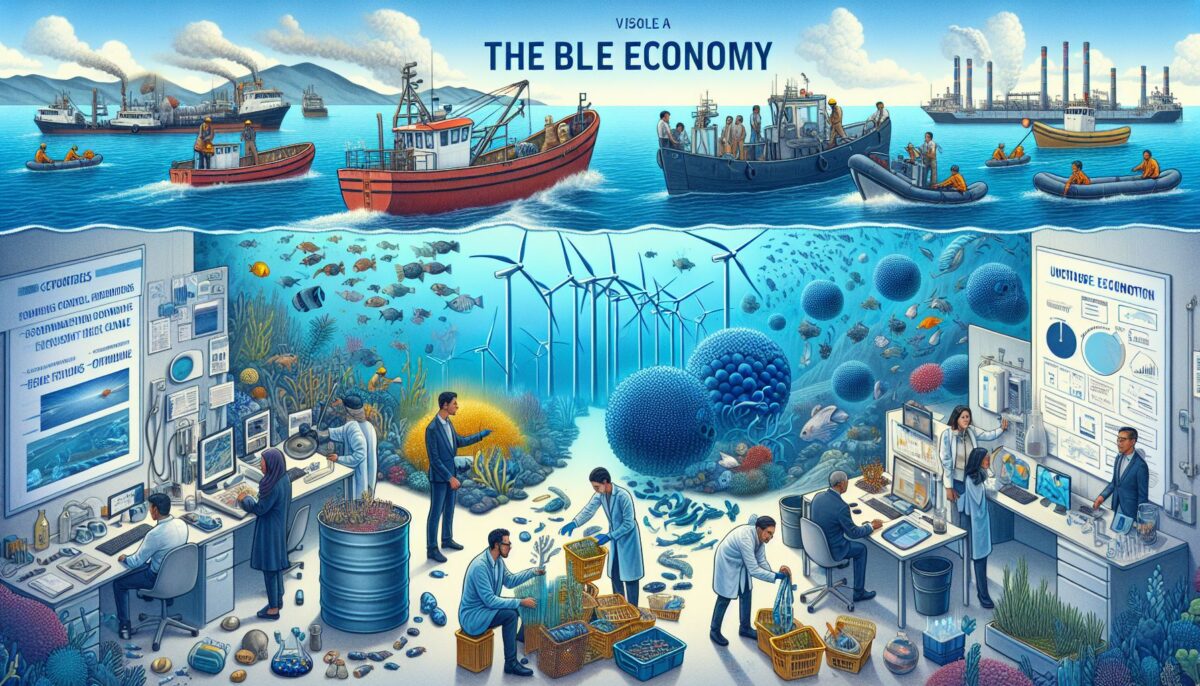
The “blue economy” is an emergent concept that recognizes the seas and oceans as drivers for the economic growth of coastal and island countries, and even beyond. It encompasses a wide array of economic sectors and activities, from fisheries to tourism, maritime transport to offshore energy. But what exactly is the blue economy, how does it contribute to sustainable development, and what challenges does it pose?
What is the Blue Economy?
The blue economy refers to the sustainable use of ocean resources for economic growth, improved livelihoods, and jobs while preserving the health of the ocean ecosystem. It includes established sectors such as fisheries, tourism, and maritime transport, but also new and emerging activities like offshore renewable energy, aquaculture, deep-sea mining, and marine biotechnology.
Fisheries and Aquaculture
Fisheries and aquaculture represent traditional pillars of the blue economy. They provide nutritional food to billions of people and livelihoods to millions worldwide. Sustainable fisheries and modern aquaculture practices can help meet the growing demand for protein without compromising marine ecosystems.
- FAO. “The State of World Fisheries and Aquaculture.” http://www.fao.org/3/ca9229en/ca9229en.pdf
Marine Renewable Energy
With an increasing need for renewable energy sources, the blue economy looks to the ocean for solutions. Harnessing tidal and wave energy has the potential to provide a stable source of clean energy.
- IRENA. “Renewable Energy Technologies for Blue Economy.” https://www.irena.org/blueeconomy
Tourism and Recreation
Coastal and maritime tourism – the largest segment of the blue economy – represents a significant source of income and employment for many nations. However, it needs to be managed responsibly to ensure the conservation of marine environments.
Shipping and Trade
Maritime trade is the backbone of globalization and international trade, with the vast majority of global trade by volume being carried by sea. Ports, shipping lanes, and shipbuilding all play a role in the blue economy, providing vital connections between markets.
The Sustainable Development Aspect
The sustainable aspect of the blue loan economy is aligned with the United Nations’ Sustainable Development Goals (SDGs), particularly SDG 14 which aims to “conserve and sustainably use the oceans, seas and marine resources for sustainable development.” Sustainable management and protection of marine and coastal ecosystems are of utmost importance for maintaining the productivity and biodiversity of the oceans.
- United Nations. “Sustainable Development Goals.” https://sdgs.un.org/goals
Challenges within the Blue Economy
While the blue economy presents major opportunities, it is not without its challenges. Here are some of the key issues that need to be tackled:
Overfishing and Resource Depletion
Overfishing continues to be a threat to marine biodiversity and food security. Effective regulation and international cooperation are needed to ensure sustainable fishing practices.
Pollution and Marine Debris
The oceans are increasingly being polluted with plastics, chemicals, and other waste from human activities. The effects of this pollution are far-reaching, affecting marine life and human health.
Ocean Acidification and Coral Bleaching
The increase in carbon dioxide emissions is leading to higher ocean acidity, which affects coral reefs and threatens marine biodiversity. Coral bleaching is already a visible consequence of a warming ocean due to climate change.
Climate Change and Rising Sea Levels
As global temperatures increase, sea levels rise, posing a threat to low-lying island nations and coastal communities. Additionally, the increase in the frequency of extreme weather events brings about challenges for shipping and maritime infrastructure.
Ensuring Fair Growth
While the blue economy can help propel economic growth, it needs to be inclusive. Ensuring small-scale fishers and coastal communities can benefit is essential for fair development.
Towards a Sustainable Blue Economy
To truly harness the potential of the blue economy, a range of strategies and policies is required. Here’s what that path might include:
Integrated Ocean Management
Governments must collaborate to manage their seas and oceans holistically, balancing conservation objectives with the need for economic development.
Sustainable Maritime Transportation
Ships and ports must be cleaner and more efficient to reduce their environmental footprint. Innovations in shipping and port infrastructure can lead to more sustainable maritime trade.
Investment in Marine Research and Innovation
Further study of the seas and investment in marine technology can enhance our understanding of marine ecosystems and lead to better management and exploitation of marine resources.
Strengthening Coastal Resilience
By investing in infrastructure that can handle rising sea levels and extreme weather, and by restoring coastal ecosystems like mangroves, nations can protect shorelines and mitigate the effects of climate change.
Involving Local Communities
Local communities must be engaged in the blue economy, ensuring that their livelihoods are improved, and their knowledge is utilized in managing marine and coastal resources.
Conclusion
The blue economy offers a visionary approach to supporting economic growth, fostering innovation, and improving livelihood.
Maintaining the health of marine ecosystems is a prerequisite for a sustainable blue economy. This vision for economic growth and environmental stewardship requires cooperation among nations, industries, and communities. It holds the promise of a future where economic prosperity goes hand in hand with the conservation of our blue planet’s precious resources.
