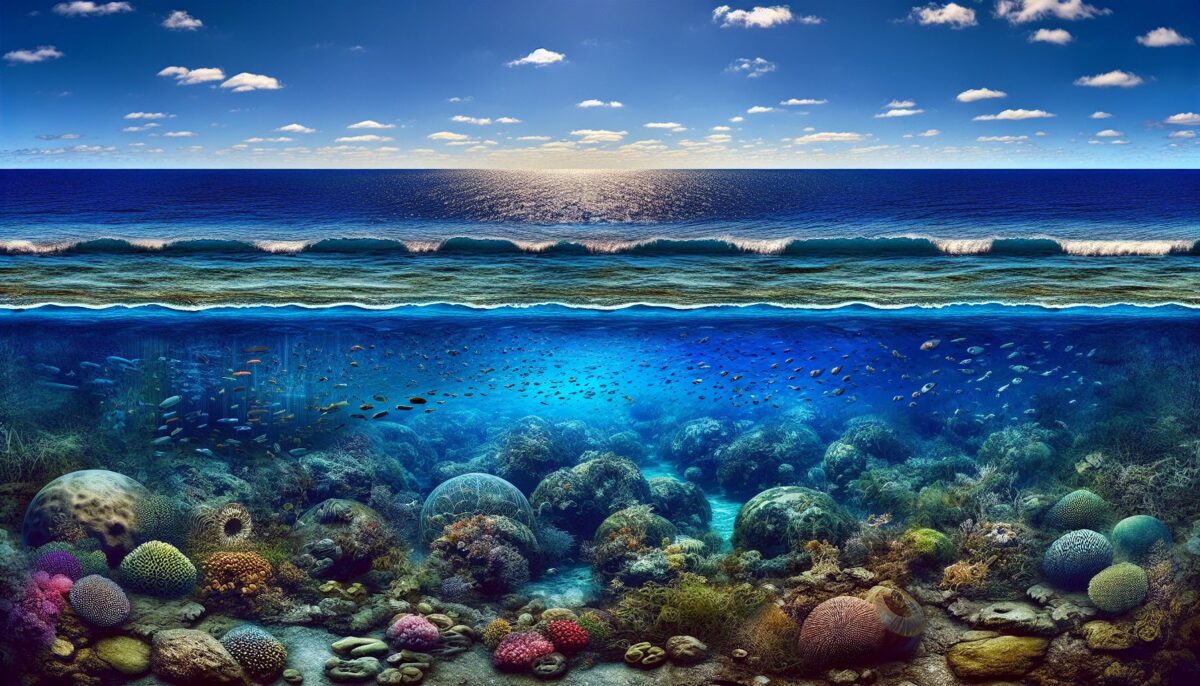
The ocean is the heart of our planet, and its pulse is felt through the rhythmic ebbing and flowing of tides. Understanding tides is not just for sailors and fishers; it’s crucial for everyone as tides influence maritime trade, coastal ecosystems, and even the future of our shorelines. In this deep dive into the world of tides, we will explore how they’re formed, their environmental implications, and their significance to human activities.
What Are Tides?
Tides are the long-period waves that roll around the planet as the ocean is “pulled” back and forth by the gravitational forces exerted by the moon, and to a lesser extent, the sun. When the highest part, or crest, of the wave reaches a particular location, we experience high tide. Conversely, when the lowest part, or trough, arrives, it’s low tide.
Gravitational Pull and the Tidal Dance
The bulk of tidal effects are due to the moon’s gravitational pull. As the earth and moon orbit around their common center of mass, the moon’s gravity tugs at the earth’s water. This action causes the water to bulge out in the direction of the moon. A second bulge occurs on the opposite side of the earth, due to the centrifugal force of the earth’s rotation. The areas under these bulges experience high tides.
The sun also plays a role, but its effect is less because, while it has a much stronger gravitational force than the moon, it is also much farther away from the earth. When the sun, moon, and earth are all in a line (during full or new moons), the tidal effects are strongest, leading to what we call spring tides. When the sun and moon are at right angles relative to the earth (during the moon’s first and last quarters), we experience neap tides, which are less extreme.
The Environmental Impact of Tides
Tidal Ecosystems: Estuaries and Intertidal Zones
The ebb and flow of tides create unique environments such as estuaries and intertidal zones. These areas are home to resilient species that have adapted to the changing water levels. Estuaries – where freshwater meets the sea – act as nurseries for many marine species and are vital for maintaining biodiversity. Intertidal zones expose organisms to the air and sunlight at low tide and to the nutrient-rich waters at high tide.
Tidal Flats and Wetlands
Tidal flats and wetlands are buffer zones that protect shorelines from storm surges. They act as sponges, soaking up excess water and providing habitats for wildlife. These areas also serve as effective carbon sinks, helping in the fight against climate change.
Tides and Human Activities
Navigation and Shipping
Mariners have to account for tides when navigating the seas. The tides determine when a ship can enter or leave the port, dictate the draft of vessels that can safely pass over shoals, and sometimes even determine the speed of the sea travel, as going against a strong tide can be incredibly inefficient.
Coastal Management and Engineering
Engineers designing coastal infrastructure must understand tides to prevent erosion and flooding. Breakwaters, sea walls, and tide gates are all engineered with tidal data to mitigate potential damage from high tides and storm surges.
Renewable Energy: Tidal Power
One of the promising sources of renewable energy comes from harnessing the power of tidal movements. Tidal energy is predictable and consistent, unlike solar and wind energy, which makes it an especially appealing green energy source. Areas with high tidal ranges are especially suitable for tidal energy farms.
Tides’ Challenge: Climate Change
Rising Sea Levels and the Role of Tides
As climate change leads to rising sea levels, the high tides become higher, and the low tides become less low. This increase in tidal ranges can exacerbate coastal flooding, leading to more frequent and severe “sunny day” floods, particularly in low-lying areas.
Coastal Erosion
Higher sea levels, together with the increased intensity of storms due to global warming, result in more significant wave action during high tides, leading to accelerated coastal erosion. This process can destroy habitats, increase saltwater intrusion, and lead to the loss of property and infrastructure.
The Measurement and Prediction of Tides: A Scientific Look
Tidal Observations: Gauges and Satellites
Historically, tidal predictions were made using tidal gauges – instruments that measure the rise and fall of tides. Today, advances in satellite technology have revolutionized the precision with which we can observe and forecast tides globally.
The Study of Tides: Hydrography and Oceanography
Hydrography, the science of mapping bodies of water, is essential for safe navigation and the efficient operation of ports and harbors. Oceanography, which covers a broader range of sea studies, includes the analysis of tides in understanding ocean currents and the large-scale movement of water.
Preserving Our Tidal Heritage
Marine Protected Areas and Conservation Efforts
To combat the negative effects of human activity on tidal regions, governments and organizations establish Marine Protected Areas (MPAs) to conserve marine life and ecosystems. MPAs can help to preserve tidal flats, mangroves, and coral reefs, which are crucial for the health of our oceans.
Public Awareness and Education
Increasing public awareness about the importance of tides and their associated ecosystems is vital. Educational programs and citizen science projects can involve the community in monitoring and protecting these dynamic and valuable environments.
Conclusion: The Continuing Importance of Understanding Tides
Tides are far more than just the rise and fall of sea levels. They shape our coastlines, influence weather patterns, and affect the lives of countless marine organisms. As we navigate the challenges posed by climate change and increased human impact on natural systems, understanding and respecting the tides is critical.
While we have learned much about tides, there remains much to explore. From the potential of tidal energy to the intricate ways tides interact with marine ecosystems, the future of tide-related research is as deep and vast as the oceans themselves.
Sources
- NOAA’s National Ocean Service (https://oceanservice.noaa.gov/facts/tides.html) – Information on tides, navigation, and coastal management.
- Intergovernmental Panel on Climate Change (https://www.ipcc.ch/) – Reports on sea-level rise and the impact on tidal systems.
- Marine Renewable Energy Guides – Tidal Energy (http://www.marineenergyguides.org/) – A guide on tidal energy and its potential.
Understanding the movement of tides is not just about scientific curiosity; it’s about safeguarding our coastal communities, ecosystems, and economies. By continuing to study and respect the ebb and flow of our global tides, we can better protect and utilize the vast resources that the world’s oceans have to offer.
