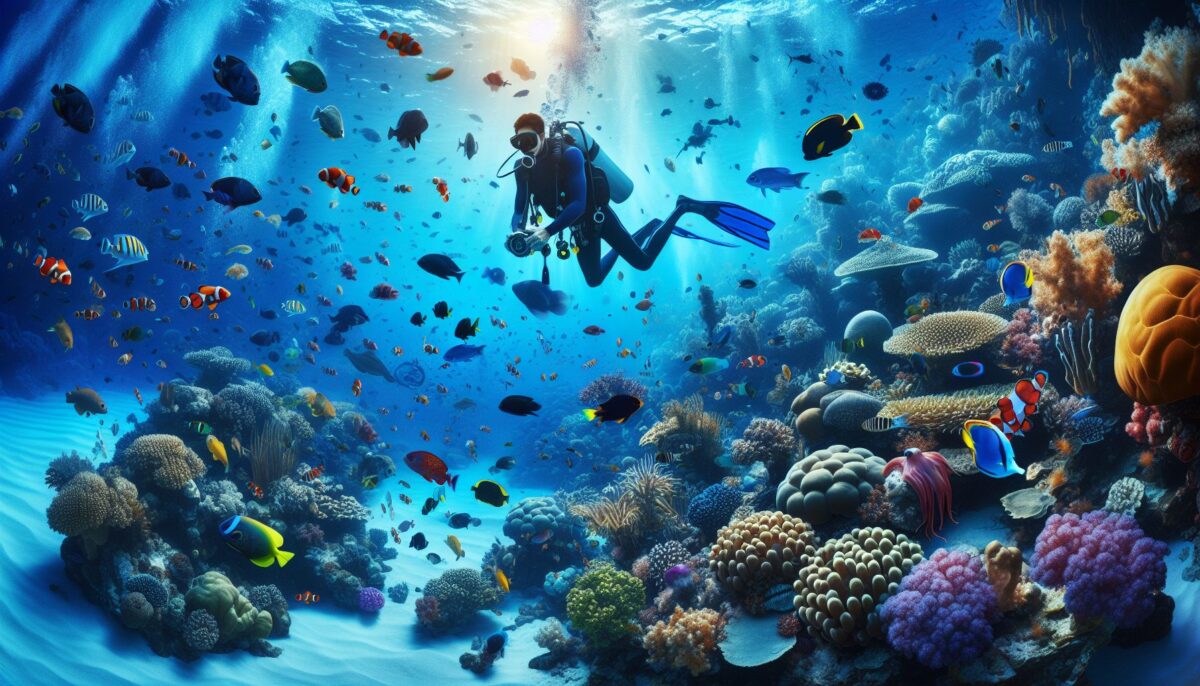
There’s a lot meets the eye when it comes to the ocean. Spanning over more than 70% of the Earth’s surface, oceans house more than just water – they’re biodiversity hotspots, climate change indicators, and sources of subsistence for millions around the world. So this is our invitation to journey deep into the mysterious realm of the ocean. Let’s unravel its secrets and understand its incredible complexities.
Oceans: The Lifeline of the Planet
Imagine a world without the ocean. That’ll surely take the wind out of the sails! It’s the oceans that pump the heart of planetary life. They regulate temperature 1, produce over half the world’s oxygen 2, and provide homes to a vast array of species. But what’s even more fascinating is their innate capacity to capture and store the bulk of the planet’s carbon dioxide, playing an instrumental role in atmospheric content and climate change.
Delving into the Ocean Depths
The depths of the ocean aren’t accessible to the average person. It takes just the first hundred meters to reach the sunlight zone, where the majority of marine life resides. Go deeper, and we reach the twilight zone, where light barely penetrates, and the inhabitants are often bioluminescent. The midnight zone follows, a region plunged in perennial darkness. The trenches and plains of the abyssal and hadal zones represent the deepest parts of the ocean, over 6,000 meters below sea level. Each layer reveals a fascinating biosphere, enhanced by incredible survival adaptations.
Ocean Currents: The Aquatic Highways
Ocean currents, the aquatic highways, hurdle graciously, shaping the world’s climate. Cold and warm currents together help regulate global temperatures and control the world’s weather systems. Currents carry nutrient-rich cold water from the ocean floor to the surface, supporting large populations of marine organisms. In essence, these currents shape marine ecosystems.
The Strait Talk: Connecting Seas and Oceans
Straits play essential roles in bridging large water bodies. Vital to international marine trade and naval routes, straits such as the English Channel, the Strait of Hormuz, and the Strait of Malacca are strategic points of maritime significance 3.
Tides and Tidal Energy
Tides, yet another fascinating character in the ocean’s play, are created by the gravitational forces of the moon and the sun. The constant movement and massive kinetic energy of ocean tides have driven innovations in renewable energy sources in the form of tidal energy, paving the way for sustainable energy harvesting solutions.
Marine Life: A Biodiversity Treasure Trove
The delicate dance of plankton, the gentle sway of algae, the mesmerizing colors of coral reefs, and the mysterious depths teeming with life. The ocean hosts a stunning biodiversity showing. Much of it remains untouched and unexplored.
Shorelines, Beaches, and Human Impact
Beaches and shorelines are perhaps the most accessible parts of the ocean for most people and, unfortunately, the most impacted by human activities. Coastal erosion, pollution, litter, and oil spills have significantly damaged these ecosystems. However, efforts and actions are underway worldwide to conserve and restore these critical habitats, often involving community participation.
From Oil Rigs to Offshore Drilling
The quest for black gold has led humans to the remotest parts of the ocean. Offshore drilling, while economically lucrative, raises environmental and safety concerns. Oil spills, disrupting marine life, leaks, and explosions are but a few of the significant risks associated with offshore drilling.
The Majesty of the Blue Economy
The ocean resources offer opportunities to develop a sustainable blue economy encompassing maritime trade, shipping, ports, as well as renewable energy, fisheries, and aquaculture. Sustainable management of ocean resources is key to global development, food security, and battling climate change.
Our Role in Ocean Conservation
Oceans are brilliant waltzers; they give and take. They’re the source of joy, amazement, often fear, and more recently – despair. Our actions significantly impact the ocean, and its future depends on our understanding of its nuances and our willingness to instigate positive change. Protecting the ocean must include policies, practices, and, most importantly, a globally conscious mindset that acknowledges the infinite value generated by these amazing bodies of water.
In conclusion, the mysteries of the ocean reveal themselves at their own pace. They are elusive, profoundly deep, and intricate in nature. So, rather than attempting to dominate and exploit these natural wonders, perhaps it’s time to relax, understand, admire, and most importantly, respect them. After all, the ocean’s health is reciprocally tied to our own. Let us delve into the depths of the oceanic world, understand its vital role on Earth, and recognize our duties as stewards of these aquatic life sources.

Sources:
1. National Oceanic and Atmospheric Administration: Ocean Currents
2. National Geographic: Oceans – Source of half Earth’s oxygen
3. Maritime Executive: The World’s Most Important Maritime Chokepoints
