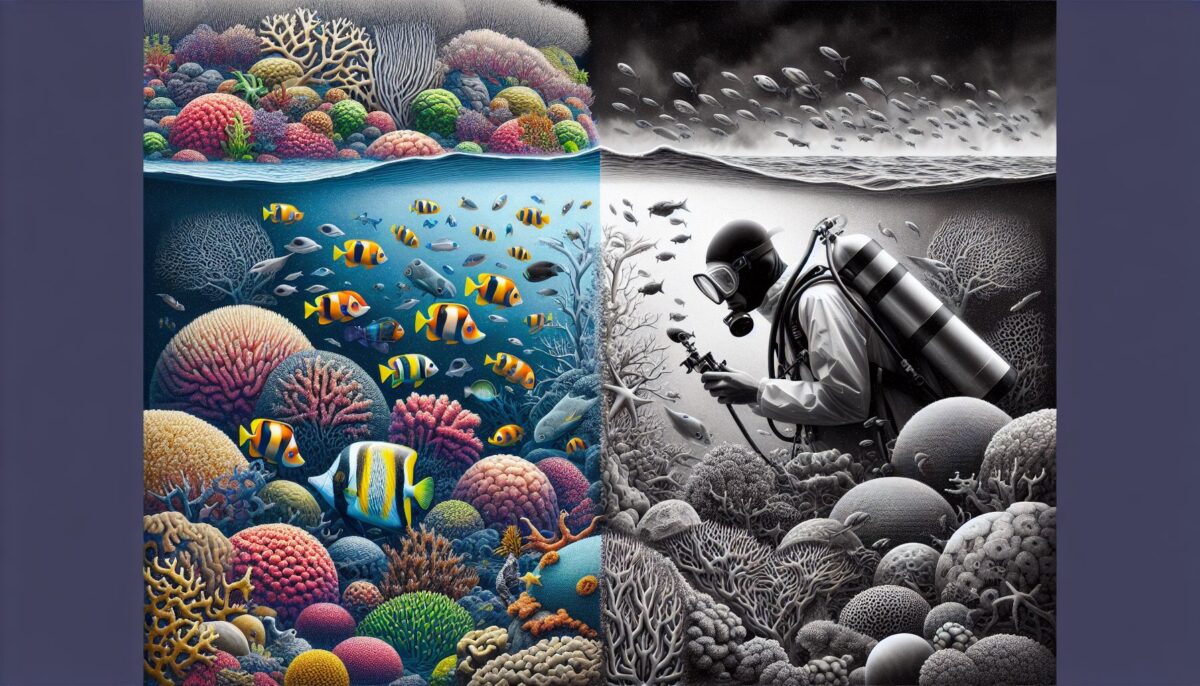
As caretakers of our planet, understanding processes such as ocean acidification can provide a clear insight into the intricacies of the Earth’s systems and highlight our responsibility to maintain and protect them. Ocean acidification – a key consequence of the increase in anthropogenic carbon dioxide emissions – has a dramatic effect not only on marine life but also on global climate patterns, and directly or indirectly affects us all.
Ocean acidification refers to the ongoing decline in pH levels in the Earth’s oceans, caused primarily as a result of our relentless release of carbon dioxide (CO2) into the atmosphere. According to the National Oceanic and Atmospheric Administration[^1^], about one-third of the CO2 we produce by burning fossil fuels, changing land uses, and other industrial processes ends up absorbed by the oceans. This uptake of CO2 triggers chemical reactions resulting in a more acidic ocean environment.
The processes behind ocean acidification and its impact on both marine life and global climate patterns are complex and fascinating, warranting thorough exploration and understanding.
The Chemistry Behind Ocean Acidification
Whenever CO2 is absorbed into seawater, a series of chemical reactions occurs resulting in an increase in the concentration of hydrogen ions, which leads to the seawater becoming more acidic. With this increase in hydrogen ions, there’s a decrease in the number of carbonate ions accessible. This is unfortunate since carbonate ions are a primary building block used by numerous marine organisms like corals, shellfish, and some types of plankton to create their shells and skeletons.
The Woods Hole Oceanographic Institution[^2^] has done significant work in researching the impacts of these chemical changes. Their findings reveal that the acidity of the ocean surface has increased by approximately 30% over the last 150 years, linked directly to anthropogenic CO2 emissions.
Impact on Marine Life
As mentioned earlier, increased ocean acidity directly impacts marine organisms that rely on carbonate ions to form their skeletons and shells, putting them at risk. A number of studies, such as this one by the National Center for Biotechnology Information[^3^], have shown that coral reefs are especially vulnerable to these changes. Reefs support a multitude of marine life, acting as a home and nursery to 25% of all marine species despite only accounting for less than 0.1% of the world’s ocean area. Therefore, damage to these critical ecosystems could potentially result in a domino effect, disrupting biodiversity and resulting in the loss of numerous marine species.
Apart from corals, shellfish like mussels, clams, and oysters will also struggle to produce their shells in more acidic water, making them thinner and more fragile. For organisms like pteropods – tiny snails whose shells dissolve in acidic sea water – the risk of extinction is imminent. Being part of the larger food chain, the decline in their populations will undoubtedly have a ripple effect on the broader marine ecosystem.
What Can We Do?
Understanding the impacts of ocean acidification presents us with a chance to take urgent action. It starts with reducing our carbon emissions, advocating for sustainable practices, and supporting policy changes that prioritize the health of our oceans.
Harnessing renewable energy sources, improving industrial and agricultural practices, conserving forests, and making conscious choices in consumption and waste management can all play a part in mitigating the adverse impacts of ocean acidification. Our efforts, combined with increased scientific research and technological innovation, can help curb this alarming trend and ensure the preservation of our precious oceans for future generations.
In conclusion, ocean acidification is a silent crisis – invisible to most of us, but one that spells catastrophe for our oceans and planet. As we venture on into the future, let’s commit to taking the necessary action to mitigate its advance now and in the years to come.
[^1^]: NOAA PMEL Carbon Program: What is Ocean Acidification?
[^2^]: Woods Hole Oceanographic Institution: Ocean Acidification
[^3^]: NCBI: Impacts of Ocean Acidification on Coral Reefs and Other Marine Calcifiers.
