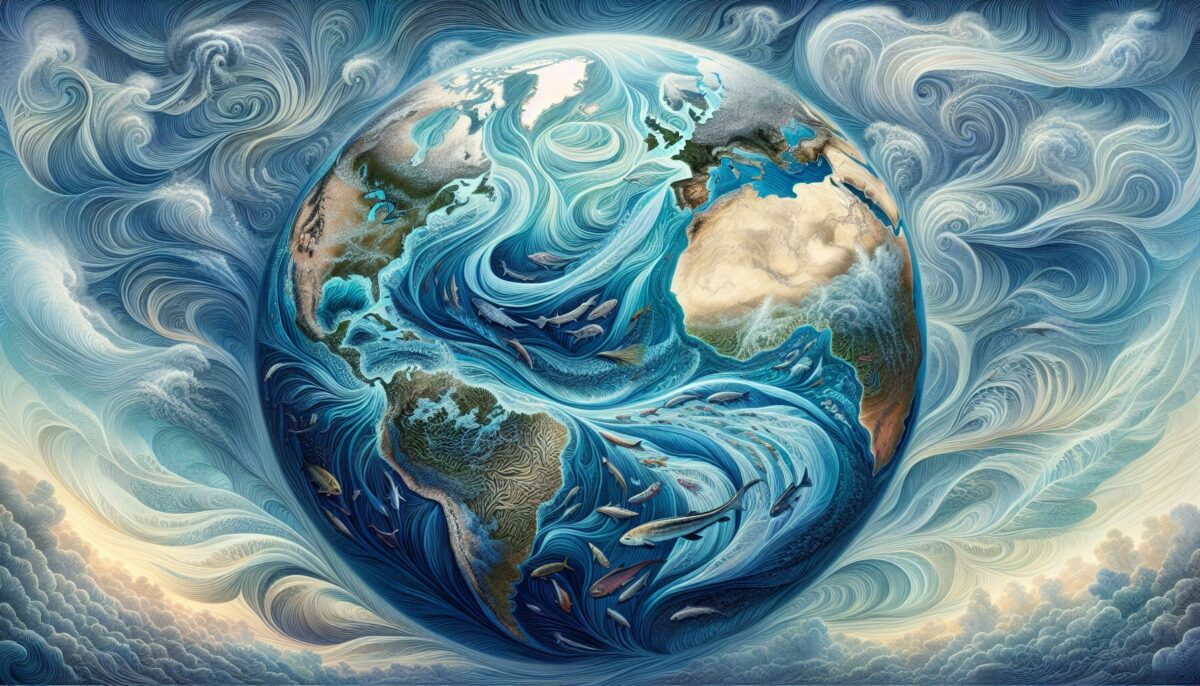
The ocean is nothing short of a marvel—a boundless expanse that has intrigued humans for millennia. Among its many wonders are ocean currents: vast, river-like flows of water that traverse thousands of miles across the Earth’s surface and depths. These currents play a pivotal role in regulating the planet’s climate, shaping marine ecosystems, and influencing human activities. In this comprehensive article, we will delve deep into the world of ocean currents, exploring their mechanisms, importance, and the challenges they face in a rapidly changing world.
Understanding Ocean Currents
Ocean currents are continuous, directed movements of seawater. They are generated by a variety of factors, including wind, temperature differences, salinity gradients, the rotation of the Earth (Coriolis effect), and tides. Currents are categorized into two main types: surface currents and deep-water currents.
Surface Currents
Surface currents constitute about 10% of all the water in the ocean and are primarily driven by the wind. These currents are most pronounced at depths of less than 400 meters and are largely responsible for the redistribution of heat from equatorial regions to the poles—a process critical to the Earth’s climate system.
Deep-Water Currents
Making up the other 90% of the ocean, deep-water currents are driven by differences in water density, which is affected by temperature (thermohaline) and salinity. This is often referred to as the “global conveyor belt,” a deep-water current system that circulates water around the globe and can take centuries to complete a single loop.
The Significance of Ocean Currents
Climate Regulation
One of the primary roles of ocean currents is in the regulation of the world’s climate. Currents act like a giant conveyor belt, transporting warm water from the equator towards the poles and cold water from the poles back to the tropics. This not only moderates global climate patterns but also influences weather systems.
Nurturing Marine Life
Marine life thrives on the constant movement of water. Ocean currents bring nutrients from the deep to the surface, supporting the growth of phytoplankton—the base of the marine food chain. They also facilitate the migration of species and the dispersal of organisms across different parts of the marine environment.
Human Impact
Currents are paramount to maritime navigation and shipping, influencing the design of shipping routes to maximize speed and fuel efficiency. They also play a role in fisheries, as areas enriched by upwelling currents tend to be particularly abundant in marine life, and thus, attract commercial fishing activities.
Threats to Ocean Currents
While ocean currents are robust and nature-driven, they are not immune to human-induced climate change. The melting of polar ice caps and the influx of freshwater into the oceans may alter the delicate balance of temperature and salinity that drives the global conveyor belt. Such shifts could lead to changes in the strength and direction of currents, severely affecting global climate and weather patterns, as well as marine biodiversity.
Monitoring and Preserving Ocean Currents
Given the importance of ocean currents, significant efforts are made to monitor and understand these massive flows of water. Oceanographers use various tools, including satellites, buoys, and underwater drones, to gather data on current speed, direction, and temperature.
Marine Protected Areas
To conserve the marine ecosystems dependent on ocean currents, marine protected areas (MPAs) have been established around the world. These areas help safeguard biodiversity and ensure sustainable use of marine resources by regulating human activities like fishing and tourism.
The Role of International Agreements
International agreements, such as the United Nations Convention on the Law of the Sea (UNCLOS), also help govern the use of the ocean and its resources. They provide frameworks for responsible oceanic exploration, shipping, fishing practices, and the protection of the marine environment.
Technological Advancements
The development of newer, more efficient technologies can also help minimize the impact on ocean currents. Innovations in shipping design, renewable energy sources like tidal and wave energy, and more sustainable fishing practices can reduce the human footprint on oceanic systems.
Conclusion
Ocean currents are an integral component of the Earth’s climate system and marine ecosystems. Their effects stretch far and wide, influencing weather, supporting marine life, and driving human activities. As we navigate the challenges posed by climate change, it’s imperative that we continue to study and protect these vital currents to ensure the health of our planet.
The complexity and magnitude of ocean currents cannot be understated, nor can their importance in the grand narrative of our planet’s ecological and climatological story. By understanding and respecting these powerful flows, we not only safeguard our environment but also secure a sustainable future for generations to come.
Sources
- National Oceanic and Atmospheric Administration (NOAA) – Ocean Currents
- Intergovernmental Oceanographic Commission of UNESCO – The Role of Ocean Currents in Climate
- United Nations Convention on the Law of the Sea (UNCLOS) – Division for Ocean Affairs and the Law of the Sea
As we approach the end of this exploration into the fascinating world of ocean currents, we must remember that the oceans do not exist in isolation. They are interconnected with the atmosphere, the land, and all living creatures, including ourselves. Whether we live near the coast or in a landlocked region, the health of ocean currents ultimately impacts us all. It’s our collective responsibility to cherish and protect this mesmerizingly complex and life-sustaining force—our global ocean conveyor belt.
