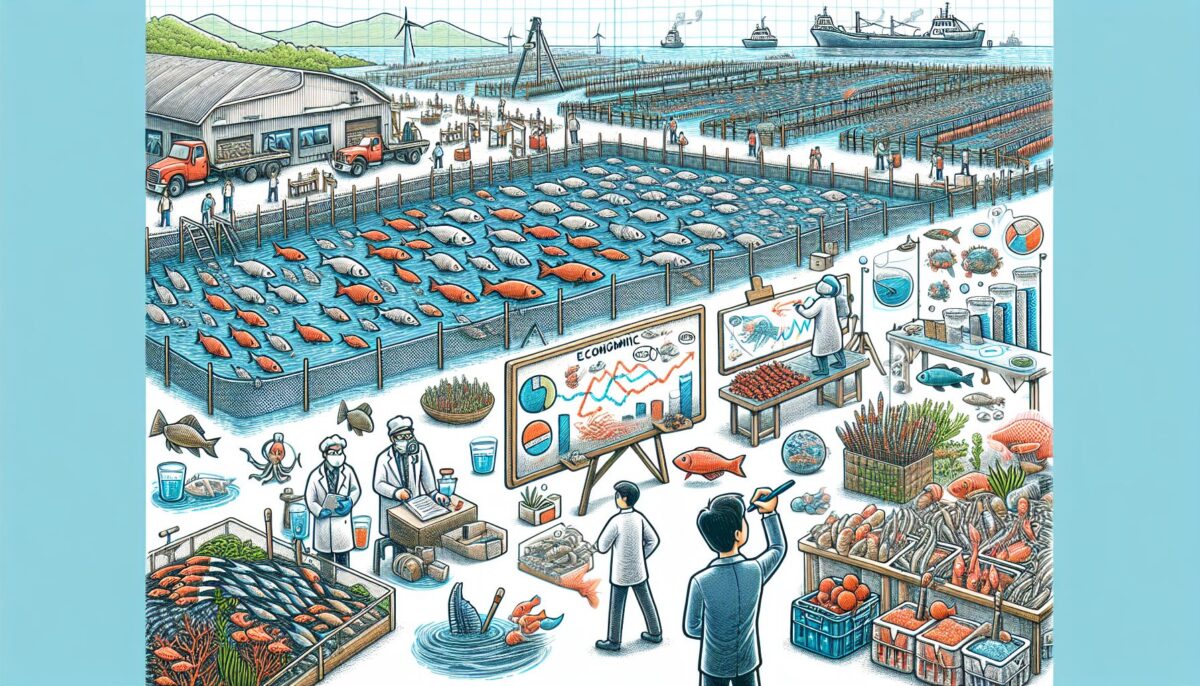
Humans have depended on the bounty of the sea since the dawn of civilization. Aquaculture, also known as aquafarming, is a significant part of this reliance. Aquaculture refers to the cultivation of aquatic organisms and the management of aquatic habitats under controlled conditions. It involves cultivating freshwater and saltwater populations under controlled conditions, and can be contrasted with commercial fishing, which is the harvesting of wild fish.
According to FAO, about half of the fish consumed globally is derived from aquaculture. The range of species involved, the methods used, and the impact on the environment are all subjects of great interest, and areas in which further research is continuously being carried out.
History and Evolution of Aquaculture
Aquaculture has ancient roots, dating back to early civilizations where people would trap fish in natural pools and nurture them until they were ready for consumption. The ancient Chinese, Egyptians, and Romans all practiced aquaculture. It was also a practice common among indigenous cultures in the Pacific Northwest and South America.
In the 19th century, with the advent of Industrialization, the demand for food led to advances in aquacultural methods. According to a study published by the University of Washington, the U.S. began promoting aquaculture through government policy as early as in the 1890s. Now, it’s an industry of unprecedented scale, providing an enormous portion of the world’s fish supply.
Importance and Impact of Aquaculture
Aquaculture’s importance lies in its ability to supplement the dwindling resources from wild catch. It also serves to meet the growing demand for seafood as generic population increases. Since wild fisheries are finite and overfishing creates damaging effects on ecological balance, aquaculture is seen as an efficient solution to deal with these issues.
However, the environmental impact of aquaculture is a matter of serious consideration. Intensive farming of fish and other sea creatures can lead to issues such as water pollution, disease outbreaks, and the escape of farmed species into the wild, where they can compete with or interbreed with wild populations.
Sustainable Aquaculture: The Shift to Organic and Eco-friendly Practices
The growing awareness of the ill effects of conventional practices has led to a shift in the industry towards organic and sustainable methods. These methods aim to minimize environmental impact by controlling waste production and avoiding the use of chemicals and non-indigenous species.
Sustainable aquaculture aims to create a productive harmony between cultivated species and the environment, with benefits for both the human community and the natural world it cohabits. This includes measures like polyculture (cultivating more than one species together), integrated multi-trophic aquaculture (IMTA), where the waste from one species becomes the nourishment for another, and closed recirculating systems which ensure that effluents are filtered out and not released into the environment.
Aquaculture for the Future
In the age of global warming with sea-level rise and acidification threatening marine biodiversity, aquaculture holds the potential to preserve the livelihoods of millions while also contributing to food security.
However, it’s important that the practice is managed sustainably. With the right measures taken, aquaculture can be a boon and not a bane to the health of our seas.
The ultimate aim should be to structure aquaculture in such a manner that its impacts on the surrounding ecosystems are neutral or better. The promising element is that a number of cutting-edge technologies and breakthrough research are being conducted in the field to improve efficiency and minimize environmental impacts.
To learn more about the latest advances in sustainable aquaculture, visit the World Aquaculture Society website.
In conclusion, aquaculture is a promising and vital industry that needs to be nurtured. But like all things, it must be handled with care, understanding, and a commitment to sustainability. The well-being of our planet depends on it.
By appreciating the significance and challenges of aquaculture, we can understand its potential influence on the future of our species and the aquatic world we depend upon. And with informed knowledge, we can also contribute in our individual capacities, whether by making sustainable seafood choices or supporting aquaculture research and initiatives.
