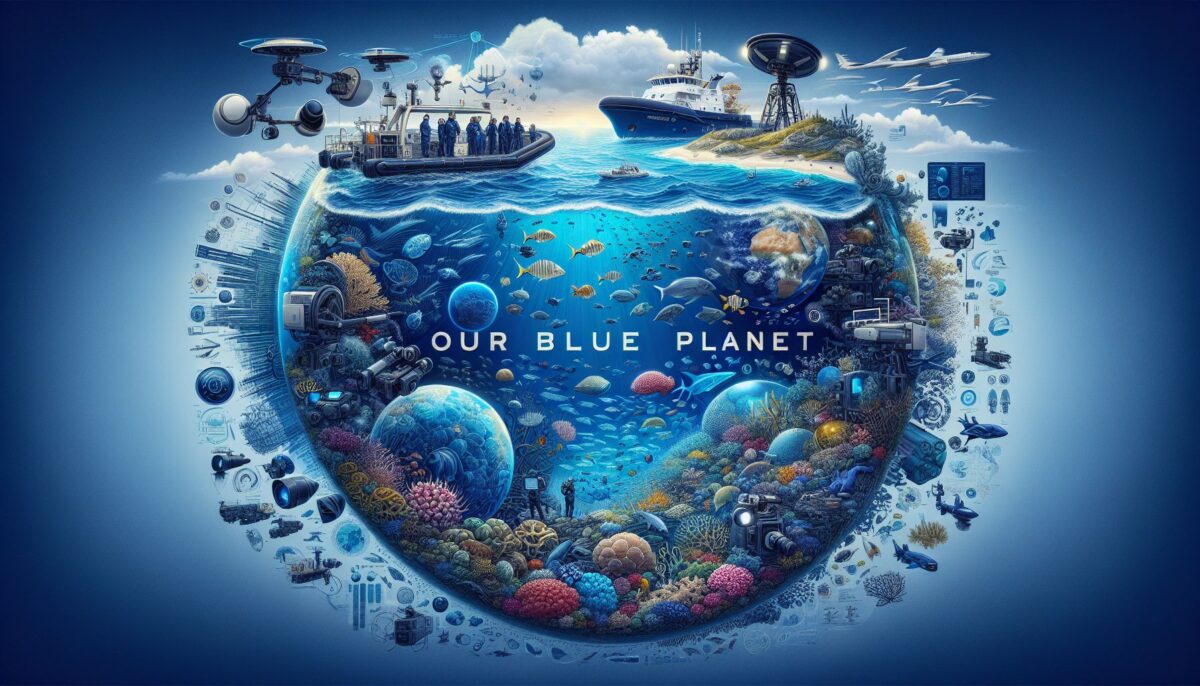
The ocean is a vast and wondrous part of our planet, covering more than 70% of the Earth’s surface. It is a source of life, a hub for biodiversity, and a key player in the global climate system. Yet, despite its importance to life on Earth, much of the ocean remains a mystery. Oceanography, the scientific study of the ocean, aims to unravel these mysteries by exploring its physical, chemical, biological, and geological properties. This article delves into the world of oceanography, its subdisciplines, and its pivotal role in addressing modern challenges such as climate change, marine pollution, and the sustainable use of ocean resources.
Understanding Oceanography
Oceanography is an interdisciplinary science that combines elements of biology, chemistry, physics, and geology to understand the complex interactions within the marine environment. The study of oceanography is crucial for several reasons:
- Climate Regulation: The ocean plays a vital role in regulating the Earth’s climate by absorbing and redistribating heat from the sun.
- Marine Biodiversity: It is home to a multitude of organisms, from the microscopic plankton to the massive blue whale.
- Economic Resources: The ocean is a source of food, energy, minerals, and other resources that are integral to the world’s economy.
- Environmental Health: Studying the ocean helps scientists monitor and mitigate environmental issues like pollution and acidification.
Subdisciplines of Oceanography
Oceanography can be divided into several subdisciplines, each with a specific focus:
- Physical Oceanography: Examines the ocean’s physical properties and dynamics, including waves, tides, currents, and ocean-atmosphere interactions.
- Chemical Oceanography: Focuses on the chemical composition and properties of seawater, as well as the biochemical cycles within the ocean.
- Biological Oceanography (or Marine Biology): Studies the diverse forms of life in the ocean, their ecological relationships, and the impact of environmental changes on marine organisms.
- Geological Oceanography: Investigates the structure and evolution of the seafloor, including plate tectonics, sedimentation, and the creation of oceanic features like trenches and ridges.
- Marine Geology: Concerns itself with the geologic features and processes of the seafloor, such as underwater volcanism and erosion.
- Marine Ecology: Looks at the relationships between ocean organisms and their environment, including the impact of human activities.
Oceanography’s Role in Addressing Global Challenges
Oceanography is not just an academic pursuit; it is also essential for addressing some of the world’s most pressing challenges.
Climate Change and Oceanography
The ocean is a major carbon sink, absorbing a significant portion of the carbon dioxide emitted by human activities. However, this comes at a cost: ocean acidification. As more CO2 dissolves in seawater, it lowers the pH, affecting calcium carbonate-dependent organisms like corals and shellfish. Oceanographers study these changes to predict their impacts and help develop mitigation strategies.
Marine Pollution and Its Mitigation
Marine pollution, from sources suchly plastic debris, oil spills and toxic chemicals, not only poses a threat to marine life but also impacts human health and economies. Oceanographers work to understand the pathways and fate of pollutants to improve waste management practices and devise clean-up measures.
Sustainable Use of Ocean Resources
As demand for seafood, new medications, and mineral resources grows, sustainable management of ocean resources becomes increasingly important. Oceanography helps in assessing fish stock levels, monitoring the impacts of aquaculture, and guiding responsible mineral extraction from the seafloor.
Ocean Exploration and Technology
Advancements in technology have expanded the frontiers of oceanography. Remotely operated vehicles (ROVs), autonomous underwater vehicles (AUVs), and deep-sea submersibles allow scientists to explore previously unreachable depths. Satellites and advanced sensors provide data on sea surface temperature, sea level rise, and other critical parameters.
Examples of Oceanography in Action
- Monitoring Sea Level Rise: By tracking changes in sea level, oceanographers can forecast the impacts on coastal communities and ecosystems, aiding in developing protection and adaptation strategies.
- Coral Reef Preservation: Studying the causes and effects of coral bleaching allows for the creation of conservation plans to protect these vital ecosystems.
- Fisheries Management: Assessing fish populations and their habitats helps establish fishing quotas and protected areas to prevent overfishing and support marine biodiversity.
Being Stewards of the Sea: Conservation and Policy
Oceanography not only advances scientific understanding but also informs policy and conservation efforts. Marine protected areas (MPAs), for example, are designed based on oceanographic research to safeguard critical habitats and species.
The Role of International Collaboration
The ocean knows no borders, making international collaboration essential. Organisations like the Intergovernmental Oceanographic Commission (IOC) of UNESCO and the International Maritime Organization (IMO) play critical roles in fostering cooperation among nations for ocean research, preservation, and safe navigation.
The Future of Oceanography
In the face of climate change and increasing human impact on marine environments, the role of oceanography is more important than ever. Innovative technologies and collaborative research initiatives continue to push the boundaries of our oceanic knowledge.
Challenges and Opportunities
The vastness and depth of the ocean provide both challenges and opportunities for future research. One major challenge is the need for sustained funding and public support. As climate change accelerates, there is an increasing urgency to understand and protect our marine environments.
Engaging the Public
Raising public awareness about the importance of the ocean and its ecosystems is crucial for the future of oceanography. Educational initiatives and citizen science projects can play a significant role in fostering a connection between the public and the ocean.
Conclusion
Oceanography is a critical science that has far-reaching implications for our understanding of the Earth, informing policies and practices that affect the future health of our planet. By studying the oceans, we gain insight into climate change, biodiversity, and the sustainable management of resources, preparing us to navigate the waves of change.
We must continue to invest in oceanographic research and cultivate an international, collaborative approach to protect our blue planet for generations to come.
Sources
- Intergovernmental Oceanographic Commission (IOC) of UNESCO. (n.d.). Retrieved from https://ioc.unesco.org/
- National Oceanic and Atmospheric Administration (NOAA). (n.d.). What is Oceanography? Retrieved from https://www.noaa.gov/education/resource-collections/ocean-coasts-education-resources/what-is-oceanography
- The Ocean Portal Team. (n.d.). Ocean Acidification. Smithsonian National Museum of Natural History. Retrieved from https://ocean.si.edu/ocean-life/invertebrates/ocean-acidification
