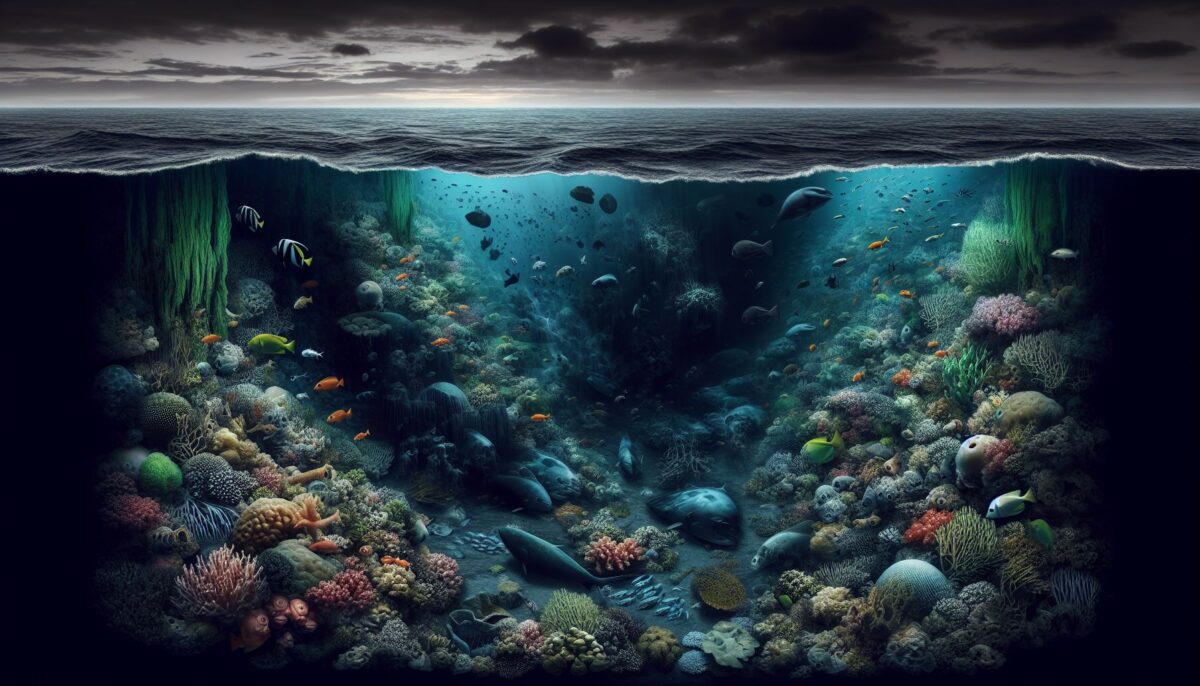
Ocean acidification, a term that might not be as widely recognized as climate change, is a silent crisis happening beneath the waves. It refers to the ongoing decrease in the pH of the Earth’s oceans, caused by the uptake of carbon dioxide (CO2) from the atmosphere. As our activities continue to release vast amounts of CO2, the ocean absorbs about a quarter of these emissions, leading to a series of chemical reactions that place marine life and ecosystems in jeopardy. In this deep dive, we’ll explore the intricacies of ocean acidification, its impact on marine biodiversity, and what we can do to mitigate its effects.
Understanding Ocean Acidification
Let’s begin with a basic understanding of how ocean acidification occurs. When CO2 is absorbed by seawater, it reacts with water to form carbonic acid, which in turn breaks down into bicarbonate ions and protons. The increase in protons reduces the pH of the ocean, making it more acidic.
markdown

CO2 (atmospheric carbon dioxide) + H2O (water)

-> H2CO3 (carbonic acid) -> HCO3^- (bicarbonate ion) + H^+ (proton)
This chemical reaction does not take place in isolation. As the concentration of hydrogen ions increases, it lowers the saturation state of calcium carbonate minerals, which are crucial for the formation of shells and skeletons in many marine organisms, including corals, mollusks, and some species of plankton.
The Consequences of Acidic Oceans
Ocean acidification has a multitude of ecological consequences:
- Coral Bleaching: Corals require calcium carbonate to maintain their structural integrity, and when they struggle to obtain it, it leads to coral bleaching and potential mortality.
- Marine Life Reproduction and Growth: The growth and reproductive systems of many fish and shellfish species are affected by lower pH levels.
- Food Web Disruption: Plankton forms the base of the marine food web, and their vulnerability to ocean acidification can have ripple effects throughout the entire ecosystem.
- Habitat Loss: Certain habitats, like coral reefs and oyster beds, are at risk of degradation or even collapse due to the changing chemistry of the ocean.
- Economic Impact: The fishing and aquaculture industries, vital for food security and employment for millions of people, are endangered by the shifts in species health and distribution.
The Science Behind The Changes
Many studies conducted over the recent decades have painted a grim picture of acidifying oceans. For example, according to a report by the National Oceanic and Atmospheric Administration (NOAA), the pH of surface ocean waters has fallen by 0.1 pH units since the beginning of the Industrial Revolution, representing approximately a 30% increase in acidity.
Marine species have varied responses to reduced pH levels, making it challenging to predict the precise outcomes. For example, while some species may be able to adapt to the changing conditions, others may suffer greatly, leading to a reduction in biodiversity.
The Impact on Coral Reefs
Coral reefs are among the most vibrant ecosystems on the planet and are particularly affected by acidification. They are not only biodiversity hotspots but also provide protection for coastal areas against storms and support fishing and tourism industries.
The skeletons of corals are formed by the accumulation of calcium carbonate (CaCO3). In more acidic conditions, the availability of carbonate ions decreases, impairing coral growth and leading to weaker structures. Scientists fear that continued acidification will eventually outpace the ability of corals to adapt and recover, leading to global coral reef decline.
The Human Connection
Human activities are directly linked with ocean acidification through the release of CO2. The combustion of fossil fuels, deforestation, and industrial processes contribute to the ever-increasing concentration of atmospheric CO2. The reliance on carbon-intensive energy sources is the primary culprit behind this issue.
Mitigating Acidification
Mitigation efforts require global cooperation and the reduction of CO2 emissions. Alternative energy sources such as wind, solar, and tidal energy must be harnessed to replace traditional fossil fuels. Afforestation and reforestation projects can also help absorb some of the excess CO2.
Local interventions, like marine protected areas (MPAs), can also foster resilience in marine ecosystems, providing refuges for species and habitats affected by acidification.
Adaptation Strategies for Marine Life
Ecosystems and species can sometimes adapt to changing conditions, but this depends on the rate and extent of change. Selective breeding programs in aquaculture and the development of acidification-resistant strains are potential ways to help buffer species against the impacts. Further research is essential to understand the capacity of marine organisms to adapt.
The Role of Research and Monitoring
Research is crucial for monitoring the progression of ocean acidification and its effects on marine ecosystems. Initiatives such as the Global Ocean Acidification Observing Network (GOA-ON) provide valuable data that can inform policy and conservation strategies.
Advanced technologies in hydrography and marine chemistry aid in the precise measurement of ocean pH and related variables. Continuous monitoring helps capture the long-term trends associated with acidification and other climate-related changes.
The Policy Perspective
Policymakers play a critical role in combatting ocean acidification. International agreements, like the Paris Agreement, aim to limit global temperature rise and implicitly CO2 emissions. Additionally, policies that directly address ocean health, such as regulations on overfishing and habitat destruction, contribute to the resilience of marine ecosystems.
National policies focusing on reducing carbon footprints and promoting sustainable practices in industries can halt the progression of acidification. Educational campaigns can also raise awareness and drive community action.
Moving Toward a Sustainable Ocean Future
The crisis of ocean acidification is both a significant environmental challenge and a wake-up call for humanity. It demands a cohesive response that balances socioeconomic needs with the urgency of ecological preservation.
By fostering sustainable practices, investing in green technology, and protecting vulnerable habitats and species, we can work towards maintaining the health and resilience of our oceans. The way we respond to this crisis will shape the future of marine ecosystems and the myriad of services they provide us.
It is our collective responsibility to ensure that the oceans, those vast and mysterious realms beneath the waves, continue to teem with life and remain a source of wonder for generations to come. The waves of change are upon us, and our actions today will chart the course for the future of our blue planet.
