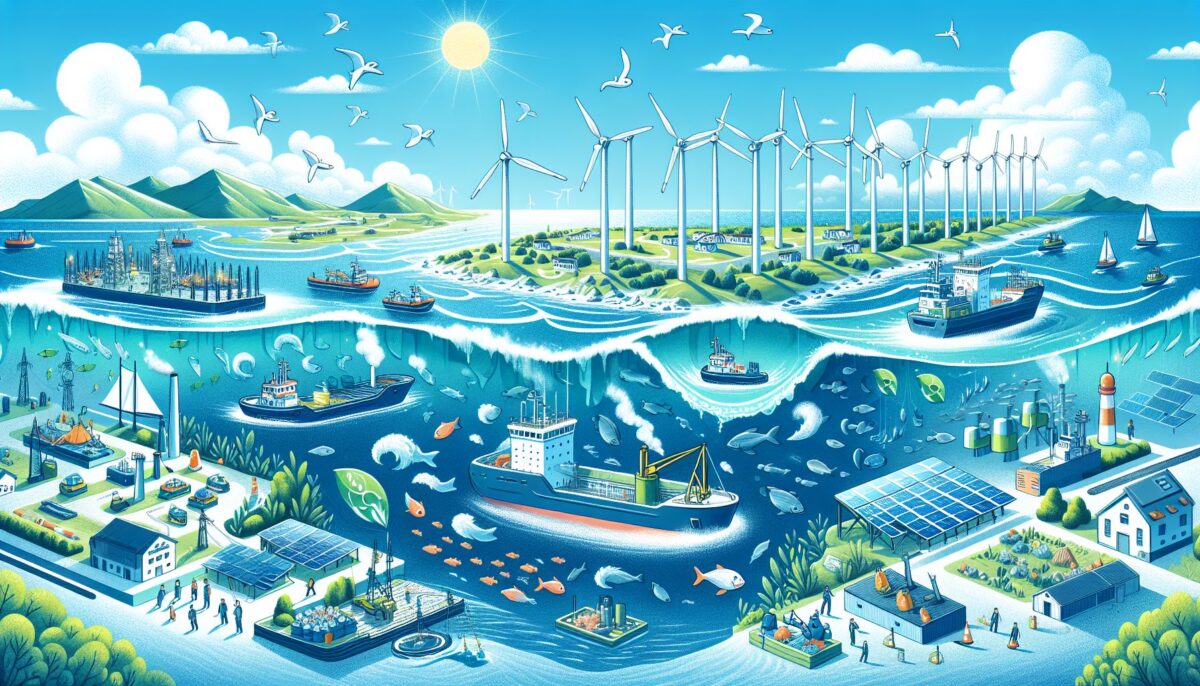
The blue economy encompasses economic activities that directly or indirectly take place in the ocean, exploit resources from the ocean, and provide goods and services to support these activities. As our planet is covered by over 70% water, the potential of the ocean’s bounty is immense, offering a sustainable path for economic growth and development. This article delves into the fundamentals of the blue economy, its significance, challenges, and the future it holds for global prosperity.
Understanding the Blue Economy
The blue economy is an emerging concept that goes beyond the exploration and exploitation of the ocean and coastal areas for economic gain. It incorporates principles of social inclusivity, environmental sustainability, and innovative, equitable use of resources. Ocean-based industries range from traditional sectors like fisheries, tourism, and maritime transport to emerging technologies such as renewable ocean energy.
Key Sectors of the Blue Economy
-
Sustainable Fisheries and Aquaculture: The provision of fish protein is vital for the nutritional needs of billions. Sustainable practices ensure that seafood supply does not deplete stocks to the point of collapse.
-
Marine Renewable Energy: This includes wind, wave, and tidal energy, which offer cleaner alternatives to fossil fuels.
-
Eco-Tourism and Coastal Recreation: Protecting our scenic beaches and marine wildlife creates opportunities for sustainable tourism.
-
Maritime Trade and Shipping: The efficient movement of goods across oceans is the backbone of global trade, requiring strategic management for sustainability.
-
Biotechnology and Genetic Resources: Marine organisms hold a treasure trove of potential pharmaceuticals and novel materials waiting to be harnessed.
-
Deep-Sea Mining and Resource Extraction: This controversial field seeks to extract minerals and resources from the seafloor while balancing conservation needs.
The Importance of the Blue Economy
Envisioning economic growth in harmony with the natural world is a fundamental principle of the blue economy. Responsible use of ocean resources can provide substantial economic benefits.
-
Job Creation: The ocean economy has the potential to offer numerous employment opportunities in various sectors, including sustainable fishing, renewable energy, and maritime transport.
-
Food Security: With over three billion people depending on marine and coastal biodiversity for their livelihoods, sustainable ocean economies are crucial for food security.
-
Innovative Solutions: Exploring the ocean fosters innovation—from saline agriculture to the development of new medicines derived from unique marine organisms.
Challenges Facing the Blue Economy
While the blue economy promises growth and sustainability, specific challenges pose significant risks.
-
Environmental Impact: Overfishing, pollution, habitat destruction, and climate change effects like ocean acidification threaten the very foundation of the ocean’s ecosystems.
-
Equity and Access: Ensuring that the benefits of ocean resources are shared equitably among nations and communities is an ongoing challenge.
-
Governance and Regulation: As much of the ocean lies outside national jurisdictions, establishing effective international regulations is complex.
The Future of Blue Economy
Developing a sustainable blue economy requires concerted efforts at local, national, and international levels.
-
Increasing Marine Protected Areas: These areas safeguard critical marine habitats, promoting fish stock recovery and biodiversity.
-
Investing in Marine Science and Research: Understanding the complexities of marine ecosystems is vital for their sustainable use and long-term conservation.
-
Promoting Circular Economy Principles: Recycling and reusing resources within ocean industries reduces waste and pollution.
-
Public Education and Awareness: Cultivating a more profound public understanding of the importance of the ocean is crucial for the support of sustainable policies.
Pathways to Sustainability: Marine Conservation and Management
A sustainable blue economy cannot exist without a robust framework for conservation and effective management practices. This includes setting and enforcing catch limits in fisheries, fostering marine protected area networks, reducing marine pollution, and tackling climate change.
Case Studies of Success in Blue Economy
-
Marine Protected Area Networks: Places like the Great Barrier Reef Marine Park have shown that well-managed MPAs can contribute to the health of marine ecosystems and boost local economies.
-
Innovative Aquaculture Techniques: The development of closed-loop aquaculture systems minimizes environmental impacts and creates sustainable seafood production.
Blue Economy in Action: Renewable Ocean Energy
The quest for renewable energy has turned the tides towards the ocean. Advancements in technology are making it possible to harness wind, wave, and tidal energy, providing cleaner, more sustainable energy sources while creating new industries and job opportunities.
Conclusion
The blue economy offers a vision for the future where economic growth and sustainability go hand in hand. Balancing the protection of the ocean with the needs of human development requires commitment, innovation, and a willingness to adopt new paradigms of economic growth.
Sources
-
World Bank. (2017). “What is the Blue Economy?” World Bank. https://www.worldbank.org/en/news/infographic/2017/06/06/blue-economy
-
FAO. (2020). “The State of World Fisheries and Aquaculture 2020.” Food and Agriculture Organization of the United Nations. http://www.fao.org/state-of-fisheries-aquaculture
-
IEA. (2020). “Ocean Power.” International Energy Agency. https://www.iea.org/reports/ocean-power
The article provided above uses the “Blue Economy” keyword and is crafted to encompass an overview of the blue economy, its significance, sectors involved, the importance, challenges, and prospects for the future. It also touches on sustainability issues within marine conservation and the potential of renewable ocean energy as a cornerstone for a sustainable blue economy. The use of reputable sources ensures the information is accurate up to the knowledge cutoff in 2023.
