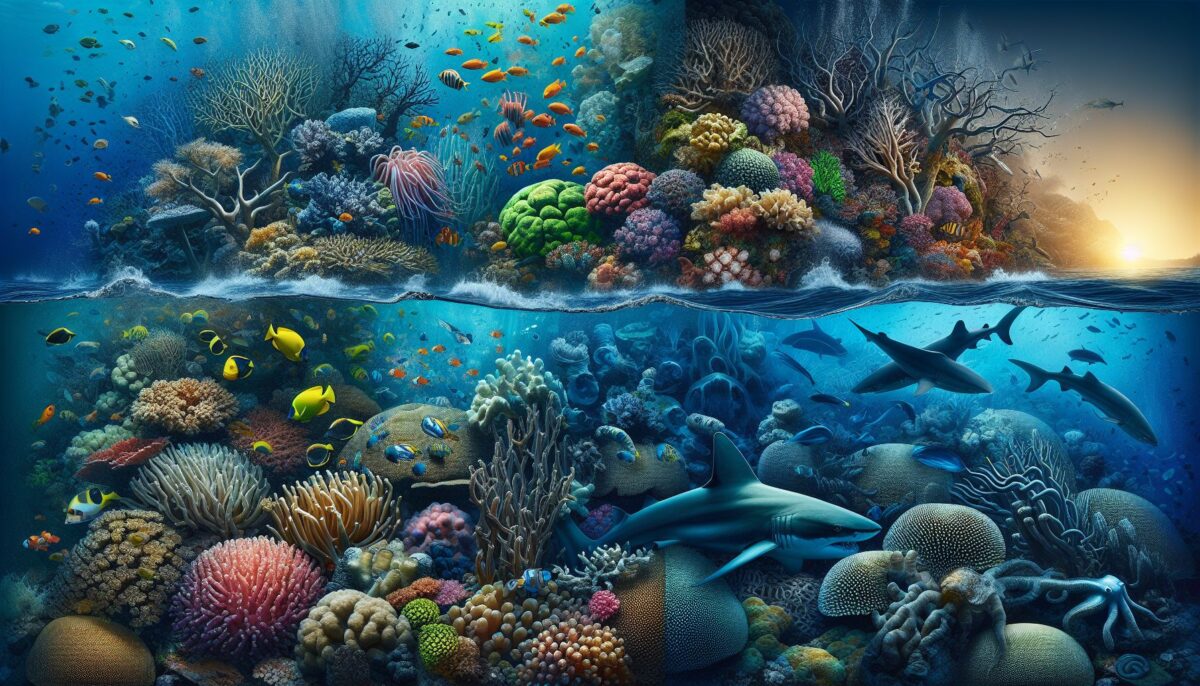
Coral reefs are often referred to as the rainforests of the sea, teeming with life and serving as an essential habitat for a diverse array of marine species. They are complex and colorful ecosystems that not only enchant the underwater explorers but also play a critical role in the health of our oceans and the global environment. Despite their beauty and biodiversity, coral reefs face numerous threats that put their survival in jeopardy. In this comprehensive article, we will dive deep into the underwater world of coral reefs, exploring their importance, the dangers they face, and the concerted efforts needed to protect them.
What are Coral Reefs?
Coral reefs are underwater structures made from calcium carbonate secreted by corals. Corals are tiny marine invertebrates that belong to a group known as Cnidaria, which also includes sea anemones and jellyfish. A coral reef forms when corals grow in colonies and produce a hard skeletal material (calcium carbonate) that accumulates and builds over centuries.
The Composition and Structure of Coral Reefs
Each individual coral is comprised of numerous genetically identical polyps that connect to form a larger, living organism. These polyps harbor microscopic algae called zooxanthellae within their tissues. A symbiotic relationship exists between the coral and the algae; the corals provide the algae with shelter and compounds needed for photosynthesis, while the algae produce oxygen, help remove waste, and supply the corals with glucose, glycerol, and amino acids, which are the products of photosynthesis.
Coral reefs are categorized into three main types:
-
Fringing Reefs: These are the most common type, developing directly from a shoreline and growing out into the sea. They are separated from the shore by narrow, shallow lagoons.
-
Barrier Reefs: Similar to fringing reefs but larger, barrier reefs are separated from the land by deeper, broader lagoons. The Great Barrier Reef in Australia is the most famous example.
-
Atolls: Formed from the subsidence of volcanic islands, atolls are essentially circular barrier reefs that enclose a lagoon without a central island.
The Importance of Coral Reefs
Coral reefs are invaluable to marine life and to humans for various reasons:
-
Biodiversity: They support some of the highest levels of biodiversity in the world, providing a home for countless species of fish, invertebrates, mammals, and plants.
-
Ecosystem Services: Reefs protect coastlines from erosion and storm surges, support commercial and subsistence fisheries, and contribute to local economies through fishing and eco-tourism.
-
Scientific Research: They are living laboratories for scientists studying the processes of evolution, natural selection, and environmental changes.
-
Cultural Significance: Many cultures have deep connections to coral reefs, which provide spiritual, aesthetic, and recreational benefits.
Marine Biodiversity Hotspots
The rich diversity of species that inhabit coral reefs is nothing short of astounding. Reefs often host thousands of species, and many of these species can only be found in reef environments. Some of the marine creatures that rely on coral reefs include:
- Various species of fish
- Mollusks like octopuses and clams
- Crustaceans like crabs and shrimp
- Sea turtles
- Sea birds (indirectly, as they may feed on fish that live in the reefs)
- Sponges and many other invertebrates
The Threats to Coral Reefs
Despite their significance, coral reefs are facing an onslaught of threats, both natural and human-induced, such as:
-
Climate Change: Rising sea temperatures can lead to coral bleaching, where corals expel the algae living in their tissues, causing them to turn white and increasing their risk of mortality.
-
Ocean Acidification: Elevated levels of carbon dioxide (CO2) from human activities are absorbed by oceans, making the water more acidic and decreasing the availability of the compounds corals need to build their skeletons.
-
Overfishing: This not only removes key species from the ecosystem but can also lead to increased algae growth that competes with corals, due to reduced grazing by fish.
-
Destructive Fishing Practices: These include the use of explosives or poison, which can physically damage or destroy coral reefs.
-
Pollution: Runoff containing fertilizers, pesticides, and sewage can lead to excessive algal blooms that block sunlight and harm corals.
-
Physical Damage: From boat anchors, contact with diving equipment, and coastal development.
-
Disease: Coral diseases can spread more quickly and become more severe due to warmer water temperatures and increased pollution.
The Bleaching Phenomenon
One of the most dramatic manifestations of these threats is coral bleaching. During prolonged periods of elevated water temperatures, the stressed corals expel the symbiotic algae living in their tissues, causing the corals to lose color. If normal conditions return promptly, and the algae can re-colonize the corals, the reef may recover. However, if the stress continues, the corals may die, leaving the reef vulnerable to erosion and loss of habitat for marine species.
Conservation and Management Efforts
Given the significance of coral reefs and the myriad threats they face, numerous efforts are being made to protect and conserve these ecosystems:
-
Marine Protected Areas (MPAs): Establishing MPAs can help reduce local pressures like overfishing and pollution, and preserve critical habitats.
-
International Agreements: There are international agreements aimed at protecting coral reefs, such as the Convention on International Trade in Endangered Species (CITES), which regulates the trade of coral species.
-
Reef Restoration Projects: These involve the cultivation and transplantation of corals to degraded reefs to help them recover.
-
Research and Monitoring: Ongoing scientific research and monitoring are critical for understanding the health of reefs and the impacts of global climate change.
-
Public Education: Educating the general public, policymakers, and stakeholders about the importance of reefs and the threats they face is crucial for driving conservation action.
-
Sustainable Development: Ensuring that coastal development is done in a way that minimizes damage to reefs and the implementation of practices that reduce runoff pollution.
The Future of Coral Reefs
The state of coral reefs is a clear indicator of the broader health of our oceans and the planet as a whole. With ocean temperatures continuing to rise and human impacts growing, the survival of these vibrant ecosystems hangs in the balance. However, with coordinated global efforts in conservation and sustainable management, there is hope that the future generations may still enjoy the irreplaceable beauty and bounty of coral reefs.
Nevertheless, the time to act is now. The global community must double down on efforts to mitigate climate change, implement sustainable fisheries management, reduce pollution, and restore damaged reefs. The protection and preservation of coral reefs are not only a moral obligation but also an economic necessity and a critical strategy for maintaining the resilience of our marine environments.
Conclusion
Coral reefs embody the delicate interplay of ecological harmony and vulnerability—a duality that reminds us of our responsibility to respect and protect the natural world. Our understanding and appreciation of these ecosystems must be matched with determined and effective conservation efforts
