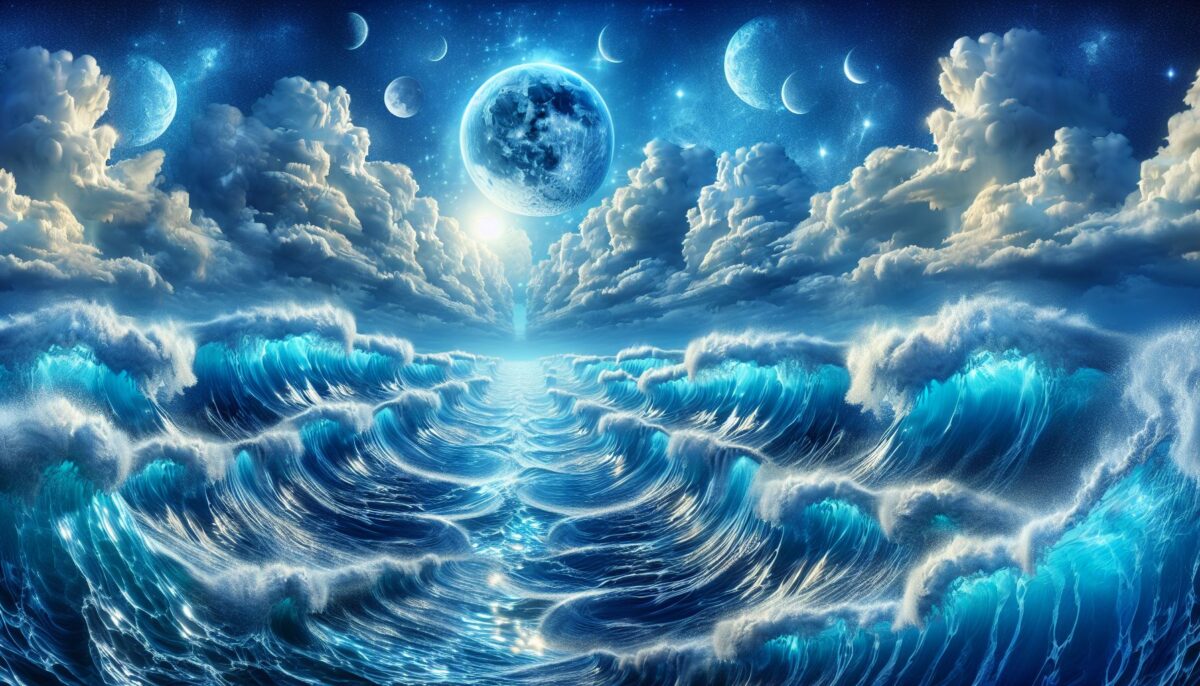
As one looks out to the vast, never-ending horizon of the sea, one can’t help but wonder at the ceaseless rhythms of the tides. This phenomenon, which has inspired countless poets, artists, and scientists, is a force of nature with powerful implications both ecologically and for mankind. In this article, we will delve into the intriguing world of ocean tides, exploring their cause, their impact on marine life and the future of how we can leverage them for renewable energy.
Understanding Tides
At the most basic level, tides are the rise and fall of sea levels caused by the combined effects of gravitational forces exerted by the Moon and the Sun, and the rotation of our planet. The gravitational pull caused by the Moon is more influential due to its closer proximity to the Earth, resulting in a greater deformation of water bodies, leading to high and low tides[^1^].
When the Sun, Moon, and Earth align (during a full moon or new moon), the combined gravitational pull results in very high and very low tides known as “spring tides”. Conversely, when the Moon is at a right angle to the Earth-Sun line (first or last quarter), we experience “neap tides” which are less extreme[^2^].
Tides and Marine Life
Beyond just the rising and falling of sea levels, tides play a crucial role in shaping the marine ecosystem. Tide pools, formed in rocky coastal environments during low tide, provide a unique habitat for a wide array of marine life such as starfish, sea urchins, and various types of algae.
The predictability of tides also aids many species in their feeding and mating patterns. For instance, grunion fish come ashore during high tide for spawning, while horseshoe crabs use the high tide to lay their eggs in the sand, keeping them safe from predators[^3^]. Tides also influence where certain species live within a coastal environment.
Harnessing Tidal Energy
In the quest for clean, renewable energy sources, tides represent a largely untapped resource. Tidal energy, a form of hydropower, generates electricity by capturing the energy contained in moving water mass due to tides.
Tidal stream generators are a type of tidal power system that works much like an underwater wind turbine, capturing energy from the fast-flowing water currents caused by tides. Barrage schemes, on the other hand, typically involve building a dam across an estuary or bay; the change in water levels then drives turbines to produce electricity.
One of the key benefits of tidal energy is its predictability. Unlike wind or solar power, we can accurately predict the timing and intensity of tides, making it a reliable energy source. Noteworthy examples include the La Rance Tidal Barrage in France, and the Sihwa Lake Tidal Power Station in South Korea, both of which contribute significantly to local power generation[^4^].
Conclusion
The rhythmic motions of the tides remain one of Earth’s most reliable phenomena. They influence our world in myriad ways, from distinguishing ecosystems to dictating the behavior of countless marine species. As we continue to seek out sustainable energy resources, the immense power of tides represents an exciting frontier for exploration.
In our bid to harness this power, we must bear in mind the delicate balance of our maritime ecosystems. With careful research, planning, and regulation, we can hopefully unlock the power of tides in a way that supports both human development and the flourishing of our extraordinary marine world.
[^1^]: NOAA – Tides and Water Levels (https://oceanservice.noaa.gov/education/tutorial_tides/welcome.html)
[^2^]: National Geographic – Tides, Currents, and Waves (https://www.nationalgeographic.org/encyclopedia/tides-currents-and-waves/)
[^3^]: ZME Science – How Tides Affect Marine Life (https://www.zmescience.com/science/how-tides-affect-marine-life/)
[^4^]: Energy.gov – Hydroelectric Power: How it Works (https://www.energy.gov/eere/water/hydroelectric-power-how-it-works)
