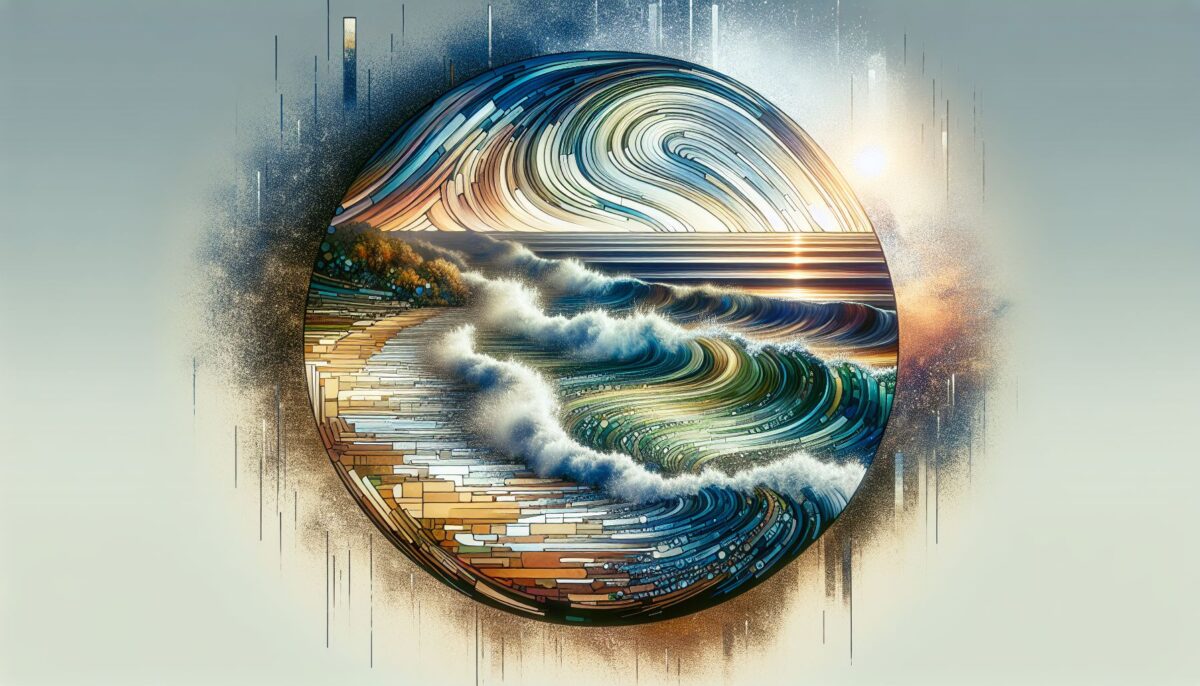
The ocean is Earth’s beating heart, its rhythmic pulse felt along every coastline in the form of tides. The ebb and flow of tides shape our coastlines, influence marine ecosystems, and have profound impacts on human activities. In this exploration of over 1,500 words, we’ll dive deep into the world of tides, from their origins and types to their effect on the environment and human endeavors. Prepare to be swept away by the fascinating tidal forces that govern the interplay between land and sea.
Tides: A Gravitational Ballet
To understand tides, one must look up to the heavens. The gravitational pull of the moon, and to a lesser extent the sun, orchestrates tidal movements. When the moon is closest to a part of Earth, the sea beneath it bulges toward it, creating what is known as a high tide. Conversely, on the side of the Earth farthest from the moon, inertia causes the water to bulge outward, creating another high tide; the areas in between experience low tides.
Spring and Neap Tides
The interplay between the sun and moon gives rise to two significant types of tides – spring and neap tides. During new and full moons, the sun, Earth, and moon align, their combined gravitational forces resulting in spring tides, which are higher and lower than average. Conversely, during the moon’s quarter phases, it forms a right angle with the sun, leading to neap tides, which boast less extreme differences between high and low tides.
Understanding this celestial dance is crucial for various human activities, such as coastal navigation and fishing. Websites like the National Oceanic and Atmospheric Administration (NOAA) Tides & Currents provide vital information for those who rely on the sea’s rhythms (https://tidesandcurrents.noaa.gov/).
The Tidal Phenomena
Tides are more than just the rise and fall of sea levels. They’re also creators of various natural phenomena, each playing a unique role in the life of our coasts and oceans.
Tidal Currents
As tides move in and out, they generate tidal currents – streams of water that can be incredibly powerful. These currents are essential for ships entering and leaving ports and have been used for centuries as natural highways upon the sea.
Tidal Flats and Estuaries
Tides also create tidal flats, areas flooded and exposed with each tidal cycle. These rich ecosystems are nurseries for many marine species and crucial feeding grounds for migratory birds. Furthermore, estuaries – where rivers meet the sea – are greatly influenced by tides, distributing nutrients and sediments essential for sustaining diverse habitats.
The Ecological Significance of Tides
Intertidal Zones
The intertidal zone, the area between high and low tide, is a world of survival and adaptation. Organisms here, such as barnacles, mussels, and various crustaceans, have evolved to withstand immense physical stress from waves and changing salinity and temperature.
Marine Life Cycles
Many marine species, from the diminutive plankton to the colossal blue whale, have life cycles and behaviors synchronized with the tides. For instance, some fish spawn on specific tide cycles, ensuring their offspring are carried to safer waters.
The Nutrient Pump
Tides serve as a massive nutrient pump, moving water in and out of coastal areas, replenishing nutrients and oxygen. This process sustains vast populations of phytoplankton, which form the base of the marine food web and produce much of the world’s oxygen.
Human Interactions with Tides
Coastal Communities and Tide Prediction
Coastal communities have been tied to the rhythms of the tides since their inception. The ability to predict tides is vital for everything from building coastal infrastructure to search and rescue operations. Organisations like the UK Hydrographic Office provide tidal predictions critical for maritime safety (https://www.admiralty.co.uk/).
Renewable Energy: Tidal Power
The predictable nature of tides has been harnessed for generating renewable energy. Tidal power stations, like the Rance Tidal Power Station in France, convert the energy of moving tidal waters into electricity, providing a consistent and sustainable energy source.
Tidal Influence on Maritime Trade
Maritime trade relies heavily on tides for the safe passage of cargo ships. Tides determine when a ship can enter or leave a port and affect how heavily a ship can be loaded, directly impacting global trade efficiency.
Tides Facing Modern Challenges
Climate Change and Rising Sea Levels
Climate change and the associated sea-level rise alter tidal dynamics, leading to increased flooding and altering coastal ecosystems. As sea levels rise, tidal ranges and the power of tidal currents can change, necessitating updated management strategies for affected areas.
Coastal Erosion
Increased storm activity and sea-level rise can intensify coastal erosion. Tides contribute to this process by carrying away sand and soil during strong tidal flows, posing a threat to coastal structures and habitats.
The Need for Coastal Management
Effective coastal management, considering tidal effects, is necessary to protect human lives and preserve ecosystems. Initiatives like integrated coastal zone management (ICZM) aim to balance human activities with the need to conserve coastal and marine areas.
Conclusion: Respect and Understanding for Our Tidal World
Tides are an emblem of nature’s predictable yet powerful forces that shape our world’s shorelines and marine ecosystems. As we strive to comprehend and respect their influence, we unlock a deeper appreciation for the complex symphony of life, climate, and geography that is our ocean.
References
- National Oceanic and Atmospheric Administration (NOAA) – Tides & Currents, https://tidesandcurrents.noaa.gov/
- UK Hydrographic Office – Admiralty Tidal Prediction, https://www.admiralty.co.uk/
- Rance Tidal Power Station, https://www.britannica.com/technology/tidal-power/Tidal-power-stations
With a deeper understanding of tides, we can better safeguard our coasts, harness the ocean’s energy, and protect the myriad life forms that rely on this ancient, timeless dance of the seas.
