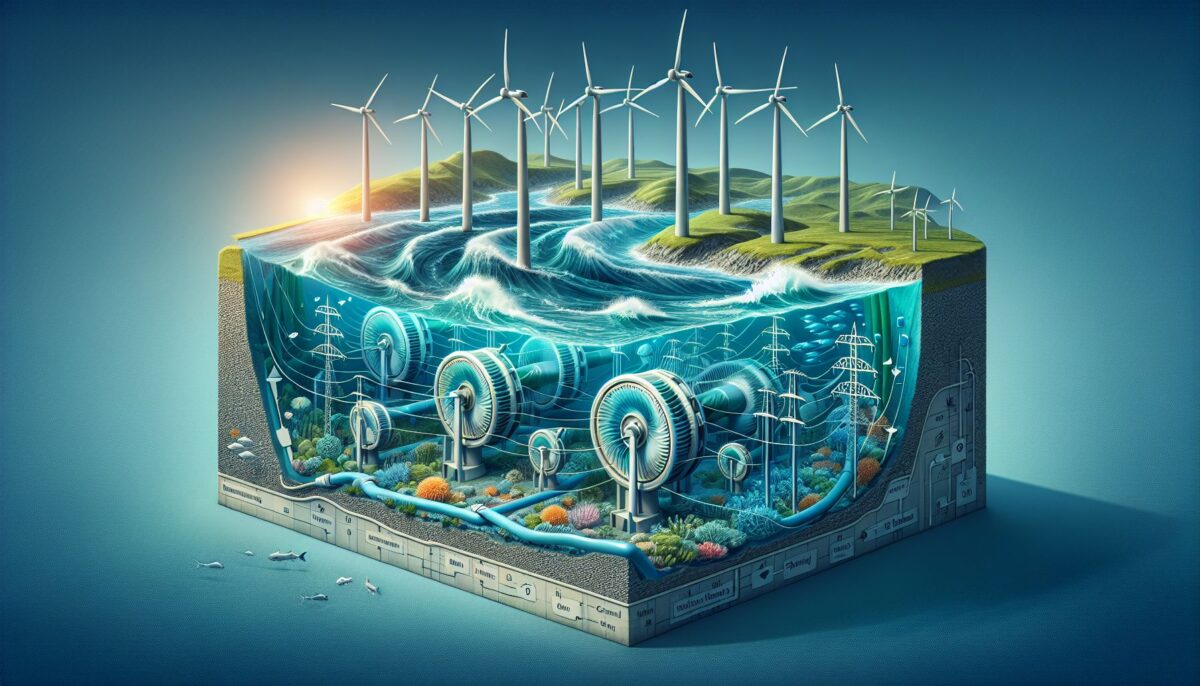
Our planet possesses an endless beauty that never ceases to inspire, and with that comes a vast source of untapped resources. One of these, lying in the restless movement of our oceans, is tidal energy. Tidal energy has been the source of growing interest and research over the past few years, proving itself a promising candidate for renewable energy production.
Tidal Energy: Unlocking the Potential
Tidal energy, as the name suggests, comes from the natural ebb and flow of oceanic tides. The moon’s gravitational pull mainly causes these tides, resulting in a rhythmic movement of the sea. This movement can be harnessed to generate electricity, presenting an efficient and consistent means of renewable power generation [^1^].
Unlike other forms of renewable energy such as solar and wind, tidal energy is predictable and consistent, making it a reliable source of power. Moreover, it has a significantly reduced environmental impact compared to traditional fossil fuels [^2^].
The Mechanics of Tidal Energy
The process of obtaining energy from the sea’s tides involves building a turbine in the sea that spins as tides move in and out of a bay or estuary. As the water flows, it turns the turbine, which in turn rotates a generator producing electricity.
There are two main types of tidal energy technologies: Tidal Stream Generators (TSG) and Tidal Range Technologies. TSGs work like underwater wind turbines, capturing the kinetic energy from moving water. Tidal Range Technologies, on the other hand, make use of the height difference between high and low tides to generate electricity.
The Global Tidal Energy Landscape
Countries with large coastlines and significant tidal ranges, such as the UK, Canada, and France, are leading in terms of tidal energy deployment [^3^]. The UK, most notably, has been at the forefront of tidal power generation, with projects such as the Swansea Bay Tidal Lagoon.
Meanwhile, China has recently stepped up its efforts in the tidal energy domain—a notable example being the Jiangxia Tidal Power Station, the third-largest tidal power station worldwide.
Challenges and Opportunities
Despite the promise of tidal energy, the sector faces a few challenges. Firstly, the technology for tidal power generation is relatively new and therefore lacks the necessary infrastructure. Additionally, tidal energy can also lead to localised ecological impacts such as altering tidal patterns and affecting marine life.
However, the continued advancements in tidal energy technology have demonstrated immense potential, mitigating many environmental concerns. Studies are also being conducted to further understand the possible impacts of tidal turbines on marine ecosystems[^4^].
The Future of Tidal Energy
Considering the urgent need to shift toward cleaner, reliable, and renewable energy sources, tidal energy is carving out a unique and indispensable niche. The energy contained in our oceans, if appropriately harnessed, is capable of meeting a significant portion of our global energy needs.
With advancements in technology and more investment in the field, the day is not far when tidal energy will take its deserved place in the pantheon of renewable energy solutions, contributing significantly to the global energy mix[^5^].
In conclusion, while tidal energy is still in its early stage, with new technologies emerging, it holds promise as an abundant, predictable, and emission-free source of power. In the war against climate change, it is more crucial than ever to embrace such innovative and sustainable solutions.
[^1^]: National Ocean Service – Tidal Energy
[^2^]: Marine Insight – Benefits and Drawbacks of Tidal Energy
[^3^]: Ocean Energy Europe – Tidal Energy
[^4^]: The Guardian – Impact of Tidal Power Stations on Marine Wildlife
[^5^]: IRENA – Tidal Energy
