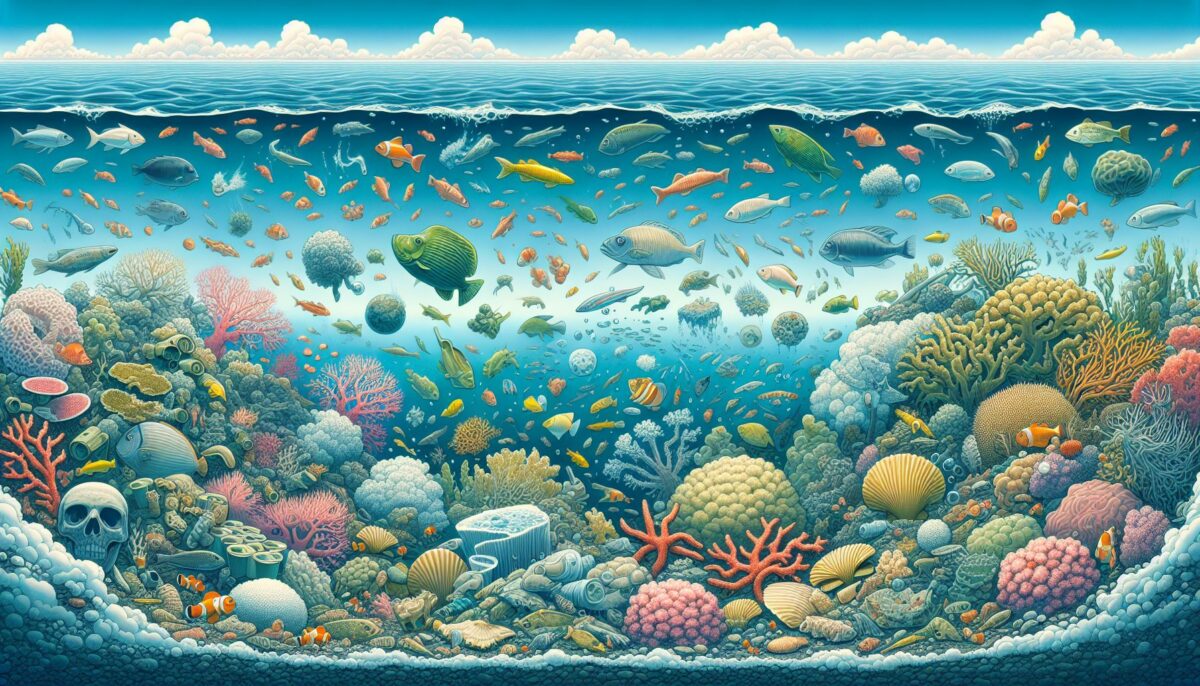
The ocean covers about 71% of the Earth’s surface and serves as a fundamental anchor to many aspects of life on our planet. It regulates the climate, provides a substantial portion of the oxygen we breathe, and offers a rich source of biodiversity and resources. Yet, this vast expanse of blue is facing a silent crisis, one that is less visible but equally troubling as the more publicized issues of climate change and plastic pollution. The culprit is ocean acidification.
What is Ocean Acidification?
Ocean acidification refers to the ongoing decrease in the pH levels of the Earth’s oceans, caused primarily by the uptake of carbon dioxide (CO2) from the atmosphere. As atmospheric CO2 levels rise due to human activities like burning fossil fuels and deforestation, the oceans absorb a significant portion of this gas. When CO2 dissolves in seawater, it forms carbonic acid, which lowers the pH of the water.
Why is Ocean Acidification a Concern?
The impacts of ocean acidification are broad and deeply concerning, affecting marine ecosystems, biodiversity, and human industry and societies by extension.
Affecting Marine Life
Marine organisms, particularly those that build shells and skeletons from calcium carbonate, like corals, oysters, clams, sea urchins, plankton, and certain species of algae, are especially vulnerable to acidifying oceans. These organisms need a stable pH to effectively extract the carbonate ions from seawater. Acidified conditions erode their ability to maintain and build these structures, imperiling their survival.
Threatening Coral Reefs
Coral reefs, often referred to as the “rainforests of the sea,” are among the most vibrant ecosystems on Earth. Beyond their immense biodiversity, corals protect coastlines from storms, support fishing industries, and contribute to local economies through tourism. However, when faced with more acidic waters, the growth rates of reef-building corals slow down, and existing reef structures can begin to dissolve, leading to coral bleaching and the collapse of reef ecosystems.
Impacts on Fisheries and Aquaculture
Commercially important shellfish such as oysters, clams, and scallops, as well as the fish that feed on them, are also at risk due to ocean acidification. The aquaculture industry, which supplies a significant portion of the world’s seafood, could face substantial economic losses. A decline in shellfish populations would reverberate through the food chain, affecting a wide array of marine species and the industries that rely on them.
Challenges to Marine Biodiversity
Ocean acidification doesn’t operate in isolation; it works in conjunction with other stressors like rising sea temperatures, overfishing, and pollution. This multifaceted attack can weaken the resilience of marine ecosystems and lead to declines in biodiversity as species struggle to adapt to rapidly changing conditions.
Causes of Ocean Acidification
The primary driver of ocean acidification is the rise in atmospheric CO2 levels due to human activities. Since the Industrial Revolution, CO2 levels have skyrocketed from approximately 280 parts per million to over 415 parts per million today. As a result, the oceans have absorbed about 30-40% of this CO2, significantly altering their chemistry.
The Science Behind the Process
To understand ocean acidification, we delve into a bit of chemistry. When CO2 reacts with seawater, it forms carbonic acid (H2CO3), which then dissociates into bicarbonate ions (HCO3−) and hydrogen ions (H+). The increase in hydrogen ions decreases the pH of the seawater, making it more acidic. Simultaneously, the additional hydrogen ions bind with carbonate ions (CO32−) to form more bicarbonate ions. This reaction reduces the availability of carbonate ions, which are crucial for the formation of calcium carbonate (CaCO3) in marine organisms.
Measuring and Monitoring Ocean Acidification
Scientists use various methods to track changes in ocean pH and carbonate chemistry. These include pH sensors, spectrophotometric techniques, and satellite observations. Many organizations and projects like the Global Ocean Acidification Observing Network (GOA-ON) actively monitor and compile data on ocean acidification to help inform and shape conservation efforts.
The Human Aspect: Economic and Social Impact
The effects of ocean acidification ripple beyond environmental concerns and into economic and social realms. Coastal communities, many of which rely on fishing and tourism, could experience significant losses. Developing nations, whose economies and food securities are closely tied to the health of marine ecosystems, are particularly vulnerable.
Addressing the Issue
To combat ocean acidification, reducing our global carbon footprint is imperative. Efforts include transitioning to renewable energy sources, increasing energy efficiency, and conserving natural habitats that can absorb and store carbon like mangroves and seagrasses.
Research and Technology
Ongoing research is crucial to better understand the impacts of ocean acidification and to develop strategies for mitigation and adaptation. Technologies such as selective breeding programs in aquaculture aim to produce more resilient species of shellfish that can cope with lower pH conditions.
Policy and Conservation Measures
International and local policies have a critical role in tackling ocean acidification. Agreements like the Paris Climate Accord contribute to global efforts to limit CO2 emissions. Establishing marine protected areas and conserving habitats also help sustain ecosystem resilience in the face of changing ocean chemistry.
Conclusion
Ocean acidification poses a serious and complex challenge that requires immediate attention from the global community. By understanding the issue more deeply and coming together to enact meaningful change, we can help protect the ocean, its inhabitants, and the many human communities that depend on its health.
Sources
- NOAA PMEL Carbon Program – pmel.noaa.gov/co2/story/What+is+Ocean+Acidification%3F
- Global Ocean Acidification Observing Network – goa-on.org
- The Ocean Foundation – A non-profit organization that supports, strengthens, and promotes those organizations dedicated to reversing the trend of destruction of ocean environments around the world. oceanfdn.org
