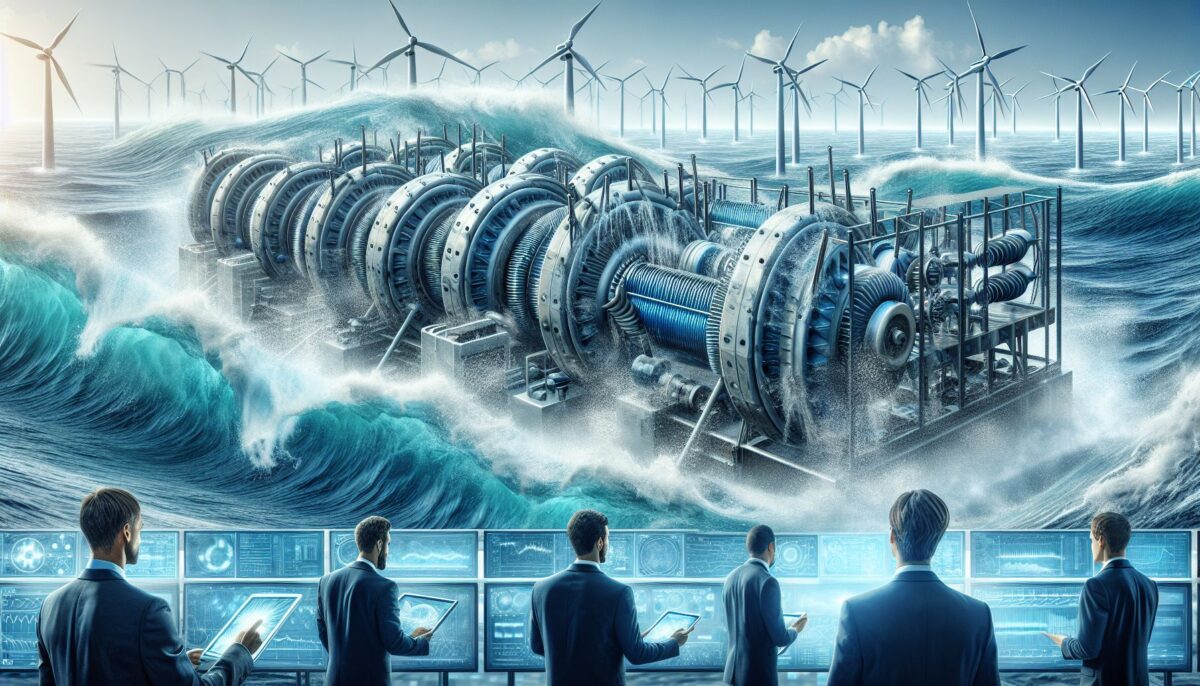
Amidst the growing concern for sustainable and renewable forms of energy, an immense power source that has been part of human consciousness through ages—that of the tides—stands as a beacon of potential. Tidal energy, derived from the gravitational pull of the moon and sun, coupled with Earth’s rotation, is starting to take its rightful place in the portfolio of renewable energy sources. This article will explore the mechanisms, benefits, challenges, and the future of tidal energy as a cornerstone of the blue economy.
What is Tidal Energy?
Tidal energy is a form of hydro power that exploits the natural ebb and flow of coastal tides to generate electricity. The immense amount of energy contained within the tides is harnessed by constructing tidal power stations at coastal locations with high tidal ranges.
The Mechanics of Tides
Tides are the long-period waves that move through the oceans in response to the forces exerted by the moon and sun. These celestial bodies exert a gravitational pull on the Earth’s water. When combined with Earth’s rotation, these forces generate periodic rises and falls in sea level—what we know as tides.
Types of Tidal Energy
Tidal energy can be harnessed in several ways:
-
Tidal Streams: Utilizing the kinetic energy from tidal currents to turn underwater turbines, similar to how wind turbines generate power from the wind.
-
Tidal Barrages: These are dam-like structures that capture the potential energy generated by the difference in height (or “head”) between high and low tides.
-
Tidal Lagoons: Man-made lagoons that can generate power from incoming and outgoing tides.
The Advantages of Tidal Energy
Predictability
Unlike other renewable energy sources such as wind or solar, tidal movements are highly predictable. We can forecast tides years in advance with high precision. This reliability allows for a stable and forecastable energy production.
Environmental Impact
Tidal energy is a clean, renewable resource. It does not produce greenhouse gases or other pollutants when generating electricity, making it an environmentally friendly alternative to fossil fuels.
Efficiency and Longevity
Tidal turbines are capable of converting a high percentage of the energy in tidal streams into electricity. Also, tidal power plants have long lifespans, often exceeding thirty years, which balances the initial cost of construction.
Challenges to Overcome
High Initial Costs
The technology for harnessing tidal energy is still in its developmental stages, making the upfront costs quite high. Tidal power stations are also expensive to build and maintain.
Environmental and Ecological Impacts
While tidally generated electricity is clean, the construction of tidal power plants can have detrimental effects on marine life and ecosystems. There can be changes in the habitat, and the movement of fish and other marine species can be impeded.
Limited Suitable Locations
Only specific locations with high tidal ranges or strong tidal currents are suitable for tidal power, which limits where tidal energy can be harnessed.
Technological Challenges
Tidal environments are harsh, with strong seawater corrosion and the potential for biofouling, which presents significant engineering challenges.
The Future of Tidal Energy
As we move forward, the technology for tidal energy is improving, making it more economically viable. Innovations in materials and design are increasing the efficiency and longevity of tidal power plants. Moreover, policy incentives and the international goal of reducing carbon emissions may lead to a rise in the investment and development of tidal energy.
Research and Development
There is a continuous investment in research and development to find more cost-effective and efficient ways to harness tidal energy. This includes developing new types of turbines that are more robust and less intrusive on the environment.
Policy and Economic Incentives
Governments, especially in coastal regions, have the opportunity to support tidal energy through grants, subsidies, and feed-in tariffs, providing a considerable push towards the adoption of this clean energy source.
Integration and Storage
As part of a broader energy strategy, tidal energy can be integrated with other renewable sources. The predictability of tides compensates for the intermittency of solar and wind power. Energy storage solutions will also play a significant role in managing the energy produced during tidal surges.
The Role of Tidal Energy in the Blue Economy
The “blue economy” refers to the sustainable use of ocean resources for economic growth, improved livelihoods, and ocean ecosystem health. Tidal energy aligns perfectly with the concept of the blue economy by providing a sustainable and renewable energy source that can bolster coastal economies while preserving the ocean environment.
Conclusion
Tidal energy presents a fascinating and potent source of renewable energy that could be pivotal in our efforts towards a more sustainable future. While challenges remain, the path forward is illuminated by technological innovation and the imperative of environmental stewardship.
By adopting tidal energy within our energy mix, we are taking steps towards a future where our dependency on unsustainable resources is significantly reduced, and the integrity of our coastal and marine ecosystems is respected.
As we contemplate the vast, rhythmic movements of the sea, we see not only the poetic rhythm of nature but also the steady pulse of a powerful ally in our quest for sustainable vitality.
Sources
-
Charlier, R. H., & Justus, J. R. (1993). “Ocean energies: environmental, economic and technological aspects of alternative power sources”. Elsevier Science Publishers.
-
European Marine Energy Centre (EMEC) (n.d.). “Tidal Energy”. http://www.emec.org.uk/marine-energy/tidal-energy/
-
IEA (2014). “Technology Roadmap: Ocean Energy”. International Energy Agency. https://www.iea.org/reports/technology-roadmap-ocean-energy
