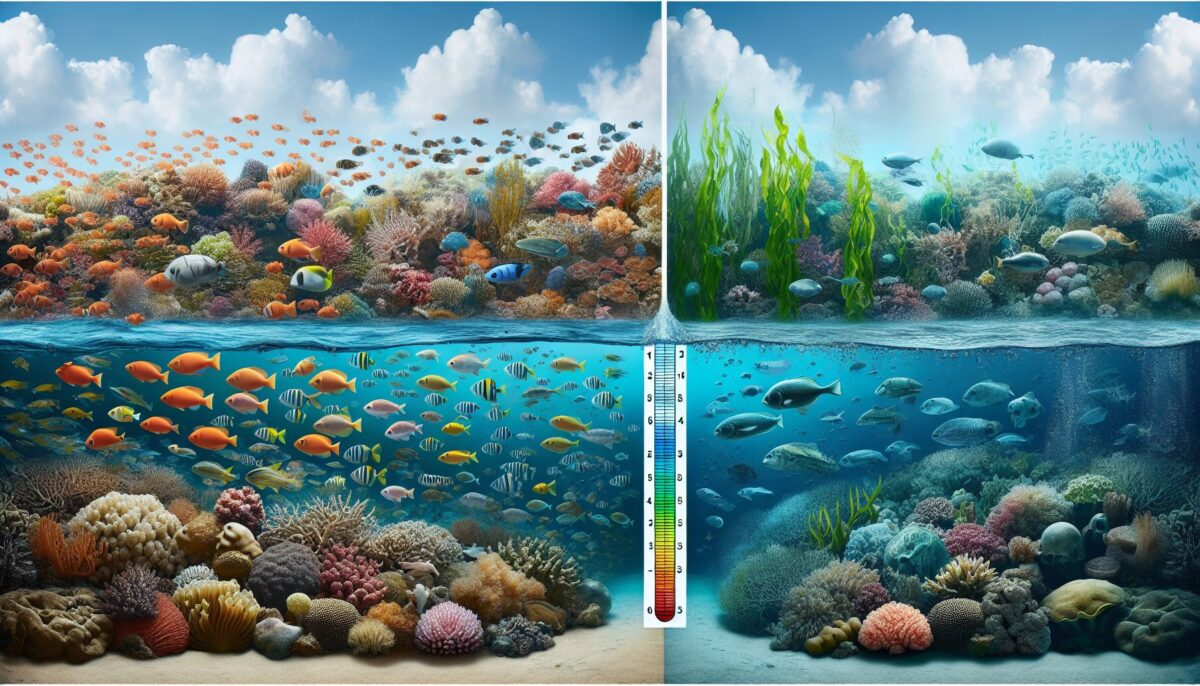
Ocean acidification, an often-overlooked aspect of climate change, is emerging as a major problem threatening marine biodiversity, affecting virtually every corner of the oceans. Lustier and more palpable representations of climate change typically take center stage: melting ice caps, forest fires, and extreme weather events. Yet the gradual acidification of our oceans equates to a silent assassin, wreaking havoc out of sight.
What is Ocean Acidification?
Ocean acidification broadly refers to the process wherein the pH of ocean water decreases, making it more acidic. This stems from the escalating amounts of carbon dioxide (CO2) humans release into the atmosphere. When these CO2 molecules infiltrate our oceans, they react with seawater to form carbonic acid, a weak acid. Further splitting of this carbonic acid releases bicarbonate ions and hydrogen ions, resulting in a more acidic environment[^1^].
Impacts of Ocean Acidification
Marine Life
A shift in oceanic pH has vast implications for marine life. Many marine organisms, such as clams, oysters, and coral reefs, use carbonate ions in seawater to build their calcium carbonate structures or shells. As acidity surges, there is a knock-on effect: the concentration of these carbonate ions plunges. This makes it harder for these organisms to build up and maintain their shells and skeletons—canvassing precedents of weakened species that are more prone to disease and predation[^2^].
Moreover, increased ocean acidity modifies the acoustical properties of seawater, helping sound travel farther. This can have unknown impacts on marine mammals and fish that rely on sound for navigation, territory establishment, and predator and mate detection.
Biodiversity and Ecosystems
In altering the conditions for life for such a broad range of species, ocean acidification has considerable implications for marine biodiversity. Senescence or local extinction of a species can wreak havoc across entire ecosystems, with the risks particularly acute for coral reefs. These reefs are the bedrock of marine life, hosting up to a quarter of all marine biodiversity despite covering less than one percent of the ocean floor[^3^].
Economic Consequences
The aftereffects of ocean acidification are also felt onshore. It poses both direct and indirect threats to economies around the globe. Direct economic impacts can be traced to commercial fisheries, where acidification exerts a significant throw weight on several valuable species, impacting both their quality and quantity.
The indirect economic impacts can be even more significant. For instance, coral reefs serve as natural breakwaters that absorb wave energy and shield coasts from storms and floods. Their reduction due to ocean acidification augments the risks of coastal property and infrastructure damage, thus increasing publicly and privately financed rehabilitation costs.
Addressing the Issue
Ocean acidification is a global issue and demands international cooperation. Steps can be taken on both a macro and micro scale to nut out the problem.
Reduction of CO2 Emissions
The primary driver of ocean acidification remains escalating CO2 emissions. Therefore, regarding broad-scale mitigation, international commitments are crucial. There needs to be concerted effort to reduce greenhouse gas emissions, and all nations must heighten ambitions to meet the goals outlined in the Paris Agreement.
Local Adaptation and Mitigation Strategies
In tandem with international efforts, local adaptation and mitigation strategies also hold the key. These might include the protection and management of seagrasses and mangroves that absorb CO2, reducing local pollution, and championing sustainable fishing practices.
Awareness and Education
Lastly, raising awareness is central to addressing ocean acidification. The more educated the global community becomes about this environmental challenge, the more seamlessly we can rally for governmental changes and adopt individual action towards more sustainable practices.
In conclusion, ocean acidification remains a silent yet formidable foe that needs immediate action. Recognition of this pervasive problem, along with intensive research, international cooperation, and local action, can help mitigate this specific fallout of global change.
[^1^]: (NOAA PMEL Carbon Program. “What is Ocean Acidification?” https://www.pmel.noaa.gov/co2/story/What+is+Ocean+Acidification%3F)
[^2^]: (National Geographic. “Ocean Acidification, Explained.” https://www.nationalgeographic.com/environment/oceans/critical-issues-ocean-acidification/)
[^3^]: (Ocean Agency. “Why Coral Reefs are Important.” https://theoceanagency.org/coral-reefs/)
