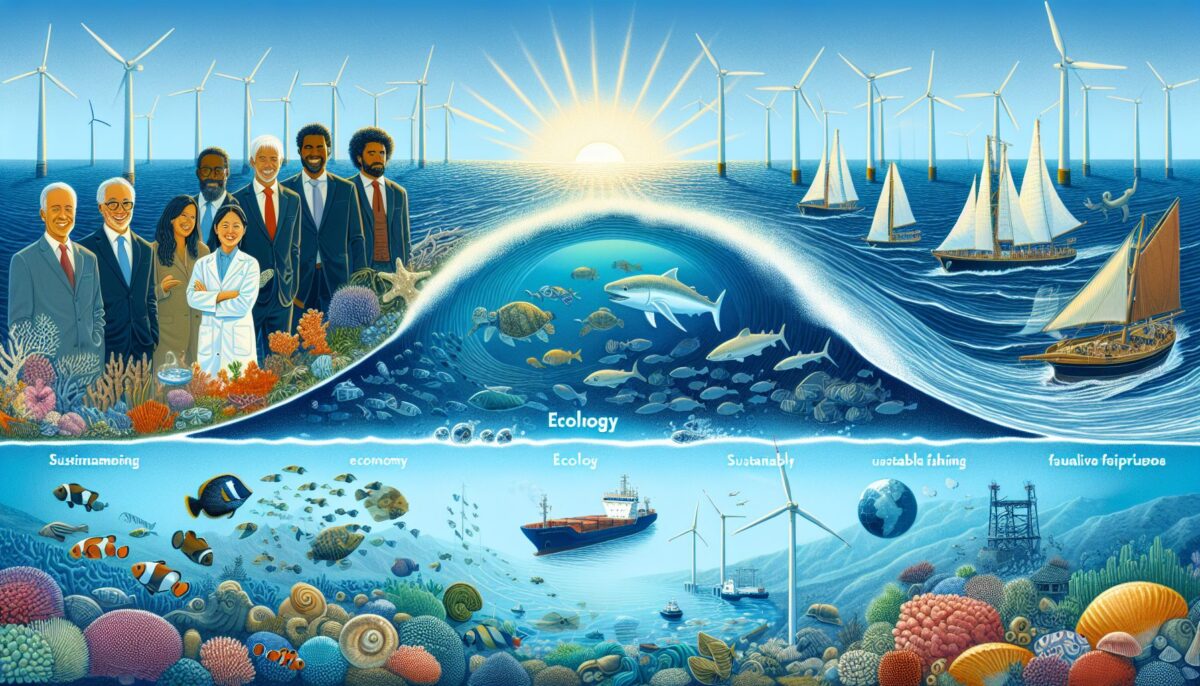
The ocean covers over 70% of the Earth’s surface, plays a crucial role in supporting life, and is fundamental to our economy. This vast body of water provides food, regulates our climate, and supports a burgeoning economy that is rapidly gaining recognition: the Blue Economy. This concept extends well beyond the extraction of resources; it encapsulates how we can sustainably harness the ocean’s resources to support economic growth, improve livelihoods, and preserve the health of ocean ecosystems.
What is the Blue Economy?
The Blue Economy is a term that has gained traction in recent years, referring to the sustainable use of ocean resources for economic growth, improved livelihoods, and jobs while preserving the health of ocean ecosystems. It encompasses a wide range of sectors, including fisheries, aquaculture, maritime trade, tourism, and energy. Understanding and investing in the Blue Economy is critical as it provides a crucial opportunity for coastal nations to capitalize on their natural resources while fostering environmental stewardship.
Fisheries and Aquaculture
Fisheries and aquaculture represent a significant part of the Blue Economy. According to the Food and Agriculture Organization (FAO), the fisheries and aquaculture sector provides the primary source of protein for 3.3 billion people and supports the livelihoods of 10-12% of the world’s population [1]. However, overfishing and unsustainable practices threaten the industry, leading to decreased fish stocks and ecosystem damage. Sustainable fisheries and responsible aquaculture practices are imperative to maintain balance.
Maritime Trade and Shipping
Maritime trade and shipping areanother pillar of the Blue Economy. The vast majority of international trade by volume is carried by sea, with ports and shipping lanes forming the backbone of global commerce. The International Chamber of Shipping notes that there are over 50,000 merchant ships trading internationally, carrying every kind of cargo [2].
Coastal Tourism
Coastal and marine tourism, another key sector, leverages the aesthetic and recreational value of the seas. From beach holidays to extreme sports like surfing and diving, the lure of the ocean is undeniable. Tourism can drive economic development but it must also contend with its environmental footprint.
Renewable Energy
Renewable energy, including tidal and wave energy, is a promising and innovative industry within the Blue Economy. These sources provide cleaner energy alternatives, reducing dependency on fossil fuels and contributing to climate change mitigation.
Ocean Science and Technology
Ocean science and technology underpin the Blue Economy by improving our understanding of the ocean and developing better tools and techniques for managing marine resources. This encompasses oceanography, marine biology, biotechnology, and marine engineering, among other fields.
Oceanography and Marine Biotechnology
Advancements in oceanography, which is the scientific study of the physical and biological aspects of the ocean, play a vital role in resource management and environmental protection. Marine biotechnology also offers potential breakthroughs in medicine, food production, and the biodegradable materials industry.
Preserving Marine Ecosystems
Central to the Blue Economy is the preservation of marine ecosystems. Intensified human activity has led to pollution, overfishing, and habitat destruction, all of which threaten ocean health.
Marine Protected Areas (MPAs)
One solution to address these challenges is the establishment of Marine Protected Areas (MPAs). MPAs are conservation areas that restrict human activity to preserve ecological, biological, and cultural resources. They have been shown to not only aid in conservation efforts but also benefit fisheries by acting as nurseries for juvenile fish.
Coastal Management and Marine Spatial Planning
Coastal management and marine spatial planning are other critical components that help balance the various demands on marine resources by allocating specific spaces for different uses, reducing conflicts, and protecting ecologically sensitive areas.
Challenges of the Blue Economy
Despite its potential, the Blue Economy faces significant challenges.
Marine Pollution and Plastics
Marine pollution, including plastics and other forms of debris, is a growing concern. The United Nations Environment Programme (UNEP) estimates that around 8 million tons of plastic end up in the oceans each year, affecting marine life and ecosystems [3].
Climate Change and Ocean Acidification
Climate change leads to ocean acidification, sea-level rise, and increased frequency and intensity of extreme weather events. These changes have profound implications for marine ecosystems and the economies that depend on them.
Overexploitation of Resources
The overexploitation of marine resources is another serious issue that needs to be addressed. Sustainable management and conservation efforts are essential to prevent the depletion of these resources.
Policy and Governance
Effective governance and policymaking are necessary to address cross-border environmental issues and manage the common resources that the Blue Economy relies upon. International cooperation is crucial, as marine issues often transcend national boundaries.
Strategies for Growth
For the Blue Economy to reach its full potential, a coordinated strategy focusing on sustainability, innovation, and collaboration is required.
Sustainability
Adopting sustainable practices across all sectors to minimize the ecological footprint and ensure the long-term health of marine ecosystems.
Innovation
Investing in research and development to find new, sustainable ways of exploiting marine resources, such as developing biodegradable materials from marine algae or improving aquaculture systems to reduce their environmental impact.
Collaboration
Enhancing international cooperation to tackle global challenges like marine pollution, illegal fishing, and climate change through agreements and shared initiatives.
Conclusion
The Blue Economy is not just an economic opportunity; it is also a call to action to protect our oceans and manage their resources wisely. As we continue exploring and exploiting the seas, we must remain cognizant of the ecological balances that sustain life both in and out of water. With the right commitment and international collaboration, we can foster an economy that thrives alongside the flourishing ocean ecosystems that support it.
Sources
-
FAO. “The State of World Fisheries and Aquaculture 2020.”
https://www.fao.org/fishery/en -
International Chamber of Shipping. “Shipping and World Trade – Driving Prosperity.”
https://www.ics-shipping.org/shipping-facts/shipping-and-world-trade -
UNEP. “State of the Global Environmental Authority 2018.”
https://www.unep.org/resources/report/state-global-environmental-authority-2018
