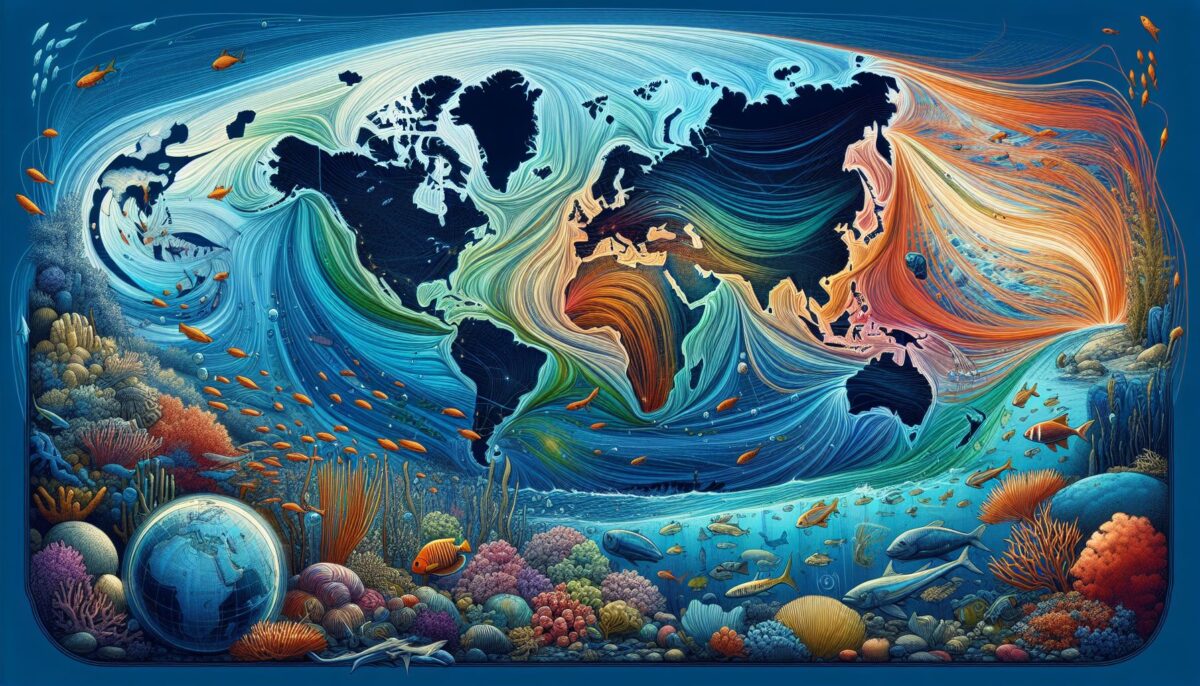
The vast and rolling expanse of Earth’s oceans is a spectacle of nature that has inspired humanity for millennia. Yet, beneath the surface of these endless waters, there lies a dynamic force that shapes our climate, landscapes, and marine ecosystems: ocean currents. These unseen powerhouses of the marine world are more than just the great conveyors of water; they are integral to life as we know it, influencing everything from weather patterns to food chains. In this comprehensive exploration, we dive into the currents that cradle our blue planet, their impact on marine life and coastal communities, and the science that seeks to understand their mysterious flow.
The Nature of Ocean Currents
Ocean currents are large-scale movements of seawater, driven by a complex interplay of wind, the rotation of the earth, variations in water density, and geography. They can flow for thousands of kilometers and to depths of several meters to a couple of thousand meters, creating highways in the sea that transport heat, nutrients, and even organisms across vast distances.
Confined by the continents that border them, ocean currents are generally classified as either surface currents or deep-water currents.
-
Surface Currents: Constituting about 10% of the ocean’s water, surface currents are primarily driven by the wind and follow global wind patterns. One of the most familiar systems is the gyre—colossal, circular current systems found in each of the major ocean basins. Perhaps the most widely recognized gyre is the North Atlantic’s Gulf Stream, renowned for its role in tempering the climate of Western Europe.
-
Deep-Water Currents: Making up the other 90% of the ocean, these currents are often driven by differences in water density, which can be caused by variations in temperature and salinity. This density-driven movement of water is a part of what’s known as the thermohaline circulation, or more poetically, the Great Ocean Conveyor Belt.
The Significance of Currents
Climate Regulation: Ocean currents regulate the world’s climate by redistributing heat. They carry warm water and air from the equator towards the poles and colder water back toward the equator. This vast circulation acts like a global conveyor belt, playing a decisive role in the temperature profiles of many regions across the globe.
Marine Life Support: Currents carry oxygen, nutrients, and organisms. Upwelling currents, for instance, bring nutrient-rich waters from the deep to the surface, feeding marine ecosystems and supporting some of the planet’s most productive fisheries.
Human Activities: Currents influence human activities by affecting maritime navigation, fishing industries, and even the viability of certain types of marine renewable energy.
The Science Behind Measuring Currents
Oceanographers employ a variety of methods to study currents, ranging from direct measurement to remote sensing.
-
Floating Devices and Drifters: These are released into the currents and tracked over time to gauge the current’s speed and direction.
-
Doppler Current Profilers: This technology uses the Doppler effect to measure the velocity of the water column.
-
Satellites: Remote sensing technologies enable the measurement of surface currents on a global scale, providing valuable insights into their influence on weather and climate systems.
The Role of Technology in Understanding Currents
Modern advancements have vastly improved our understanding of ocean currents. Autonomous underwater vehicles (AUVs), such as gliders, can now dive to great depths and travel vast distances, relaying back to scientists a treasure trove of data. In combination with satellite technology, these tools help build a more comprehensive picture of how currents operate and interact with the broader oceanic system.
Global Climate Change and Its Effects on Ocean Currents
As vital as they are to our world, ocean currents face the challenge of climate change. The alteration in the earth’s climate can lead to changes in wind patterns and ocean temperatures, which in turn can disrupt the delicate balance that drives these currents. For example, melting polar ice can inject fresh water into the ocean, potentially altering the thermohaline circulation. The full implications of such changes are a significant area of ongoing research, with experts concerned about the potential for dramatic impacts on global climate and marine ecosystems.
The Future of Ocean Current Research
The cutting edge of oceanographic research aims to unravel the complexity of currents. Advanced computer models, coupled with in situ observations, are providing new insights into how the oceans move and respond to a changing climate. However, this understanding is not solely for academic pursuit—it is vital for the sustainability of humanity and the marine life that calls the ocean home.
Preserving the Flow of Life
In an interconnected world, the importance of ocean currents cannot be overstated. From their role in moderating climates to their function in sustaining marine ecosystems, currents are the cardiovascular system of our seas. To preserve and protect them is to ensure the health of the planet for future generations.
Sources
- National Oceanic and Atmospheric Administration (NOAA) – https://www.noaa.gov/
- Intergovernmental Panel on Climate Change (IPCC) – https://www.ipcc.ch/
- The Ocean Cleanup – https://theoceancleanup.com/
Note: Sources provided are examples of the bodies focused on the area of study and not specific article citations.
With awareness growing of their importance, conservation, and management efforts are now more critical than ever. As steward
