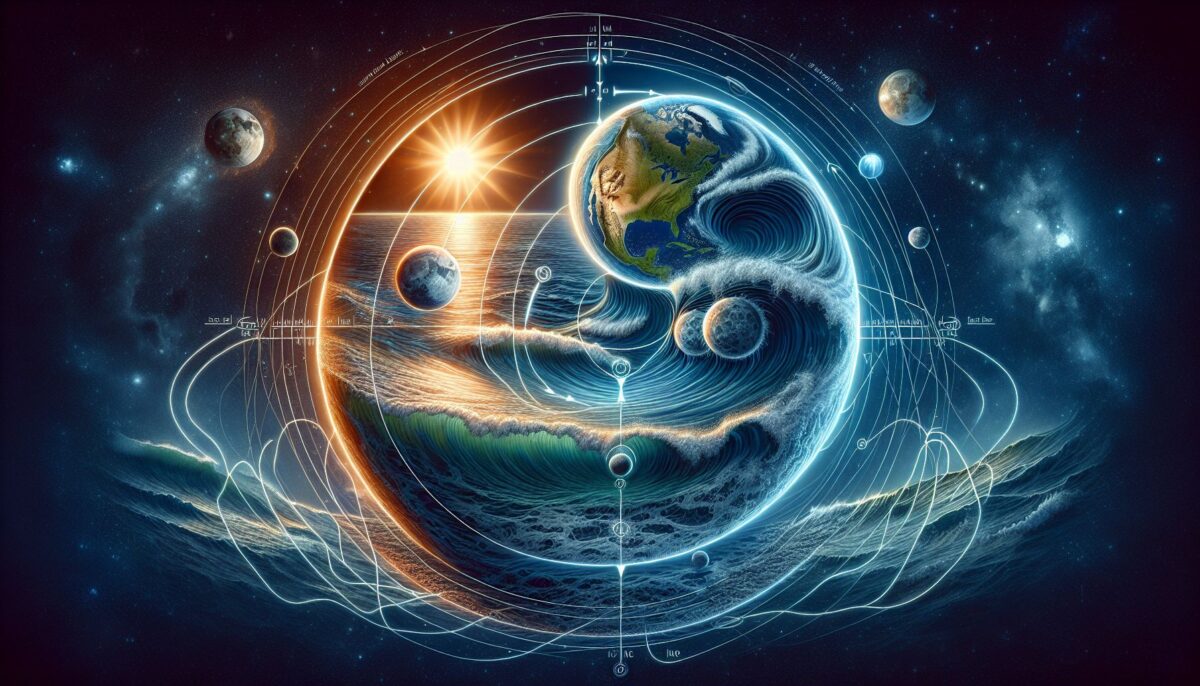
The ebb and flow of ocean tides are a natural phenomenon that has puzzled and fascinated humans for millennia. From ancient mariners who relied on the tides for navigation to modern scientists studying their impact on marine ecosystems, the study of tides remains a crucial aspect of oceanography. In this comprehensive guide, we’ll dive into the science behind tides, explore their significance, and examine the challenges they present to coastal communities and industries. So set sail with us on this in-depth exploration of the dynamic pulse of our oceans.
Understanding Tides: A Complex Dance of Celestial Bodies
At its core, the movement of tides is governed by the gravitational pulls exerted by the Moon and the Sun on Earth’s oceans. These celestial bodies tug at our planet’s waters, creating bulges that rise and fall as the Earth rotates. The result is the high and low tides that we observe along coastlines.
The Gravitational Pull of the Moon and the Sun
The most influential factor affecting the tides is the Moon. Its proximity to Earth causes a more significant gravitational force on the ocean’s surface. As the Earth rotates, different areas of the ocean face the Moon, experiencing the high tide, while others are at low tide. The Sun, although much larger than the Moon, has a less pronounced effect due to its greater distance from Earth.
The Role of Earth’s Rotation and Orbital Mechanics
Earth’s rotation and its elliptical orbit around the Sun add layers of complexity to tidal patterns. Different regions of the planet experience diurnal (one high and one low tide per day), semidiurnal (two high and two low tides per day), or mixed tides, a combination of both patterns.
Spring and Neap Tides
The relative positions of the Earth, Moon, and Sun dictate the strength of the tides. Spring tides result when the Sun and Moon align with Earth, either during a new moon or full moon, reinforcing their gravitational effects and producing the highest high tides and lowest low tides. Conversely, neap tides occur during the first and third quarters of the moon phase when the Sun and Moon form a right angle with Earth, resulting in weaker tidal forces.
Tidal Rhythms and Their Global Variations
The rhythm of the tides, though seemingly regular, exhibits significant variations across the globe due to factors such as coastline shape, seabed topography, and ocean basin size. These elements distort the idealized tidal patterns, creating the diverse tidal behaviors observed on different shores.
Geographic Influences on Tidal Patterns
The shape of the coastline and the configuration of ocean basins can amplify or diminish the height of tides. Some regions, like the Bay of Fundy in Canada, experience extremely high tides due to a phenomenon called tidal resonance, where the natural period of the bay’s oscillations matches the tidal frequency.
The Impact of Seabed Topography
Underwater features such as continental shelves, canyons, and underwater ridges interact with tidal currents, shaping the magnitude and timing of tide changes. The presence of a wide continental shelf, for example, can result in higher tides due to the shallower depth of water over which the tidal bulge travels.
The Ecological Importance of Tides
Tides play a critical role in shaping coastal and marine ecosystems. They influence the distribution of nutrients, the breeding cycles of marine organisms, and the overall health of coastal habitats.
Tidal Wetlands and Estuaries
Tidal wetlands and estuaries are highly productive ecosystems that rely on the regular influx and outflow of seawater. These areas serve as nurseries for many marine species and act as natural filters, improving water quality by trapping pollutants and sediments.
Intertidal Zones: Life Between High and Low Tides
Intertidal zones, found between the high tide and low tide marks, are home to a diverse array of species adapted to withstand the changing environmental conditions. These areas are vital for many birds, fish, and invertebrates, offering abundant food sources and shelter.
Tides and Human Activities: Opportunities and Challenges
Tides have a significant impact on human activities, from the potential for renewable energy to the management of coastal infrastructure.
Tidal Energy: A Renewable Resource
Harnessing the power of tides through tidal energy devices presents an opportunity for generating renewable, predictable energy. Tidal barrages and underwater turbines can capture the kinetic energy from tidal currents, providing a clean alternative to fossil fuels.
Coastal Infrastructure and Navigation
Understanding tidal patterns is essential for the safe operation of ports, harbors, and shipping lanes. Precise tidal predictions allow for efficient maritime trade and the protection of coastal infrastructure from damage due to high tides and storm surges.
Navigational Challenges
Mariners must account for tidal heights and currents during their voyages to ensure safe passage, particularly in regions with significant tidal ranges or strong tidal streams.
Environmental Concerns and Conservation Efforts
The changing tides also bring forth various environmental concerns, from coastal erosion to the impact on marine protected areas.
Coastal Erosion: The Shifting Shoreline
Coastal erosion is exacerbated by strong wave action during high tides, threatening properties, habitats, and public infrastructure. Addressing this challenge requires integrated coastal management and engineering strategies, such as the construction of sea defenses or the restoration of natural barriers like sand dunes and mangroves.
Tides and Marine Protected Areas
Tides influence the efficacy of marine protected areas (MPAs) by determining the dispersion of larvae and nutrients. Properly factoring in tidal dynamics is essential for the design and management of these conservation zones.
Conclusion: The Tide Waits for No One
The study of tides extends beyond oceanography, touching upon diverse fields such as ecology, climate science, and engineering. Their importance to our planet’s health and our societies underscores the need for continued research and sustainable management of coastal and marine environments.
Embracing the Tidal Movement
Whether for the purpose of coastal development, marine conservation, or renewable energy, embracing the complexity of tides is key to our coexistence with these rhythmic forces of nature.
References
- NOAA’s Tide and Currents website, available at: https://tidesandcurrents.noaa.gov/
- “Intertidal Zone.” National Geographic Society, available at: https://www.nationalgeographic.org/encyclopedia/intertidal-zone/
- “Tidal Energy.” Renewable Energy World, available at: https://www.renewableenergyworld.com/baseload/tech/tidal/
Through this article, we have traversed the global impact of tides, an essential component of our oceanic systems. By further understanding these natural forces, we can better harmonize our actions with the ecosystems that rely on the tidal cycle, ensuring a healthier planet for generations to come.
