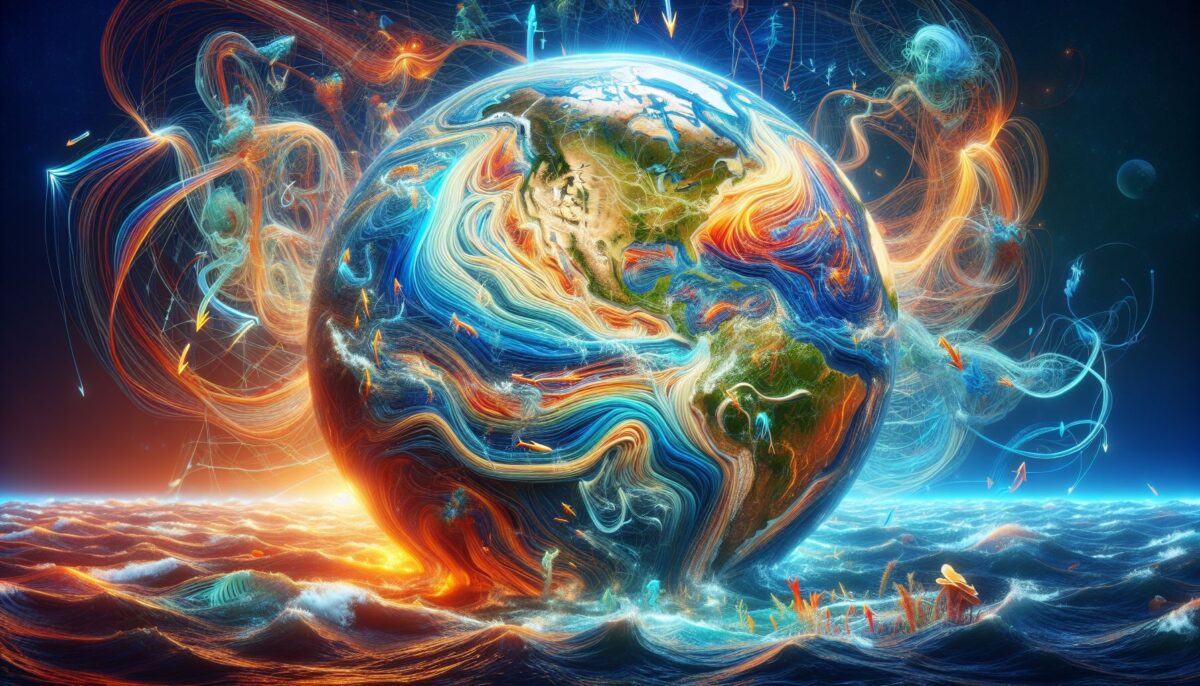
The vastness of our oceans is a testament to the myriad of mysteries and powers held within their depths. One of the most captivating and crucial phenomena cradled in these waters are the ocean currents – the great movers of our seas. These complex and dynamic systems carry water from one part of the world to another, regulating our planet’s climate, nurturing marine life, and shaping the patterns of human navigation and exploration. Dive with me as we explore the significance of ocean currents and their far-reaching impact on Earth’s systems.
The Pulse of the Planet: Understanding Ocean Currents
Ocean currents are the continuous, directional movement of ocean water generated by a multitude of forces acting upon the water, including wind, temperature, salinity differences, and the rotation of the Earth. The currents range from vast surface currents to deep water masses moving slowly in the ocean’s dark depths.
The Forces Behind the Flow
-
Wind: The primary force that drives surface currents is the wind. Winds blowing across the surface of the ocean push the water, creating currents. These wind patterns are influenced by Earth’s rotation and the positioning of the continents.
-
Temperature and Salinity: Temperature and salinity variations also cause water to move. Warmer, less dense water tends to rise, while cooler, saltier, denser water sinks. This creates a conveyor belt of water movement known as thermohaline circulation.
-
Coriolis Effect: The Earth’s rotation influences current direction, a phenomenon called the Coriolis Effect. Essentially, it makes currents veer to the right in the Northern Hemisphere and to the left in the Southern Hemisphere.
-
The Shape of Ocean Basins: The continental shapes and seafloor topography can direct the flow of currents as well.
Types of Ocean Currents
-
Surface Currents: These currents reside in the upper 400 meters of the ocean and primarily driven by wind. They include the well-known Gulf Stream in the North Atlantic and the Kuroshio in the Pacific.
-
Deep Water Currents: These are part of the thermohaline circulation and are driven by differences in water density, regulated by temperature and salinity. The Antarctic Bottom Water is a prominent example of a deep water current.
Navigating Through Nautical Highways: The Role of Currents in Maritime Trade and Biodiversity
Ocean currents are akin to a vast network of global conveyor belts transporting goods, nutrients, and marine organisms across the planet. They have played a vital role in human history, influencing maritime trade routes and the exchange of goods and cultures.
Currents as Maritime Trade Conduits
Navigational knowledge of currents has been pivotal for maritime trade. Historical trade winds and currents helped ships cross vast oceans. The well-charted Gulf Stream, for example, has been used by sailors to speed up the travel from the United States to Europe.
Currents as Highways for Marine Life
Currents carry vital nutrients that are essential for phytoplankton which are the foundation of the oceanic food chain. They also facilitate the dispersal of marine organisms, from tiny plankton to the great whales that utilize current pathways for migration.
Climate Regulators: Ocean Currents’ Influence on Weather and Climate
The circulation of ocean currents affects regional and global climates by moving heat from the Earth’s equatorial regions to the poles and distributing cold water from the polar areas back toward the equator.
-
Europe’s Temperate Climate: For example, the North Atlantic Drift, a part of the Gulf Stream, keeps the ports of Europe ice-free and gives the continent, especially Western Europe, a relatively mild climate.
-
El Niño: This climate pattern arises from changes in the Pacific Ocean’s circulation and can have drastic worldwide weather effects, such as heavy rainfall in South America and droughts in Australia and Southeast Asia.
Threats to Thalassic Flow: The Impact of Climate Change on Ocean Currents
As climate change warms the atmosphere, the ocean feels the effects. Melting polar ice impacts the salinity and density of seawater, potentially disrupting the thermohaline circulation. Moreover, alterations in wind patterns due to global warming can shift surface currents.
Addressing The Changes
It’s crucial to monitor these changes, as even slight variations in ocean currents’ paths can have significant consequences for marine ecosystems, weather patterns, and global climate.
Conservation and Sustainable Use: The Importance of Protecting Our Ocean Currents
Ocean currents are vital for the health of our planet, yet they face threats from human activities such as pollution, overfishing, and the pursuit of energy resources.
Marine Protected Areas (MPAs)
MPAs are zones designated to protect the marine environment and its resources. They help safeguard the habitats that are critical for the functioning of ocean currents and the life that depends on them.
Smart Policy and Global Cooperation
Global cooperation is essential in managing issues that affect the oceans as a whole, such as climate change, pollution, and the overexploitation of resources. International agreements like the United Nations Convention on the Law of the Sea (UNCLOS) aim to establish a legal framework for the utilization and conservation of the oceans.
Exploring New Horizons: Technological Advances in Studying Ocean Currents
The advent of satellite technology and ocean monitoring systems such as Argo floats has revolutionized the study of ocean currents. These tools provide real-time data on temperature, salinity, and current movements, contributing to our understanding of oceanography and assisting in navigation and weather forecasting.
Relevant Technologies:
- Satellite Remote Sensing: Helps in monitoring surface currents, sea surface temperatures, and chlorophyll concentrations.
- Argo Floats: Autonomous instruments that collect information from the ocean’s upper layers.
- Acoustic Doppler current profiler (ADCP): Measures water current velocities over a depth range.
Riding the Tide of Science: The Future of Ocean Current Studies
The future of ocean current research lies in advancing modeling capabilities and improving our understanding of how currents influence the biochemical cycles of the oceans. An interdisciplinary approach combining physical oceanography, marine biology, climatology, and geology is essential to unveiling the full narrative of ocean currents.
Collaborative Endeavors:
- International oceanographic research programs such as the World Ocean Circulation Experiment (WOCE) aim to achieve a comprehensive view of the world’s ocean circulation.
- The Intergovernmental Oceanographic Commission (IOC), under UNESCO, fosters international collaboration in ocean sciences.
Final Thoughts
As we have journeyed through the intricate dance of ocean currents, it’s clear that they are indispensable to the function and health of our planet. Beyond being simply a stream of water, they are lifelines that connect distant shores, climatic forces that sculpt the face of our global weather, and support systems for aquatic creatures great and small. It’s imperative that we continue to study, respect, and protect these vibrant veins of the ocean.
Sources:
- National Oceanic and Atmospheric Administration (NOAA) – Ocean Currents
- Intergovernmental Panel on Climate Change (IPCC) – [Climate Change and Ocean and Coastal E
