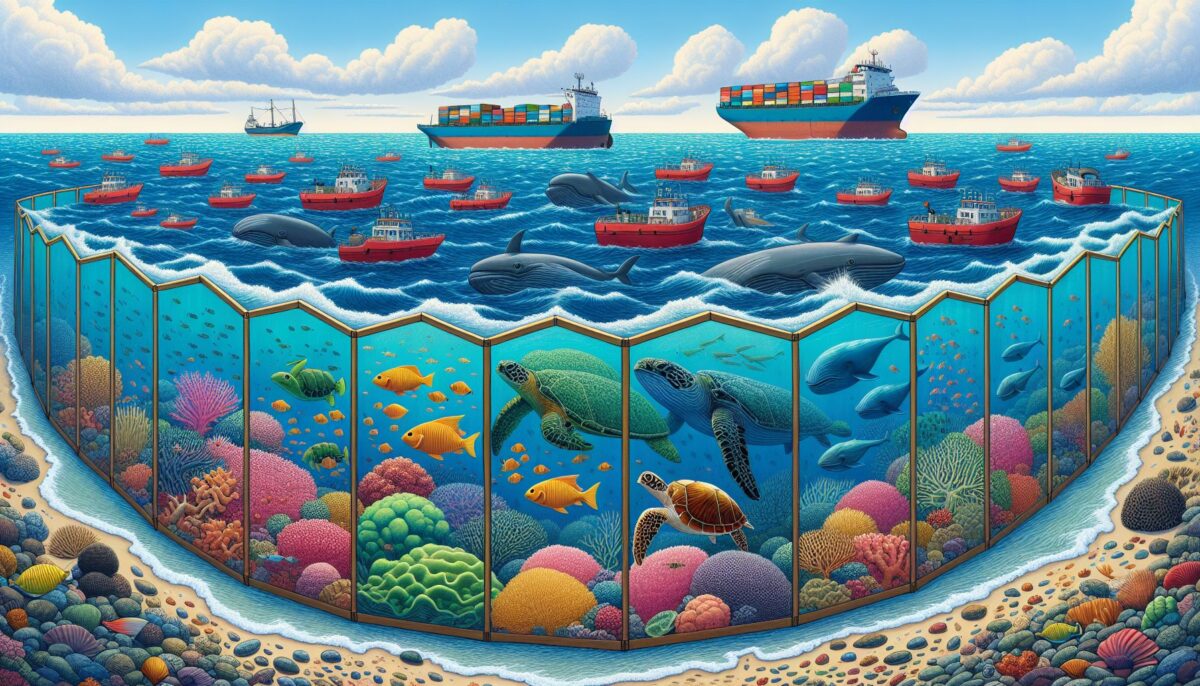
The oceans, encompassing more than 70% of the Earth’s surface, are realms of mystery and magnificence. They not only house an estimated 50-80% of all life on our planet but also play a central role in the world’s natural systems, such as climate regulation, nutrient cycles, and carbon storage. However, despite their vastness and depth, the oceans are not impervious to human impact. Marine biodiversity faces significant threats from various human activities. Marine protected areas (MPAs) represent a cornerstone strategy for the conservation and sustainable use of marine biodiversity. In this article, we will immerse ourselves in the wonders of marine life, explore the challenges it faces, and understand the pivotal role of MPAs in safeguarding our blue planet.
The Splendor of Marine Life
Marine life is beautifully diverse, ranging from the tiniest plankton to the largest whales. The intricate food webs and ecosystems established in the marine environment are both complex and delicate. Coral reefs, often referred to as the “rainforests of the sea,” support approximately 25% of all marine species, despite occupying less than 1% of the ocean floor. Yet, even the vast open oceans are brimming with life, characterized by the grand migrations of fish, marine mammals, and sea turtles across thousands of kilometers.
Challenges to Marine Biodiversity
Marine biodiversity faces numerous threats, many of which are exacerbated by human activities. Overfishing and destructive fishing practices have led to the decline of fish stocks and damage to the marine habitats. Climate change is another major factor, bringing about rising sea temperatures, ocean acidification, and coral bleaching. Pollution, including plastic debris and chemicals, further strains marine systems, causing harm to both marine life and human health. Marine habitats also face degradation and loss due to coastal development, aquaculture, and resource extraction.
Why Marine Protected Areas?
A Marine Protected Area is a space in the ocean where human activities are more strictly regulated than the surrounding waters – similar to parks we have on land. These areas are established to protect marine ecosystems, preserve cultural values, and ensure sustainable resource management. MPAs vary in size and can have multiple objectives, from strictly conserving habitats to allowing sustainable fishing practices.
The Benefits of MPAs
- Biodiversity Conservation: MPAs help conserve the diversity of marine species by offering them habitat sanctuaries where they can thrive undisturbed.
- Fisheries Management: By providing refuge for fish populations, MPAs can enhance fisheries outside their borders through the spillover effect, where adult fish migrate outside the MPA, thus supporting local fisheries.
- Resilience Against Climate Change: By protecting ecosystems, MPAs can build resilience in marine environments, allowing them to better withstand and recover from the impacts of climate change.
- Cultural and Recreational Value: These protected zones often host sites with cultural, historical, and recreational importance, including areas significant to Indigenous peoples and picturesque spots ideal for ecotourism.
Success Stories: The Impact of MPAs
The global network of MPAs showcases numerous success stories. One notable example is the Great Barrier Reef Marine Park in Australia. Established in 1975, this MPA covers an extensive range of biodiversity and has been pivotal in the conservation of species like the dugong and green sea turtle. Another success is the network of MPAs in the Mediterranean, which has been shown to greatly benefit fish populations and local economies.
Challenges in Implementing MPAs
While MPAs offer a powerful tool for conservation, there are significant challenges to their effectiveness. These include inadequate enforcement, lack of proper management, limited funding, and sometimes, the exclusion of local communities and stakeholders from the planning process. There is also the issue of “paper parks,” where MPAs exist only in legal documents, with little to no actual protection on the water.
The Future of MPAs and Marine Conservation
To enhance the impact of MPAs, several strategies must be considered:
- Effective Management and Enforcement: This includes adequate funding and resources for monitoring and enforcing regulations.
- Integrated Coastal and Ocean Management: MPAs should be part of larger management plans that include land-based activities affecting the ocean.
- Community Engagement: Engaging local communities and stakeholders can lead to more effective and equitable management practices.
- Scientific Research and Monitoring: Continuous research is needed to adapt MPA management effectively to changing conditions and new findings.
- International Collaboration: Oceans have no borders; hence, international cooperation is essential for addressing transboundary issues and establishing large-scale MPAs in international waters.
Sources and Further Reading
- Marine Conservation Institute, “What is a marine protected area?” (https://marine-conservation.org/what-we-do/program-areas/mpas/what-is-an-mpa/)
- United Nations, “Marine Protected Areas and Sustainable Fisheries” (https://sustainabledevelopment.un.org/content/documents/14589Policy_Brief_on_MPAs_and_fisheries.pdf)
- World Wildlife Fund, “Marine Protected Areas” (https://www.worldwildlife.org/initiatives/marine-protected-areas)
The establishment of MPAs showcases our increasing awareness of the need to preserve marine life for future generations. By managing our interactions with the marine environment more responsibly and creating refuges where nature can operate undisturbed, MPAs represent a beacon of hope for ocean conservation. Their effective implementation is a collaborative effort that requires the support of governments, local communities, scientists, and international bodies. Only by working together can we ensure that the boundless seas, with their wondrous inhabitants, continue to thrive in all their splendor, sustaining life both in the water and on land.
