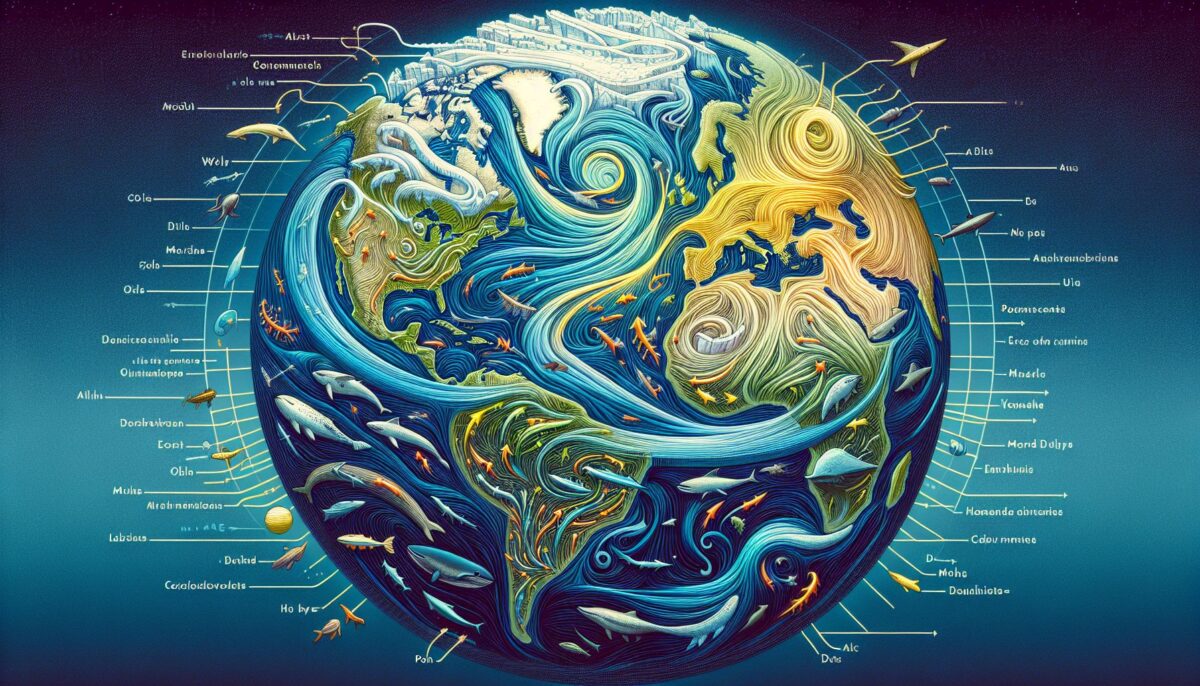
The ocean is vital to life on Earth. It covers more than 70% of our planet’s surface, regulates our climate, and provides a home for an immensely diverse array of creatures. But beneath the surface of this vast blue expanse is a complex world governed by the flow of its waters, known as ocean currents. In this article, we’ll dive deep to uncover the mysteries of these currents, their causes, the role they play in our ecosystems, and how they influence human activities.
The Driving Forces of Ocean Currents
Ocean currents are continuous, directed movements of seawater generated by various forces acting upon the water, including wind, the Coriolis effect, gravity, and differences in density.
Wind Patterns
Wind plays a significant role in the creation and direction of surface currents. These are the currents we’re most familiar with, and they can be categorized into the large-scale permanent currents that cross the globe’s oceans, like the Gulf Stream, and smaller, coastal currents that are influenced by local winds.
Coriolis Effect
The Earth’s rotation also impacts how currents move — a phenomenon known as the Coriolis effect. This force causes the water to veer to the right in the Northern Hemisphere and to the left in the Southern Hemisphere, creating swirling patterns that influence global circulation.
Gravity and Density Differences
Gravity impacts currents as water tends to move from areas of higher to lower elevation, particularly noticeable in tidal currents. Furthermore, when water of different temperatures and salinity interacts, the denser, saltier water sinks while the warmer, less dense water rises, setting up a conveyor belt-like system known as thermohaline circulation.
Benefits of Ocean Currents
Ocean currents distribute heat around the globe, which helps to regulate the climate and affect weather patterns. Without the currents, regional temperatures would be more extreme—hotter near the equator and colder toward the poles.
These currents also serve as highways for marine life, transporting nutrients across vast distances and supporting a diverse array of marine ecosystems. Phytoplankton, which relies on nutrient upwelling in certain areas, forms the base of the marine food web, feeding everything from small fish to large whales.
Human Utilization of Ocean Currents
Navigation and Shipping
Humanity has capitalized on ocean currents for centuries, first for navigation during seafaring and exploration, and now for international shipping. Ship captains often use currents to save fuel and time when planning voyages.
Marine Renewable Energy
The kinetic energy of tidal currents and surface waves is being harnessed to generate electricity, offering a sustainable alternative to fossil fuels. Although still in its infancy, marine renewable energy promises to be an important part of our future energy mix.
Fisheries and Aquaculture
Fishing industries flourish in nutrient-rich areas where currents converge. Currents bring schools of fish to specific locations, making them critical to both wild fisheries and aquaculture operations.
The Threats to Ocean Currents
While ocean currents are powerful natural phenomena, they are not immune to the impacts of human activities such as climate change.
Climate Change
The thermohaline circulation could slow down or alter due to increased freshwater from melting ice, which impacts salinity and disrupts the delicate balance necessary for this “global conveyor belt.” A disruption could lead to dramatic changes in climate, especially in Europe, which benefits from the warm waters of the Gulf Stream.
Overfishing
Overfishing can deplete the fish stocks in specific areas, disrupting the local ecosystem and the larger food web supported by the currents.
Pollution
Pollution, including oil spills and marine debris, can be carried by currents across the ocean, impacting marine life far from the original source of the contaminants.
Preserving Our Ocean Currents
To protect ocean currents and the myriad benefits they offer, we must take action at both the local and global levels. Establishing marine protected areas, regulating fishing practices, reducing carbon emissions, and investing in renewable energy are all important steps in the right direction.
International cooperation is critical in managing the ocean’s resources as currents know no national boundaries. Agreements like the United Nations Convention on the Law of the Sea provide frameworks for such collaboration but require widespread commitment and enforcement.
Conclusion
Ocean currents are the lifeblood of our planet’s ocean system, playing a crucial role in climate regulation, marine ecosystems, and human economies. As stewards of Earth’s natural resources, it is our responsibility to understand and protect these dynamic forces.
If you’re interested in learning more about ocean currents and their global significance, here are three key resources to explore further:
- National Oceanic and Atmospheric Administration (NOAA) – Currents: https://oceanservice.noaa.gov/education/kits/currents/
- The Intergovernmental Oceanographic Commission of UNESCO – Ocean Currents: https://ioc.unesco.org/
- United Nations Convention on the Law of the Sea (UNCLOS): https://www.un.org/depts/los/index.htm
By investing time in understanding these powerful currents and advocating for policies that protect our oceans, we can ensure that these vital pathways remain a force for life, climate stability, and human prosperity for generations to come.
