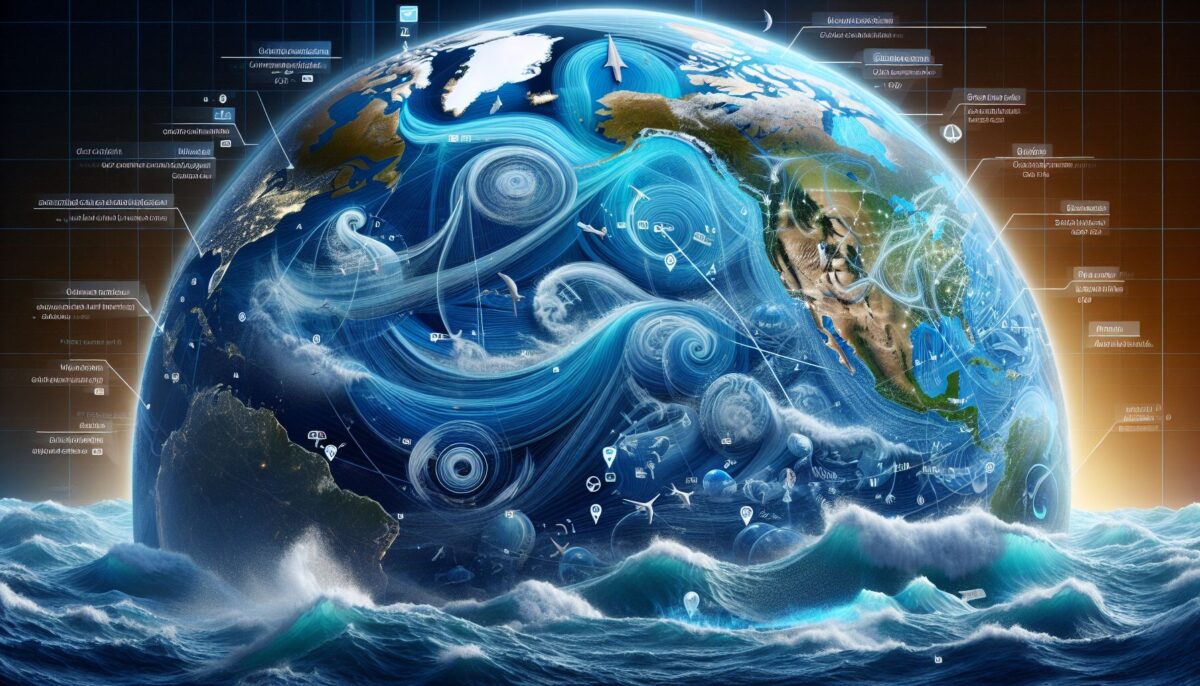
The Earth, our blue planet, is outlined with vast bodies of water that account for more than 70% of its surface. These endless stretches of water are veins to our world, fueling ecosystems and influencing weather patterns. Among the many elements of the ocean, one stands out for its significant yet often underappreciated role: ocean currents. In this article, we will embark on an aquatic journey to understand the complexities of currents, their impacts on marine life, Earth’s climate, and ultimately, human existence.
Understanding Ocean Currents
Ocean currents are continuous, directed movements of seawater generated by various forces acting upon the water, including wind, the Coriolis effect, changes in temperature and salinity, and the topography of the ocean floor. These currents can be classified into surface currents, which include the upper 400 meters of the ocean, and deep ocean currents, which move around the ocean’s depths.
Surface Currents
Surface currents are primarily driven by the wind. These currents typically follow the prevailing winds, such as the trade winds in the tropics and the westerlies in the mid-latitudes, shaping patterns known as gyres. Gyres are large circular currents that dominate the surfaces of the oceans. For example, the North Atlantic Gyre is responsible for the Gulf Stream, which brings warm water up the eastern coast of the United States and across the Atlantic to Western Europe.
Deep Ocean Currents: The Thermohaline Circulation
Deep ocean currents, also known as the thermohaline circulation or the ‘great ocean conveyor belt,’ are driven by differences in water density, influenced by temperature (thermo) and salinity (haline). Cold, salty water is dense and sinks, driving a deep current that flows from the polar regions towards the equator. This is a crucial component of global heat transfer, redistributing warm and cold water across the planet.
The Impact of Ocean Currents on Climate
Ocean currents play a pivotal role in regulating Earth’s climate. Large currents, such as the Gulf Stream, transport tremendous amounts of heat from the tropics to the poles, helping to balance the global temperature. The movement of currents also affects weather systems. For instance, the El Niño Southern Oscillation (ENSO) is a periodic fluctuation in ocean temperature and wind patterns in the Pacific Ocean, influencing global weather events.
The Ocean and Atmospheric Interplay
The ocean and atmosphere are in continual interaction; currents influence the atmosphere above them and vice versa. This close interplay can lead to the formation of weather systems such as hurricanes or monsoons, which are profoundly affected by the temperature and moisture content of the underlying ocean currents.
Currents and Marine Life
Ocean currents impact biological systems in numerous ways. Many species depend on these currents for migration, feeding, and maintaining the ecosystems they inhabit. For example:
- Nutrient Transport: Upwelling currents bring nutrient-rich water from the ocean depths to the surface, supporting vast swaths of marine life.
- Migration Routes: Many marine species such as whales and turtles use currents to traverse the oceans during their migratory patterns.
- Reef Health: Coral reefs rely on currents to bring a supply of food and oxygen while whisking away waste products and sediments.
The Challenge of Climate Change
As the climate changes, so too do ocean currents. Rising sea temperatures are beginning to alter the strength and direction of these currents, with potential consequences for marine ecosystems and the global climate. For example, a slowing of the Atlantic Meridional Overturning Circulation (AMOC) could lead to more extreme weather in Europe and impact sea levels along the American coast.
Economic and Societal Impact of Currents
Beyond their ecological importance, currents have substantial economic and societal impacts. They influence:
- Navigation: Throughout history, sailors have used knowledge of currents to aid sea travel and trade.
- Fisheries: Currents determine the health and location of fish stocks, which are critical to the global fishing industry.
- Marine Renewable Energy: Efforts to harness the energy of tidal and ocean currents are paving the way for new, clean energy sources.
Conservation and Management Efforts
Given the importance of currents to our ecosystems and climate, there are growing efforts to preserve these natural phenomena. Marine protected areas (MPAs), strict fishing regulations, and international agreements like the Paris Agreement aim to safeguard our oceans and the currents that flow within them.
Conclusion
Ocean currents are fundamental to maintaining life on Earth, both in the sea and on land. They are not only ecological wonders but also climate regulators, agents of nutrient transport, and navigational tools harnessed by humankind for millennia. As the climate shifts, understanding and protecting these vital forces of nature is more critical than ever.
Sources
- National Oceanic and Atmospheric Administration (NOAA) – “Ocean Currents and Climate” – https://www.noaa.gov/education/resource-collections/ocean-coasts/ocean-currents
- World Meteorological Organization (WMO) – “El Niño/La Niña Update” – https://public.wmo.int/en/el-ni%C3%B1o
- United Nations – “Conserve and sustainably use the oceans, seas and marine resources” (Sustainable Development Goals) – https://www.un.org/sustainabledevelopment/oceans/
These foundational currents shape not only the physical world but also the biological and human realms. From the bustling marine life thriving in nutrient-rich waters to the vast networks of global trade and commerce, our reliance on ocean currents is boundless. As we venture into a future marked by uncertainty due to climate change, it is imperative that we deepen our understanding of these powerful natural phenomena, advocating for the sustainability and health of our world’s oceans. The dance of the ocean currents is a choreography that all life on Earth is a part of; it is our duty to ensure that the music never stops.
