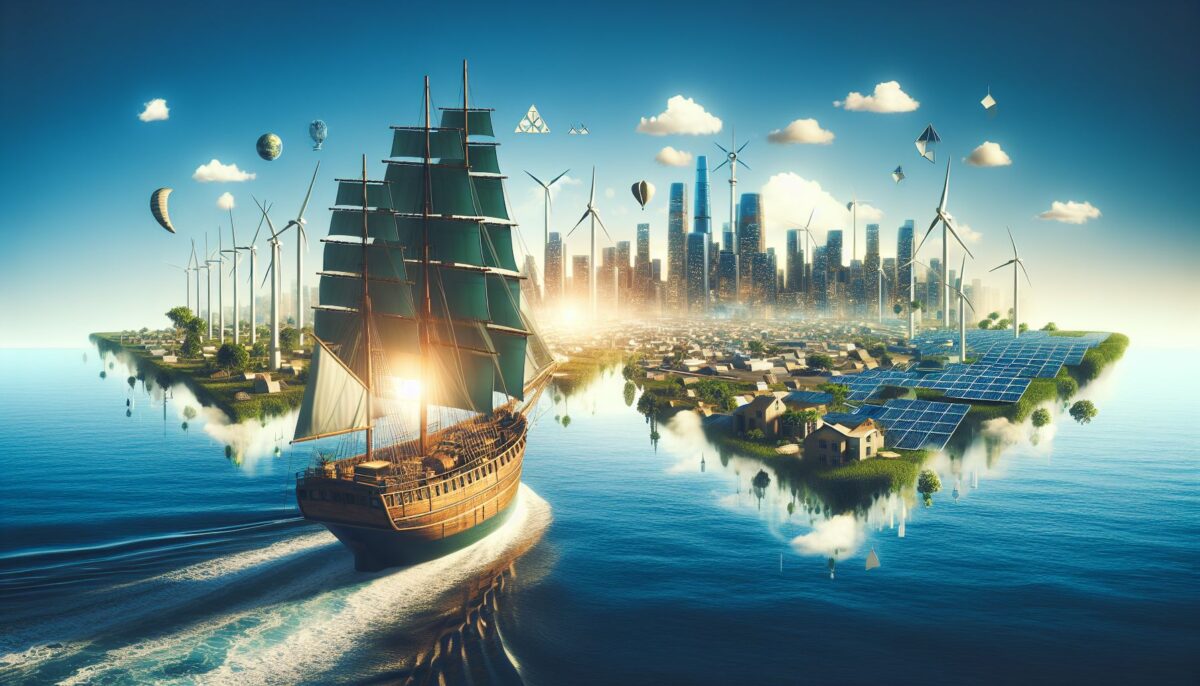
The concept of the ‘Blue Economy’ has been gaining a considerable amount of traction among policymakers, environmentalists, economists, and business leaders alike. It refers to the sustainable use of ocean resources for economic growth, improved livelihoods, and jobs while preserving the health of ocean ecosystems. In this article, we will delve deep into what the Blue Economy entails, its significance, the challenges it faces, and the potential it has for transforming our interactions with the world’s oceans.
Understanding The Blue Economy
The ‘Blue Economy’ encompasses a wide range of activities including maritime transport, fisheries, renewable energy, waste management, climate change, and coastal and marine tourism. The World Bank defines it as the “sustainable use of ocean resources for economic growth, improved livelihoods, and jobs while preserving the health of ocean ecosystems.”
Maritime Transport and Ports
Maritime transport is the backbone of the Blue Economy. Over 80% of global trade by volume and over 70% by value is carried by sea and handled by ports worldwide. Efficient and sustainable ports and shipping lanes are crucial for the success of the Blue Economy. Innovation in this sector could lead to greener shipping practices and reduce emissions and pollution.
Fisheries and Aquaculture
Fisheries play a critical role in food security and nutrient supply, providing essential protein and nutrition to billions. Aquaculture, on the other hand, is the world’s fastest-growing food production sector and is set to overtake wild fisheries as a source of seafood. Sustainable practices in both these areas are cornerstones of the Blue Economy.
Renewable Energy
Renewable energy from the sea, including tidal energy, wave energy, and offshore wind farms, offers huge potential for a more sustainable energy future. Harnessing these resources can help reduce dependency on fossil fuels and mitigate climate change impacts.
Tourism
Coastal and marine tourism is another significant component of the Blue Economy. It includes beach-based recreation and tourism, sea cruises, sports, and coastal resorts that create millions of jobs and contribute to the economies of countless coastal communities.
Waste Management
Effective management of marine waste and pollution are not only environmental imperatives but also economic ones. The health of marine ecosystems directly affects the economic activities that rely on them. Therefore, waste management initiatives, including reducing plastic pollution and treating wastewater before it reaches the sea, are essential components of the Blue Economy.
Blue Carbon
Mangroves, tidal marshes, and seagrasses make up ‘blue carbon’ ecosystems that sequester carbon from the atmosphere and ocean. Protecting these areas is crucial for mitigating climate change impacts, preserving biodiversity, and providing a buffer against storm surges and coastal erosion.
Significance of The Blue Economy
The oceans are a key part of the Earth’s life-support system. They regulate climate by absorbing carbon dioxide and produce over half of the world’s oxygen. Further, around 3 billion people rely on marine and coastal biodiversity for their livelihoods.
Economic
The Blue Economy has vast potential for promoting economic growth and alleviating poverty. It’s projected that the economic value of the Blue Economy is somewhere between $3-6 trillion per year. Developing sustainable ocean-based industries can create new jobs, support world economies, and ensure food security.
Social
By providing employment and supporting livelihoods, the Blue Economy has a significant social impact. It enables better living standards for fishing communities and adds resilience against economic downturns and food scarcities.
Environmental
Sustainable management of ocean resources minimizes environmental impacts, conserves marine biodiversity, and helps protect endangered species and habitats.
Challenges Facing The Blue Economy
While the prospects of the Blue Economy are immensely promising, there are various challenges that need to be tackled:
- Overfishing threatens the sustainability of fish stocks and marine ecosystems.
- Marine pollution, particularly plastic waste, is damaging to marine life and potentially human health.
- Ocean acidification and coral bleaching, and other climate change-related impacts, are destroying critical habitats.
- Illegal, unreported, and unregulated (IUU) fishing undermines sustainable fisheries management.
- Coastal erosion and habitat destruction diminish the ecological integrity of coastal and marine environments.
Harnessing The Potential
To truly realize the potential of the Blue Economy, we require concerted efforts at various levels:
- Marine Spatial Planning (MSP): This manages the shared use of the ocean by stakeholders such as energy, fishing, conservation, and tourism industries.
- Sustainable Fisheries Management: Implementing strict quotas and protecting nursery grounds can ensure fish populations thrive.
- Marine Protected Areas (MPAs): These are necessary to conserve critical marine habitats and biodiversity.
- Environmental Regulations: Policing and enforcing anti-pollution legislation is vital for clean seas.
- Investment in Research: Better understanding through oceanographic research leads to informed decision-making and innovation.
- International Collaboration: Oceans know no boundaries; hence global cooperation is key for tackling issues like illegal fishing and pollution.
The Path Forward
The transition to a Blue Economy requires integrating the management of land, water, and living resources, promoting conservation, and sustainable economic activity. The UN Sustainable Development Goal 14, ‘Life Below Water’, emphasizes the necessity of conserving and sustainably using the oceans, seas, and marine resources.
Continual investment in sustainable infrastructure, promotion of green shipping, development of sustainable fisheries, and marine renewable energy are essential. Furthermore, the Blue Economy concept sets the stage for developing nations, particularly Small Island Developing States (SIDS), to harness ocean resources, given the significant ocean spaces they hold sovereignty over.
The Blue Economy is more than an economic model; it’s a shift in mindset, recognizing that the economy and ecology of the planet are intrinsically linked. Ensuring sustainable ‘blue growth’ is a collaborative global responsibility that requires innovative thinking, long-term planning, and an unwavering commitment to the Earth’s oceans.
Sources
To gain a deeper understanding of the topics discussed here, consider the following resources:
- World Bank’s “What is the Blue Economy?” World Bank Group
- United Nations’ Sustainable Development Goal 14: UN SDGs
- The Blue Economy Concept Paper by the Commonwealth of Nations: The Commonwealth
The Blue Economy is a bold approach to preserving the greatest resource our planet has to offer while fostering sustainable economic growth, and the journey has only just begun. It’s through understanding, respect, and innovative management of the ocean’s resources that we can ensure the sea’s bounty endures for generations to come.
