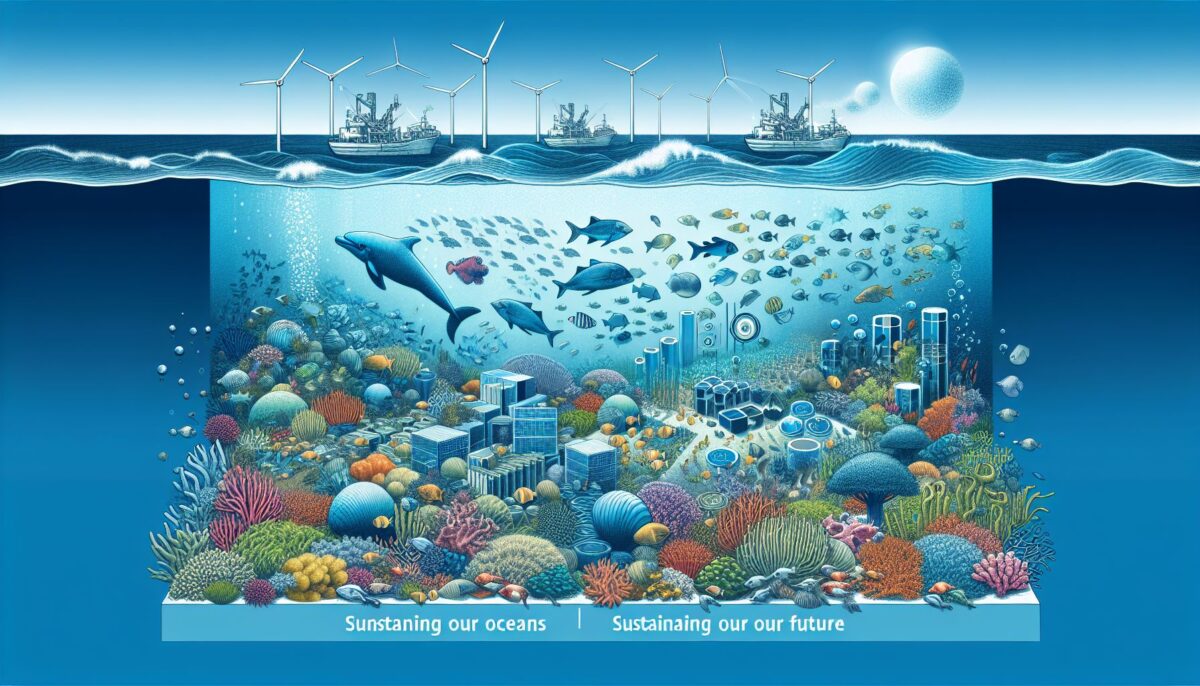
The concept of the “Blue Economy” is a rich and rapidly evolving one, reflecting the fact that the health of the world’s oceans is inextricably linked to the health of our global economy. With the oceans covering over 70% of the Earth’s surface, they are a major player in global economics, supporting a wide range of industries, from fishing and tourism to international shipping and offshore drilling.
Understanding the Blue Economy
The term “Blue Economy” encompasses a broad spectrum of economic activities that derive from the sea and coasts. This includes traditional sectors such as fisheries, shipping, and tourism, as well as emerging industries like aquaculture, marine biotechnology, and ocean energy.
Fisheries and Aquaculture: Feeding the World
The fishing industry is a fundamental part of the Blue Economy, providing livelihoods to millions of people around the world. According to the Food and Agriculture Organization (FAO), fisheries and aquaculture assure the livelihoods of 10-12% of the world’s population. Aquaculture is among the fastest-growing food sectors and can contribute greatly to food security if managed sustainably.
Shipping and Ports: The Backbone of Global Trade
Maritime trade is the lifeblood of the global economy, with over 90% of world trade being carried by sea (UNCTAD – United Nations Conference on Trade and Development). Ports serve as the gateways for goods and commodities, making the efficient and sustainable management of these services crucial for a thriving Blue Economy.
Tourism: Preserving Coastal Gems
Coastal and marine tourism, the largest segment of the Blue Economy, is heavily dependent on healthy marine ecosystems. Tourists flock to pristine beaches, corals reefs, and vibrant marine life demonstrating the direct link between environmental sustainability and economic gain.
Emerging Sectors: Harnessing the Power of Innovation
In addition to traditional uses of the ocean’s bounty, the Blue Economy includes newer sectors like marine renewable energy – wave and tidal – which offer the promise of providing a significant portion of future clean energy needs.
Challenges Facing the Blue Economy
The ocean’s health is under threat from a range of issues, which presents significant challenges for those industries that operate within the Blue Economy.
Overfishing: Emptying our Oceans
Overfishing is a serious threat to marine biodiversity, and it undermines the renewal of fish stocks, harming the long-term viability of fisheries. According to the World Wildlife Fund (WWF), around 52% of fish stocks are fully exploited, with another 17% overexploited.
Pollution: Choking Marine Life
Marine pollution, from land-based sources including plastics and nutrients, as well as from maritime activities such as oil spills, affects every aspect of ocean life. The United Nations estimates that marine litter, particularly plastic litter, kills up to 1 million seabirds, 100,000 sea mammals, marine turtles, and countless fish annually.
Climate Change: Warming and Rising Seas
Oceans are becoming warmer and more acidic due to increases in atmospheric CO2 levels. This exacerbates coral bleaching and affects many marine species, disrupting ecosystems. Rising sea levels due to climate change pose an existential threat to low-lying nations and coastal communities.
Strategies for Sustainable Blue Economy
The future of the Blue Economy depends on the sustainable management of ocean resources. It requires cooperative strategies that balance economic use with conservation efforts.
Marine Protected Areas (MPAs): Safeguarding Biodiversity
One strategy for preserving marine biodiversity is the establishment of Marine Protected Areas (MPAs). MPAs are designated regions where human activity is regulated to conserve the environment. They can contribute to replenishing fish stocks and protect ecosystems.
Coastal Management: Adapting to Change
Adaptive coastal management practices, from restoring wetlands to erecting sea walls, help communities deal with the impacts of sea-level rise and increasing storm activity.
Policy and Governance: International Cooperation
Global coordination is key to managing the oceans sustainably. The United Nations has defined Sustainable Development Goal 14 (Life Below Water) which emphasizes the conservation and sustainable use of the oceans, seas, and marine resources.
The Blue Economy in Action
Several countries and regions are pioneering ways to tap into the Blue Economy while protecting marine resources.
- Norway is investing in sustainable fish farming technology and has become a world leader in salmon aquaculture.
- In the Caribbean, countries are developing strategies to protect their tourism-driven economies from the impacts of climate change.
- Seychelles launched the world’s first sovereign blue bond in 2018 to fund marine projects that benefit the environment and communities.
Conclusion
The concept of the Blue Economy rests on the realization that the sustainable management of ocean resources is not merely an environmentalist’s agenda but a development and economic imperative. Investments in sustainable practices, innovations in conservation and energy, and international cooperation can unlock the vast potential of our oceans while safeguarding them for future generations.
Sources
- Food and Agriculture Organization of the United Nations. (n.d.). FAO and the SDGs. http://www.fao.org/sustainable-development-goals/indicators/1411/en/
- United Nations Conference on Trade and Development. (n.d.). Review of Maritime Transport 2020. https://unctad.org/webflyer/review-maritime-transport-2020
- World Wildlife Fund. (n.d.). Overfishing. https://www.worldwildlife.org/threats/overfishing
The Blue Economy encompasses a mindset change, from exploiting to nurturing the wealth of the oceans for a sustainable and inclusive future. Accepting this challenge is not only an environmental imperative; it is the foundation for ongoing human prosperity.
