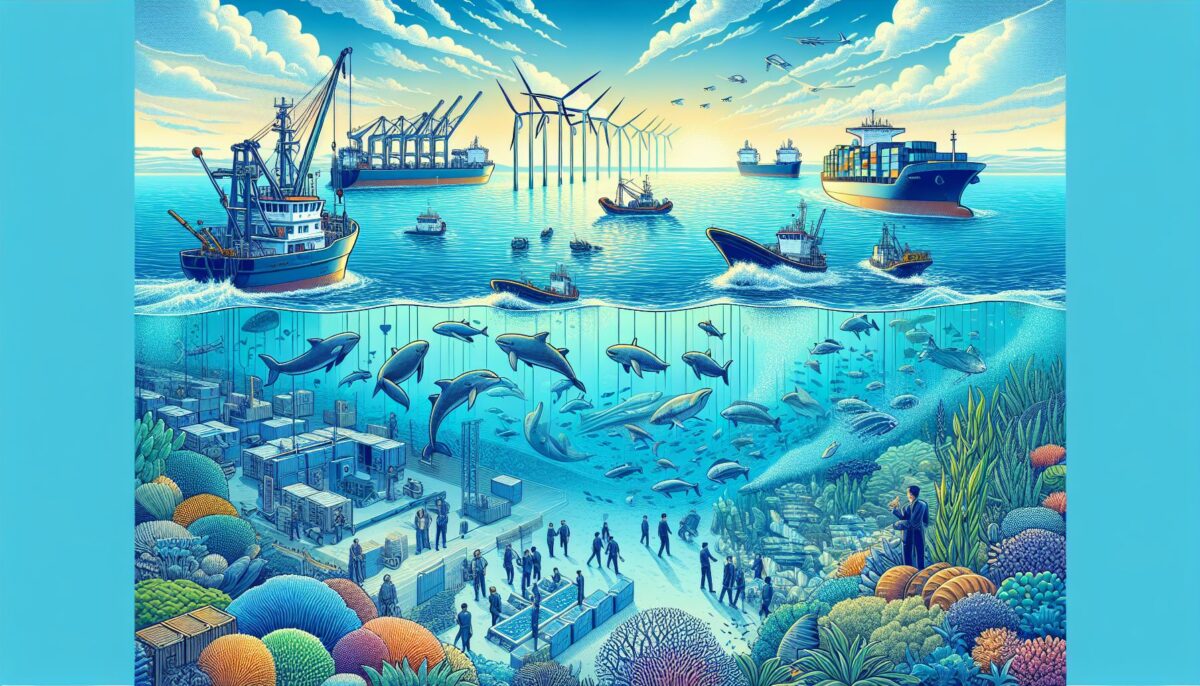
Oceans cover more than 70% of the Earth’s surface and are a vital component of life on our planet. They not only serve as a means for transportation and trade but also are a critical source of food, energy, medicine, and leisure for billions of people worldwide. Within the vast scope of ocean-related activities, there’s a concept that has been gaining momentum: the Blue Economy. At its core, the Blue Economy encompasses sustainable use of ocean resources for economic growth, improved livelihoods, and jobs while preserving the health of ocean ecosystems.
What is the Blue Economy?
The term “Blue Economy” was first introduced during the Rio+20 United Nations Conference on Sustainable Development in 2012. It highlights the potential of seas and oceans in contributing to economic development, particularly for small island developing states and coastal least developed countries, without compromising maritime health. But what exactly falls under the scope of the Blue Economy? It encompasses various sectors including:
- Sustainable fisheries and aquaculture
- Shipping and port facilities
- Coastal and marine tourism
- Renewable energy (tidal and wave power)
- Underwater mining and bioprospecting
- Coastal resilience and protection infrastructure
Each of these sectors holds the promise of not only providing sustenance and occupation but also of fueling innovation, moving us closer to a more sustainable and equitable global economy.
Sustainable Fisheries and Aquaculture
Fisheries are a fundamental component of the Blue Economy. Yet, the Food and Agriculture Organization (FAO) has reported that over 34% of global fish stocks are overfished. The sustainable management of fisheries is imperative to preserve fish stocks, protect biodiversity, and ensure a consistent supply of seafood—a primary protein source for billions.
Aquaculture, or fish farming, is on the rise to meet global demand for seafood while taking pressure off wild fish stocks. However, it needs to be managed without causing further harm to marine environments. Innovations in aquaculture, including offshore and multi-trophic systems, offer promising avenues for increasing fish production sustainably.
Maritime Transport
Maritime transport is the backbone of globalization and international trade, with over 90% of the world’s trade being carried by sea, according to the International Maritime Organization (IMO). Efficient shipping and advanced port facilities are central to the Blue Economy. However, they must adapt to be more environmentally friendly and efficient, reducing emissions and waste, implementing ballast water management, and maintaining the integrity of coastal ecosystems.
Tourism: A Pillar of the Blue Economy
Coastal and marine tourism is one of the fastest-growing areas of the global leisure industry and can significantly contribute to the wealth of nations if it’s managed sustainably. It includes beach-based recreation, snorkeling, scuba diving, wildlife watching, and cruising. These activities must be regulated to ensure they do not damage sensitive ecosystems such as coral reefs or lead to overdevelopment along coastlines.
The Renewable Energy Sector
Oceans hold great potential for renewable energy generation—one of the most promising aspects of the Blue Economy. Tidal and wave energy technologies are being developed to capture the immense power of the seas. For example, tidal barrages and underwater turbines can generate electricity by harnessing the energy from tidal currents and waves.
Exploration and Mining
The seafloor is rich in minerals and resources like diamonds, gold, and rare earth elements. With advancing technology, deep-sea mining is becoming economically feasible. However, it poses significant environmental risks. Any move towards exploiting these resources must be accompanied by stringent regulations and sustainability frameworks to protect marine ecosystems from damage.
Protecting and Enhancing Coastal Resilience
Coastal erosion and sea-level rise are real threats that the Blue Economy must address. Green infrastructure—such as mangrove restoration, coral reef protection, and the creation of marine protected areas—are crucial in bolstering coastal resilience. Investing in the protection and conservation of these natural barriers can mitigate the damage caused by storm surges and enhance the overall health of marine ecosystems.
The Challenges
Despite the potential, there are challenges to realising the full benefit of the Blue Economy. They include:
- Environmental Sustainability: How to exploit ocean resources without causing irreparable damage?
- Economic Inclusivity: Ensuring that the economic benefits are distributed equitably among all stakeholders, not just a handful of multinational corporations.
- Governance and Regulation: Establishing international and local governance frameworks that can manage the complexities of maritime activities.
Conclusion
The safeguarding of the oceans through sustainable practices is not just an environmental imperative but is also an economic strategy that can pave the way to a resilient and prosperous future. As the Blue Economy continues to expand, it must integrate the lessons of the past, where unchecked exploitation led to degradation and loss, into building a sustainable and inclusive economic model that can weather the challenges of the future.
For those interested in learning more about the Blue Economy, the World Bank, the United Nations Development Programme (UNDP), and The Economist Intelligence Unit offer extensive resources and statistics on the economic potential of our oceans and how to tap into this potential responsibly.
Sources:
-
World Bank – The Potential of the Blue Economy: Increasing Long-term Benefits of the Sustainable Use of Marine Resources for Small Island Developing States and Coastal Least Developed Countries. (Link)
-
United Nations Development Programme (UNDP) – Sustainable Management of Oceans. (Link)
-
The Economist Intelligence Unit – The Blue Economy: Growth, opportunity and a sustainable ocean economy. (Link)
