Category: Main (page 23 of 31)

The Puzzle of Ocean Currents: Driving Forces, Patterns, and their Role in Global Climate

The ocean is a vast, dynamic system playing an integral role in Earth’s climate and weather patterns. Among the many phenomena that occur within its waters, ocean currents stand out as crucial components of marine ecosystems and global heat distribution. They traverse thousands of miles, shaping coastlines, affecting weather systems, and sustaining marine life. But what drives these currents, how do they form their intricate patterns, and what roles do they play in our planet’s climate? In this article, we will explore the mysterious world of ocean currents and their profound influence on our planet.

Understanding Ocean Currents

Ocean currents are continuous, directed movements of seawater generated by a variety of forces acting upon these waters, including wind, Coriolis effect, temperature and salinity differences, and tides caused by the gravitational pull of the moon and the sun. These currents can be either surface currents, occurring in the upper 400 meters of the ocean, or deep-water currents, which move around water in the deeper parts of the ocean basins.

The Driving Forces of Ocean Currents

Wind

The primary force that drives surface currents is wind. Ocean currents and the wind have a profound relationship, with the wind’s speed and direction influencing the speed and direction of the water’s surface layer to a considerable depth through friction. The global wind patterns are known to create gyres, large system of circular currents, in the major ocean basets.

Coriolis Effect

The rotation of the Earth impacts how water moves across our planet. The Coriolis effect causes moving water to turn to the right in the northern hemisphere and to the left in the southern hemisphere. This effect contributes significantly to the circular patterns seen in ocean gyres.

Temperature and Salinity

Differences in temperature and salinity, known as thermohaline circulation, drive deep ocean currents. Cold saline water is dense and sinks to the ocean floor while warmer, less salty water is less dense and remains on the surface. This process creates a global conveyer belt that circulates ocean water around the world.

Tides

Tides also affect currents by producing tidal streams as water ebbs and flows along coasts and estuaries, as well as in the open ocean.

Patterns of Ocean Currents

Ocean currents can flow for thousands of kilometers and are key components in Earth’s climate system. They follow specific patterns:

  • Gyres: These large systems of circular currents are found in the middle of the oceans and are predominately controlled by wind direction and the Coriolis effect.
  • Equatorial Currents: These currents flow westward along the equator, driven by trade winds.
  • Western Boundary Currents: These are warm, deep, narrow, and fast-flowing currents that are found on the western side of ocean basins, such as the Gulf Stream in the North Atlantic.
  • Eastern Boundary Currents: These are cooler, shallower, and wider than western boundary currents and flow towards the equator on the eastern sides of ocean basins.

Ocean Currents and Climate

Ocean currents have a significant impact on the climate. They redistribute heat from tropical to polar regions, influencing weather patterns and temperatures. For instance, the Gulf Stream carries warm water from the Caribbean to the North Atlantic, making climates in Northern Europe significantly warmer than other locations at similar latitudes.

El Niño and La Niña

Ocean currents are also part of significant weather phenomena such as El Niño and La Niña, which can lead to global weather events. El Niño is characterized by warmer-than-average sea surface temperatures in the central Pacific Ocean, whereas La Niña features cooler-than-average sea surface temperatures. Both can cause drastic weather conditions around the globe, from flooding in the western Pacific to droughts in parts of North America.

Impact on Marine Biodiversity

Beyond their influence on climate, ocean currents transport nutrients and provide a pathway for the migration of marine life. Areas where cold, nutrient-rich deep waters are brought to the surface (upwelling) are particularly rich in marine biodiversity and are critical regions for fishing.

Changes and Challenges: Climate Change and Ocean Currents

We are beginning to see that human-induced climate change may be affecting ocean currents. Changes in oceanic heat content and the melting of polar ice can alter the intensity and direction of currents, which may, in turn, cause profound changes in regional weather patterns, climate, and marine ecosystems.

The Role of Technology in Understanding Currents

Advancements in technology have been crucial in studying ocean currents. Satellite observations and an array of underwater instruments, such as ARGO floats, have provided scientists with unprecedented insights into the dynamics and impacts of ocean currents.

Protecting the Oceans

Understanding and protecting our ocean currents is critical. Oceanographic research and monitoring of currents help us predict changes in climate and fisheries, contributing to the sustainable management of marine resources. Efforts to protect the ocean’s health are internationally coordinated through various initiatives and agreements.

Resources for Further Reading

  1. National Oceanic and Atmospheric Administration (NOAA): Ocean Currents
  2. Intergovernmental Oceanographic Commission (IOC): Ocean Currents
  3. National Geographic Society: Ocean Currents and Climate

Conclusion

Ocean currents are the lifeblood of the ocean and an essential component of the Earth’s climate system. They shape our climate, affect marine ecosystems, and impact human societies. As we continue to deepen our understanding of these powerful forces, it is vital we recognize their importance and work to protect the oceans that drive them. Human activity, particularly the emission of greenhouse gases, can have a significant impact on the ocean currents. Therefore, it is in our best interest to strive for a harmonious relationship with the ocean currents that keep our planet’s climate engine running smoothly.
Navigating the Dynamic World of Ocean Currents: The Lifeblood of Our Oceans

The ocean, that vast expanse of saltwater covering approximately 71% of our planet, is an entity filled with wonders and mysteries yet to be fully understood by humankind. Amongst its many fascinating aspects are the currents—those continuous, directed movements of seawater generated by various factors such as wind, temperature, salt concentration, and the rotation of the Earth. Ocean currents play a crucial role in regulating the Earth’s climate, distributing nutrients, and supporting marine life. This article will delve into the dynamic world of ocean currents, exploring their nature, causes, types, and the vital part they play in the environment and human life.

What Are Ocean Currents?

Ocean currents are like rivers within the sea, moving vast amounts of water across the planet’s surface and depths. They can flow for thousands of kilometers and reach depths of several thousand meters. These currents can be broadly categorized into two types:

  1. Surface Currents: Comprising about 10% of the water in the ocean, these currents are found in the upper 400 meters and are primarily driven by the wind.
  2. Deep Water Currents: Making up the other 90%, these currents are driven by differences in water density, which is affected by temperature (thermo) and salinity (haline), hence the term thermohaline circulation.

Causes and Effects of Ocean Currents

Ocean currents are generated by a complex interplay of factors, and understanding them is crucial for comprehending how they affect marine and global systems.

Wind

Wind plays a significant role in the creation of surface currents. The Earth’s rotation and the Coriolis effect cause winds to blow in particular patterns, such as trade winds, westerlies, and polar easterlies, which in turn drag the water with them, creating currents.

Earth’s Rotation

The Coriolis effect, resulting from the Earth’s rotation, influences the direction of currents, causing them to veer to the right in the northern hemisphere and to the left in the southern hemisphere.

Water Density Differences

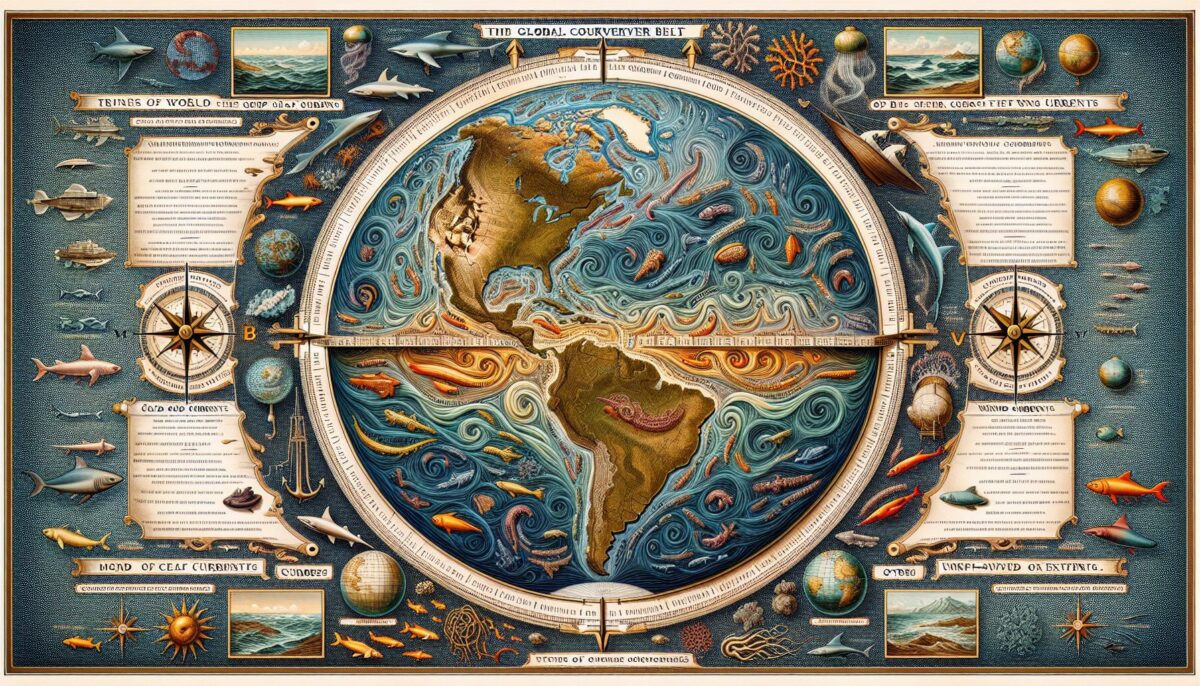
Differences in water density, due to variations in temperature and salinity (salt content), create a vertical movement of currents. Cold, salty water is denser and sinks, while warm, less salty water is lighter and rises—this initiates a global conveyer belt-like flow known as thermohaline circulation.

Gravitational Pull

The gravitational pull from the moon and the sun on the Earth’s waters contributes to the tides, which, in turn, generate tidal currents.

Shape of Ocean Basins

The underwater topography or bathymetry, including features like continental shelves, slopes, and ocean basins, directs the path of ocean currents.

Major Ocean Currents

Several major currents act as the ocean’s arteries and veins, transporting heat, nutrients, and salt around the globe:

  • The Gulf Stream: One of the strongest known currents, it transports warm water from the Gulf of Mexico along the eastern coastlines of the United States and across the Atlantic to Western Europe.
  • The Kuroshio Current: Similarly, this current flows from off the coast of Japan into the North Pacific.
  • The Antarctic Circumpolar Current: An important current that flows from west to east around Antarctica, connecting the Atlantic, Pacific, and Indian Oceans.
  • The North Atlantic Deep Water Current: This deep-water current is a key component of the global conveyer belt, carrying cold dense water from the Arctic into the North Atlantic.

Impact on Climate and Weather

Ocean currents are vital in moderating the world’s climate by redistributing heat. Warm currents like the Gulf Stream transport heat from the equator toward the poles, while cold currents help cool tropical latitudes.

Ecological Significance

The movement of currents affects the distribution of nutrients and marine life. Upwelling, a process where deep, nutrient-rich water is brought to the surface, supports high levels of productivity and is fundamental to marine ecosystems.

Human Activities and Ocean Currents

Maritime Navigation

Historically, sailors have used knowledge of currents to navigate the seas—an understanding that continues to inform modern shipping and navigation practices.

Fishing and Aquaculture

Ocean currents significantly impact fisheries and aquaculture by influencing the abundance and distribution of fish stocks. Currents can carry larvae and juvenile fish to different regions, affecting fish populations and the industry reliant on them.

Energy Production

Innovative technologies aim to harness the kinetic energy from tidal and ocean currents to generate renewable energy. Tidal energy and wave energy projects are being developed as sustainable alternatives to fossil fuels.

Environmental Concerns

Ocean currents can also spread pollutants, such as oil spills and marine debris, across vast distances, affecting marine life and coastal ecosystems far from the original source of pollution.

The Threat of Climate Change

Climate change is poised to disrupt the delicate balance of ocean currents. Melting polar ice alters the balance of fresh and saltwater, potentially impacting the global thermohaline circulation, with ramifications for the global climate.

Conclusion

Ocean currents are essential to life on Earth, influencing weather patterns, supporting rich marine ecosystems, and shaping human activities. As we continue to explore and understand these enigmatic forces of nature, our appreciation of their significance grows, as does our responsibility to protect the delicate marine environment they support.

It’s imperative to maintain the health of our ocean currents, not just for the sake of marine life but for the welfare of the entire planet. With increased research and vigilance, we can ensure that these mighty rivers within the sea continue to flow freely, playing their part in the intricate symphony of global environmental processes.

Sources

For further information, here are a few sources that delve deeper into ocean currents:

  1. National Geographic: “Ocean Currents
  2. National Ocean Service (NOAA): “What are ocean currents?
  3. Ocean Motion: “Defining Oceanic Currents

The Intriguing World of Ocean Currents: Navigating the Global Conveyor Belt

The ocean is a vast and complex entity, covering over 70% of the Earth’s surface. It influences climate, shapes ecosystems, and supports a rich diversity of life. Hidden beneath the waves, a dynamic system of currents moves enormous volumes of water around the globe. This system, often described as the planet’s “global conveyor belt,” regulates temperatures, distributes nutrients, and has a profound impact on marine life and human activities. In this article, we will embark on an in-depth exploration of ocean currents: their types, causes, importance, and the challenges they face in a changing climate.

Understanding Ocean Currents

Ocean currents are horizontal movements of seawater that can vary in size, strength, and temperature. They are essential to maintaining the Earth’s climate and are driven by several factors, including wind, water density differences, and the Earth’s rotation.

Types of Ocean Currents

There are two primary types of ocean currents: surface currents and deep-water currents.

  • Surface currents are driven primarily by wind and are most noticeable as the continuous movement of water in the ocean’s upper layers. They tend to follow predictable patterns and are largely responsible for the circulation of warm and cold water across the ocean’s surface.

  • Deep-water currents are driven by differences in water density caused by variations in temperature and salinity. These currents move more slowly than surface currents but transport large volumes of water across vast distances.

Causes of Ocean Currents

  • Wind Driven: Surface currents arise mainly due to prevailing winds. The Coriolis effect, a consequence of the Earth’s rotation, also influences how these currents move, causing them to curve to the right in the Northern Hemisphere and to the left in the Southern Hemisphere.

  • Thermohaline Circulation: Deep-water currents are part of the thermohaline circulation, which is affected by water temperature (thermo) and salinity (haline). Cooler, saltier water is denser and sinks, while warmer, less salty water is more buoyant and rises, creating a global scale flow.

  • Tidal Forces: The gravitational pull of the moon and, to a lesser extent, the sun generate tides, which can give rise to certain types of tidal currents.

The Significance of Ocean Currents

The movement of water carries heat from the tropics to the poles and back, modulating global climate conditions. Currents also distribute nutrients and oxygen, sustaining marine ecosystems from surface waters down to the darkest depths of the ocean.

Impact on Climate

Currents like the Gulf Stream have a major impact on regional climates. For example, Western Europe’s relatively mild climate, compared to other regions at similar latitudes, is largely due to the warm water transported by the Gulf Stream.

Marine Life

Plankton and other organisms rely on currents for transport and nourishment. These microscopic organisms are the foundation of the marine food web, supporting species from tiny fish to massive whales.

Human Activities

Currents play a crucial role in human activities such as navigation, shipping, and fishing. Mariners have utilized currents for centuries, saving time and energy on voyages across the oceans.

Threats to Ocean Currents in a Changing Climate

As the Earth’s climate changes, there are growing concerns that ocean currents could be disrupted by alterations in temperature and salinity patterns. A significant change in ocean circulation could have profound effects on weather patterns, sea levels, fishing industries, and even global food security.

Ocean Warming

Rising global temperatures are causing the oceans to warm, which can disrupt the delicate balance that drives the thermohaline circulation.

Melting Ice Caps

Freshwater from melting ice caps can decrease salinity levels in the oceans, potentially slowing down or even halting the global conveyor belt in some areas.

Acidification and Deoxygenation

Increased carbon dioxide levels are leading to ocean acidification, affecting marine life and altering the chemical composition of seawater. Deoxygenation, the loss of oxygen from ocean waters, further threatens marine ecosystems and affects current patterns.

Exploring the Depths: Oceanography and Hydrography

Oceanography and hydrography are scientific disciplines dedicated to the study of the ocean’s physical properties, seabed, and coastal environments. They provide valuable insights into current patterns and help predict changes in the marine environment.

Oceanographers use a variety of tools to study currents, such as buoys, satellites, and water sampling instruments. Hydrographers, on the other hand, focus on the measurement and description of navigable waters, producing charts and maps used for safe mariner navigation.

Safeguarding the Future

To protect ocean currents and the critical roles they play, several strategies can be employed:

  • Marine Protected Areas: Establishing marine protected areas can help safeguard ecosystems that are crucial for maintaining healthy current systems.

  • Reducing Greenhouse Gas Emissions: Limiting global warming through the reduction of greenhouse gas emissions is essential to prevent further changes to current patterns.

  • Sustainable Practices: Encouraging sustainable fisheries, reducing pollution, and ensuring responsible coastal development can mitigate negative impacts on ocean currents.

Conclusion

Ocean currents are the lifeblood of our planet’s oceans. They provide critical services, from regulating the world’s climate to sustaining marine life. As our understanding of these currents continues to evolve, we must take action to preserve the delicate balance that makes life on Earth possible. Through research, conservation, and sustainable practices, we can ensure that ocean currents continue to flow, undisturbed and bountiful, for generations to come.

References

  1. National Oceanic and Atmospheric Administration (NOAA). (n.d.). Currents: NOAA’s National Ocean Service Education. oceanservice.noaa.gov/education/kits/currents/
  2. United Nations Educational, Scientific and Cultural Organization (UNESCO) – Intergovernmental Oceanographic Commission. (n.d.). Ocean currents and climate change. ioc.unesco.org/
  3. National Geographic Society. (2019). Ocean Currents, the Global Conveyor Belt and Climate Change. nationalgeographic.org/encyclopedia/ocean-currents-and-climate-change/

Oceanography is not only about understanding the ocean’s movements but also about respecting and preserving its countless contributions to our planet’s stability. Let us commit to continual learning and take conscious steps to ensure the ocean’s rhythms endure.

The Vital Role of Reefs: Sustaining Marine Biodiversity and Supporting the Blue Economy

Coral reefs—often referred to as the “rainforests of the sea”—are one of the most biologically diverse ecosystems on the planet. Not only do they provide critical habitat for a plethora of marine species, but they also offer substantial economic, recreational, and environmental benefits to humans. This article explores the importance of coral reefs, the threats they face, and the ongoing efforts to protect and sustain these vital marine resources for the future.

What Are Coral Reefs?

Coral reefs are underwater structures made from calcium carbonate secreted by corals, which are marine invertebrates belonging to the phylum Cnidaria. Corals live in compact colonies and when they die, the skeletal remains add to the structure of the reef. These reefs host a spectacular variety of marine life and are found in the shallow, warm waters of the tropics and subtropics.

Types of Reefs

There are primarily three types of coral reefs:

  • Fringing Reefs: These are the most common type of reefs and grow directly from a coastline.
  • Barrier Reefs: Larger and more offshore, these reefs run parallel to the shore, with deeper lagoons between them and the land.
  • Atolls: These are circular reefs that often surround a lagoon and are usually found in the middle of the sea, often forming around sunken islands.

Ecological Importance of Reefs

Coral reefs are vital to the health of our oceans for several reasons:

  • Biodiversity: Reefs provide habitat and shelter for nearly 25% of our ocean’s fish, despite covering less than 1% of the ocean floor.
  • Food Chain: They play a fundamental role in the larger marine food chain, supporting life from tiny plankton to large predator fish and marine mammals.
  • Nursery Grounds: Many ocean species use coral reefs as nursery grounds for their young until they are big enough to venture into the open sea.

The Economic and Social Contributions

  • Fishing and Aquaculture: Reefs support fisheries and aquaculture that supply seafood to billions of people worldwide.
  • Tourism and Recreation: The natural beauty of reefs makes them popular for tourism, benefiting local economies.
  • Coastal Protection: Reefs act as natural breakwaters, reducing wave energy and protecting shorelines from erosion and storms surges.

The Blue Economy

The concept of the “Blue Economy” is an economic framework that seeks sustainable use of ocean resources for economic growth, improved livelihoods, and ocean ecosystem health. Coral reefs are a cornerstone in this economic model, contributing to various sectors, including biotechnology, pharmaceuticals, and even fashion.

The Threats to Coral Reefs

Despite their importance, reefs are under threat from a variety of sources:

  • Climate Change: Rising sea temperatures cause coral bleaching, where corals lose their vibrant colors due to stress, often leading to death. Ocean acidification, another result of increased CO2 in the atmosphere, decreases the capacity of corals to build their calcium carbonate structures.
  • Pollution: Nutrient runoff from agriculture, untreated sewage, and other pollutants can create algal blooms that smother reefs.
  • Overfishing and Destructive Fishing Practices: These can deplete key reef species and destroy reef structure.
  • Physical Damage: Anchoring on reefs, tourism, coastal development, and coral mining can cause physical harm to reefs.

The Role of Marine Protected Areas

One of the strategies to save and regenerate coral reefs is the establishment of Marine Protected Areas (MPAs). MPAs restrict certain activities to protect biodiversity and can help curb overfishing, reduce habitat destruction, and preserve ecological functions.

Conservation and Management Efforts

Organizations around the world have taken the challenge to protect and maintain coral reefs. Some of these efforts include:

  • Reef Restoration and Coral Gardening: Advocates are growing corals in nurseries and replanting them on damaged reefs.
  • Monitoring and Research: Ongoing scientific research helps better understand reef ecosystems and informs conservation strategies.
  • Policy and Advocacy: Policies that reduce carbon emissions and regulate fishing practices help to mitigate the impact on reefs.

Sustainable Practices for the Future

To ensure the long-term survival of coral reefs, sustainable practices must be adopted worldwide:

  • Sustainable Tourism: Tour operators and tourists must be conscious of their impact on reefs and act responsibly.
  • Responsible Fishing: Sustainable fishing practices and quotas need to be enforced to prevent overfishing and bycatch.
  • Reduction of Pollution: Reducing the use of harmful chemicals and improving waste management can alleviate the pollution that damages reefs.

In Conclusion

Coral reefs are essential not just for the myriad of species they support but also for the human communities that rely on them. Their protection calls for immediate international collaboration and local action. By understanding the delicate balance within reef ecosystems and our own impact upon them, we can ensure that these wondrous structures endure for future generations.

Sources

For readers interested in exploring more about coral reefs, their importance, and conservation efforts, the following sources provide valuable information:

  1. NOAA Coral Reef Conservation Programcoralreef.noaa.gov
  2. The United Nations Environment Programme (UNEP)unep.org
  3. World Wildlife Fundworldwildlife.org

By protecting coral reefs, we not only uphold the health of our oceans but also secure the ecological services that benefit humanity in countless ways. The journey to the sustained health of these vital ecosystems is complex, but with scientific understanding, effective management, and responsible stewardship, there is hope for a vibrant and resilient reef system around the globe.

The Marvel of Marine Biodiversity: Sustaining the Lifeblood of Our Blue Planet

The ocean, a vast and mysterious expanse, is home to an astonishing array of life. With its deep blues and towering waves, it not only shapes the beauty of our planet but also supports a complex network of ecosystems crucial for the survival of countless species, including our own. This article delves into the essence of marine biodiversity – the vibrant tapestry of life beneath the waves that is both fascinating and fundamentally important to the health of our planet and prosperity of humanity.

What is Marine Biodiversity?

Marine biodiversity refers to the variety and abundance of species, their genetic make-up, and the intricate ecosystems found within oceanic environments, ranging from the sunlit surface waters to the deep seafloor. This biodiversity is not just about the species we can easily visualize, like colorful fish or charismatic whales, but also includes microscopic organisms such as phytoplankton and bacteria, which are essential components of the marine food web.

The Significance of Marine Biodiversity

Marine biodiversity is the linchpin of ocean health. It ensures the resilience of ecosystems to changes and disturbances such as climate change, promotes the cycling of nutrients, and provides a plethora of services to humanity. The benefits we derive from marine biodiversity include:

  • Food security: Fisheries and aquaculture are vital sources of protein for billions of people worldwide.
  • Biomedical resources: Marine organisms have unique biochemical compounds that have led to the development of new medicines.
  • Ecosystem services: Coastal ecosystems, like mangroves and coral reefs, protect shorelines from erosion and reduce the impact of storms.
  • Economic livelihoods: Millions of people depend on the ocean for their livelihoods through maritime trade, tourism, and fishing industries.
  • Cultural and recreational value: Many cultures have deep connections to the sea, and coastal regions are popular destinations for recreation and tourism.

Challenges Facing Marine Biodiversity

Despite its importance, marine biodiversity is under threat from a wide range of human activities:

  • Overfishing: Unsustainable fishing practices have led to the depletion of many fish stocks, disrupting the balance of marine ecosystems.
  • Habitat destruction: Coastal development, dredging, and bottom trawling destroy critical habitats such as seagrass beds, mangroves, and coral reefs.
  • Pollution: Plastics, toxic chemicals, and excess nutrients from agricultural runoff contribute to the degradation of marine environments.
  • Climate change: Rising sea temperatures, ocean acidification, and changing currents are altering the living conditions for many marine species.
  • Invasive species: Non-native species introduced by human activities can out-compete and displace native species.

Exploring the Depths: The Richness of Marine Life

The ocean harbors an estimated 2.2 million species, with many more yet to be discovered [1]. From the smallest plankton to the largest whales, every species plays a part in the intricate web of ocean life. Coral reefs, often referred to as the “rainforests of the sea,” are among the most diverse ecosystems on earth, hosting thousands of species within a relatively small area.

Keystone Species and Their Impact

Keystone species, such as the sea otter, have disproportionately large effects on their environment relative to their abundance. These species help to maintain structure and balance within ecosystems, making their conservation essential for overall biodiversity.

The Importance of Microorganisms

Microorganisms, although less visible, are the backbone of marine ecosystems. Phytopl.ankton, microscopic algae, are the primary producers in the ocean, forming the basis of the marine food web. They generate nearly half of the world’s oxygen through photosynthesis, comparable to the oxygen produced by terrestrial plants [2].

Conservation Efforts and Marine Protected Areas

Conservation of marine biodiversity is vital for preserving ocean health. Marine Protected Areas (MPAs) are regions where human activity is restricted to protect ecosystems and species. MPAs have been shown to increase the number and size of marine species within their boundaries, contributing to the recovery of ecosystems and fisheries [3].

The Role of International Agreements

Several international agreements and organizations aim to safeguard marine biodiversity, such as the Convention on Biological Diversity and the United Nations Convention on the Law of the Sea. These agreements provide frameworks for the conservation and sustainable use of ocean resources.

Community Involvement and Education

Local communities play a crucial role in protecting marine biodiversity. Engaging stakeholders, including fishers and the tourism industry, in the management and conservation of marine resources can lead to more effective outcomes. Education and awareness programs help foster a sense of stewardship and encourage sustainable practices.

The Blue Economy: Harmonizing Economic Development with Ocean Conservation

The concept of the blue economy encompasses the sustainable use of ocean resources for economic growth, improved livelihoods, and jobs while preserving the health of marine ecosystems. It includes sectors such as sustainable fishing, renewable energy (e.g., tidal and wave energy), tourism, and biotechnology.

Sustainable Fisheries and Aquaculture

Ensuring that fisheries operate sustainably is crucial for maintaining marine biodiversity. Practices such as setting catch limits, reducing bycatch, and protecting spawning grounds can preserve fish populations and the health of the larger ecosystem. Aquaculture, when done responsibly, can provide a sustainable source of seafood without the environmental impact of overfishing.

Renewable Ocean Energy

The ocean holds great potential for renewable energy generation, which can help reduce our dependence on fossil fuels and mitigate climate change. Innovations in tidal and wave energy are leading the way in harnessing the power of the ocean in an environmentally friendly manner.

Navigating the Future: The Critical Role of Research and Monitoring

Ongoing Research and Oceanography

To protect marine biodiversity, we must understand it. Continual research in fields such as marine biology, oceanography, and marine geology is necessary to uncover the complexities of ocean ecosystems and the species that inhabit them. Modern technologies, including remote sensing and deep-sea exploration tools, allow scientists to study previously inaccessible areas of the ocean.

Long-term Monitoring and Data Collection

Long-term monitoring and data collection are essential for assessing the health of marine ecosystems and the impact of human activities. This information guides the management of resources and the development of conservation strategies.

Concluding Thoughts

Marine biodiversity is more than an ecological treasure; it is the foundation upon which the health and well-being of our planet and our species rest. Protecting the vast variety of life in our oceans is a responsibility that we all share. Through concerted global efforts in research, conservation, and sustainable practices, we can ensure that the marvels of marine life persist for generations to come.


Sources

  1. Mora, C., Tittensor, D. P., Adl, S., Simpson, A. G. B., & Worm, B. (2011). How many species are there on Earth and in the ocean? PLoS Biology, 9(8), e1001127. https://doi.org/10.1371/journal.pbio.1001127
  2. Field, C. B., Behrenfeld, M. J., Randerson, J. T., & Falkowski, P. (1998). Primary production of the biosphere: integrating terrestrial and oceanic components.

Unveiling the Mysteries of Tsunamis: Nature’s Fierce Phenomenon

Tsunamis, derived from the Japanese words ‘tsu’ meaning harbor and ‘nami’ meaning wave, are a series of ocean waves with immense power and energy, triggered primarily by underwater disturbances. These giant waves, once propelled towards the coast, have the capacity to destroy anything in their path. In this comprehensive article, we will delve deep into the nature of tsunamis, their causes, historical impacts, and the modern measures in place to mitigate their destructive potential.

Understanding Tsunamis

Tsunamis are often mistakenly called tidal waves, but their origins and characteristics are unrelated to the tides, which are caused by the gravitational pull of the moon and the sun. Tsunamis can be described as a series of enormous waves usually caused by disturbances such as volcanic eruptions, underwater earthquakes, and, less frequently, landslides or meteorite impacts.

Causes of Tsunamis

The most common cause of tsunamis is undersea earthquakes at tectonic plate boundaries. When the ocean floor at these boundaries rises or falls abruptly, it displaces the water above it and launches the rolling waves that will become a tsunami.

Other causes include:

  • Volcanic eruptions: When a volcano violently erupts, it can displace enough water to generate a tsunami. The infamous Krakatoa eruption of 1883 is a prime example.
  • Landslides: Either above ground or underwater, landslides can precipitate large displacement of water, initiating a tsunami.
  • Meteorite impacts: Though rare, large meteorites hitting the ocean can release enormous energy to form a tsunami.

How Tsunamis Form and Travel

The process of a tsunami’s formation and its subsequent journey across the ocean can be broken down into several stages:

  1. Initiation: A sudden displacement of a large volume of water.
  2. Split: The initial tsunami then splits into two, with one part heading out to the deep ocean, and the other toward the nearest coast.
  3. Amplification: As it travels into shallower coastal waters, the wave’s speed decreases, and its amplitude increases significantly.
  4. Inundation: The wave can travel inland, flooding vast areas with salty seawater.

Tsunamis can traverse whole ocean basins; the tsunami that struck Thailand in 2004 originated from an earthquake off the coast of Sumatra, Indonesia, over 1,000 miles away.

Historical Impacts of Tsunamis

Tsunamis have reshaped coastlines and civilizations throughout history. Here are a few significant events:

  • 2004 Indian Ocean Tsunami: Triggered by a massive earthquake with a magnitude of 9.1–9.3, it was one of the deadliest natural disasters in recorded history, resulting in over 230,000 deaths across 14 countries.
  • 2011 Tōhoku Earthquake and Tsunami: A magnitude 9.0 earthquake off the coast of Japan caused a tsunami that led to the Fukushima Daiichi nuclear disaster, one of the most severe nuclear accidents since Chernobyl.

Modern Tsunami Warning Systems and Mitigation Measures

Recognizing the dire need to forecast and mitigate the impact of tsunamis, nations worldwide have established warning systems:

  • Deep-Ocean Assessment and Reporting of Tsunamis (DART): A system of buoys that provide data on tsunamis in progress, allowing for timely warnings.
  • Tsunami Warning Centers (TWCs): Facilities that monitor Earthquakes and assess their potential to generate tsunamis.
  • Public Education and Evacuation Plans: Coastal communities have developed evacuation plans, and ongoing public education efforts are crucial in saving lives during a tsunami event.

The Role of Technology in Tsunami Detection

Technology plays an indispensable part in detecting tsunamis and disseminating warnings. Seismographs detect earthquakes, and tidal gauges measure sea level changes. However, the most crucial data come from a network of DART buoys. These buoys can detect minute changes in water pressure indicating a tsunami’s passage and relay the information to the warning centers.

Tsunami-Resistant Infrastructure

Efforts in architectural design and urban planning are essential for creating tsunami-resistant infrastructure. This includes building walls to deflect waves, elevating homes, and constructing vertical evacuation shelters. Japan, known for its frequent encounters with tsunamis, has some of the most advanced structures designed to withstand these catastrophic events.

The Future of Tsunami Research

The science of tsunamis is always advancing. Researchers are constantly refining models for better prediction and understanding of how tsunamis interact with coastlines.

The Impact of Climate Change on Tsunamis

While tsunamis are primarily geological in origin, climate change may indirectly increase the risk by causing sea levels to rise and making coastal communities more vulnerable to tsunami inundation. Additionally, the increased incidence of extreme weather events could trigger more landslides—both subaqueous and terrestrial—that may lead to tsunamis.

Tsunamis and Global Preparedness

Global initiatives, such as the United Nations’ “Sendai Framework for Disaster Risk Reduction,” promote international cooperation in disaster risk reduction, recognizing the need to enhance global preparedness for events like tsunamis.

Sources for Further Reading

Conclusion

Tsunamis, though infrequent, present a potent threat to coastal communities across the globe. The development of sophisticated detection technologies and a deeper understanding of Earth’s geological processes have bolstered our capacities to prepare for and respond to these natural phenomena. Continuing to improve tsunami education, warning systems, and global coordination remains imperative to minimizing the impact on human lives and livelihoods. As we increase our respect for nature’s force through continuous research and preparedness, we also build resilience against the waves of change and disruption brought on by tsunamis.

The Mysteries and Marvels of Coral Reefs: Ecosystems Bursting with Life

Coral reefs, often dubbed “the rainforests of the sea,” are some of the most diverse and vibrant ecosystems on Earth. This article will delve into the wonders of coral reefs, exploring their biology, importance to marine life, threats they face, and the efforts being made to protect and preserve them.

What are Coral Reefs?

Coral reefs are underwater structures made from calcium carbonate secreted by corals. Corals are marine invertebrates belonging to the class Anthozoa of the phylum Cnidaria. They typically live in compact colonies of many identical individual polyps.

The Formation of Reefs

Reefs begin when a polyp attaches itself to a rock on the sea floor, then divides, or buds, into thousands of clones. The polyp calicles connect to one another, creating a colony that acts as a single organism. As colonies grow over hundreds and thousands of years, they join with other colonies and become reefs, some of which can be seen from space.

Types of Coral Reefs

  • Fringing Reefs: These reefs grow near the coastline around islands and continents. They are the most common type of reef.
  • Barrier Reefs: These reefs are separated from a mainland or island shore by a deep channel or lagoon.
  • Atolls: These are circular or continuous barrier reefs that extend all the way around a lagoon without a central island.

The Ecosystem of Coral Reefs

Coral reefs are some of the most diverse ecosystems on the planet. They support a wide variety of species, including fish, sea turtles, sharks, eels, crabs, shrimp, starfish, mollusks, and sponges, along with countless other creatures.

Symbiotic Relationships

Many animals in coral reefs depend on each other. Corals have a symbiotic relationship with a type of algae called zooxanthellae. The coral provides the algae with a protective environment and compounds necessary for photosynthesis. In return, the algae produce oxygen and help the coral to remove wastes.

The Importance of Coral Reefs

Economic Value

Coral reefs support fishing and tourism industries around the world. Fisheries rely on coral reefs because many fish species spawn and juvenile fish grow up among the protective structure of the reef. Eco-tourism, such as snorkeling and scuba diving, relies on the beauty and biodiversity of coral reefs.

Coastal Protection

Reefs provide barrier protection to shorelines by reducing the power of waves during storms, which helps to prevent loss of life, property damage, and erosion.

Biodiversity

Coral reefs are essential for marine life biodiversity. They provide habitats and shelter for nearly 25% of the ocean’s fish despite covering only 0.1% of the ocean’s surface.

Threats to Coral Reefs

Climate Change

Rising sea temperatures cause coral bleaching, where corals expel their symbiotic algae, leading to a white appearance and eventually, coral death if stressful conditions persist.

Ocean Acidification

The ocean absorbs about a quarter of the CO2 released into the atmosphere, which reacts with seawater to form carbonic acid, lowering the pH. This process, known as ocean acidification, can harm coral reefs and make it harder for corals to build their skeletons.

Pollution

Runoff from land, including sewage, agricultural pesticides, and heavy metals, can lead to harmful algal blooms and infect corals with diseases.

Overfishing

The removal of key reef species, such as herbivorous fish that keep algae in check, can disrupt the ecological balance of coral reef communities.

Destructive Fishing Practices

Blast fishing and cyanide fishing are extremely destructive to coral reefs. They can reduce the complex reef structure to rubble, which can take centuries to recover.

Physical Damage

Anchor damage, boat groundings, and the collection of coral for the aquarium trade also pose significant physical threats to coral reefs.

Conservation of Coral Reids

Marine Protected Areas

Establishment of marine protected areas (MPAs) can be an effective way to protect coral reef ecosystems. These areas restrict human activities such as fishing, development, and tourism that could harm the reefs.

Coral Farming

Coral aquaculture, or coral farming, is the cultivation of corals for commercial purposes or coral reef restoration. “Coral gardening” is a conservation practice where fragments of corals are cultivated and then transplanted to degraded reefs.

International Agreements

The International Coral Reef Initiative (ICRI) is a partnership among nations and organizations that strives to preserve coral reefs and related ecosystems around the world.

Public Awareness

Educating the public about the importance of coral reefs and the threats they face is critical for their preservation. Responsible tourism and sustainable fishing practices are encouraged through various educational campaigns.

Conclusion

Coral reefs are invaluable to marine life and to humans. It is critical that we continue to study, appreciate, and protect these amazing ecosystems.

Sources

  1. NOAA’s Coral Reef Conservation Program (CRCP) – A partnership between the NOAA Line Offices working on coral reef issues: https://www.coris.noaa.gov/
  2. The International Coral Reef Initiative (ICRI): https://www.icriforum.org/
  3. The Coral Reef Alliance (CORAL): https://coral.org/

Preserving coral reefs is not just an environmental imperative, but also a necessary step to safeguard the economic and food security of communities worldwide. Through education, conservation, and sustainable practices, we can ensure that these vibrant ecosystems continue to thrive for generations to come.

The Blue Economy: Sustaining Our Oceans, Supporting Our Planet

The ocean is the cradle of life on Earth, intricately connected to the health of our planet and the prosperity of its inhabitants. Constituting over 70% of the Earth’s surface, the marine environment is not just a vast space of water but a dynamic element of human existence, influencing cultures, economies, and ecosystems. Among the many aspects contributing to the maintenance and utilization of the ocean, the concept of the “Blue Economy” has gained significant traction. This article explores the nuances of the Blue Economy, its importance, challenges, and the way forward for sustainable ocean use.

What is the Blue (🌊) Economy?

The Blue Economy refers to economic activities related to oceans, seas, and coasts. It encompasses a wide range of sectors, including fisheries, aquaculture, maritime trade, tourism, energy, and biotechnology. However, the Blue Economy is not only about economic gains but also includes the sustainable use of ocean resources for ecological preservation, social inclusion, and the prevention of ocean degradation.

Key Sectors of the Blue Economy

  • Sustainable Fishing and Aquaculture:
    Implementing practices to ensure that fish stocks are harvested at sustainable levels and marine habitats are protected.

  • Renewable Marine Energy:
    Harnessing wave, tidal, and offshore wind energy to generate clean power while minimizing environmental impact.

  • Maritime Transport and Trade:
    Optimizing the efficiency of shipping routes and ports while reducing emissions and waste.

  • Coastal Tourism:
    Promoting eco-friendly tourism that supports local economies without compromising marine ecosystems.

  • Desalination and Freshwater Generation:
    Innovating in desalination technology to provide fresh water with minimal energy consumption and environmental impact.

  • Marine Biotechnology:
    Exploring the ocean for pharmaceuticals, biofuels, and food additives while ensuring biodiversity is not threatened.

Importance of the Blue Economy

The Blue Economy is crucial for many reasons, from economic growth to environmental sustainability:

  1. Economic Growth and Job Creation:
    Coastal and maritime sectors employ millions of people worldwide. According to the World Bank, the Blue Economy contributes over $1.5 trillion annually to the global economy.

  2. Food Security:
    Seafood provides an essential source of protein for billions of people, and sustainable practices in fisheries and aquaculture are vital for maintaining this source.

  3. Biodiversity Conservation:
    The conservation of diverse marine life is integral, not just for maintaining ecosystems but also for supporting industries, such as pharmaceuticals, which rely on genetic materials from marine organisms.

Challenges Facing the Blue Economy

Despite its potential, the Blue Economy faces several challenges:

  • Overfishing:
    Overexploitation of fish stocks threatens the sustainability of fisheries, affecting food security and marine biodiversity.

  • Marine Pollution and Plastics:
    Ocean waste, including plastics, heavy metals, and chemical runoff, endangers marine life and human health.

  • Climate Change Impacts:
    Rising sea levels, ocean acidification, and increasing temperatures contribute to habitat destruction and coral bleaching.

  • Unregulated Development:
    Poorly planned coastal development can lead to habitat loss and increased vulnerability to natural disasters.

Sustainable Practices and Innovations in the Blue Economy

To address these challenges, several practices and innovations have emerged:

  • Marine Protected Areas (MPAs):
    Establishing MPAs to conserve marine habitats and ensure sustainable use of resources.

  • Sustainable Seafood Certifications:
    Certifications like the Marine Stewardship Council (MSC) promote sustainable fishing practices.

  • Eco-friendly Aquaculture:
    Techniques such as recirculating systems and multi-trophic aquaculture help reduce environmental impacts.

  • Green Shipping Initiatives:
    Encouraging the adoption of cleaner fuels and ship designs to reduce the carbon footprint of maritime transport.

  • Beach Nourishment and Coastal Management:
    Restoring beaches and managing coastal zones to protect against erosion and storm surages.

  • Renewable Marine Energy Technologies:
    Researching and developing technologies to capture energy from waves, tides, and offshore wind.

  • Remote Sensing and Monitoring:
    Utilizing satellites and drones for ocean mapping and enforcement of marine regulations.

The Way Forward

The sustainability of the Blue Economy requires collaborative efforts from governments, industries, NGOs, and communities through actions such as:

  • Integrated Ocean Management:
    A coordinated approach to managing ocean resources that balances economic, social, and environmental goals.

  • Investment in Research and Development:
    Funding scientific research to better understand marine ecosystems and foster innovative solutions.

  • Empowerment of Coastal Communities:
    Involving local communities in decision-making processes to ensure that their livelihoods are supported and their knowledge is valued.

  • International Cooperation:
    Global collaboration on issues like illegal fishing, marine debris, and climate change challenges are essential.

  • Public Awareness and Education:
    Raising awareness about the importance of the ocean and how individual actions can affect marine health.

Conclusion

The Blue Mountains stand as a major investment firm committed to sustainable solutions at the intersection of profit and planetary health. By prioritizing sustainable practices and embracing innovative technologies, we can ensure that the Blue Economy thrives, providing long-term benefits for both humanity and the oceans that sustain us.

Sources:

  1. World Bank – The Blue Economy: World Bank – Blue Economy
  2. Marine Stewardship Council (MSC) – Sustainable Fishing: Marine Stewardship Council
  3. International Union for Conservation of Nature (IUCN) – Marine Protected Areas: IUCN – MPAs

By adhering to both a local and global vision that respects oceanic ecosystems, the Blue Economy not only creates a pathway for economic development but also fostakes a tewardship role in the preservation of our planet.

Marine Pollution: A Deep Dive into the Crisis Beneath the Waves

Marine pollution is a silent crisis unfolding in the depths of our oceans. With human activities continually impacting marine environments, the health of our oceans is under threat. The repercussions of marine pollution are vast, not only affecting marine life but also the millions of humans who rely on the oceans for their livelihoods and sustenance. In this in-depth discussion, we’ll explore what marine pollution is, its causes and consequences, and how both individuals and policy can make a difference.

What is Marine Pollution?

Marine pollution occurs when harmful substances such as chemicals, plastics, industrial, agricultural, and residential waste enter the ocean. Once in the water, these pollutants can have devastating effects on marine ecosystems, wildlife, and even human health.

Types of Marine Pollution

There are several types of pollution affecting the oceans today:

  1. Plastic Pollution: Millions of tons of plastic enter the oceans each year, harming wildlife that ingest it or become entangled.
  2. Oil Spills: When oil is released into the ocean due to accidents or spills, it creates a layer that can suffocate marine life and damage habitats.
  3. Chemical Pollutants: These can include pesticides, herbicides, and industrial chemicals that reach the ocean through runoff and can accumulate in the food chain.
  4. Nutrient Pollution: Excessive nutrients from agricultural runoff can lead to algal blooms, which in turn can create dead zones where oxygen is depleted.
  5. Marine Debris: Larger objects, such as discarded fishing gear or household items, can cause direct harm to sea creatures.
  6. Noise Pollution: Increased noise from shipping traffic and exploratory activities can disrupt the communication and navigation of marine animals.

Causes of Marine Pollution

Marine pollution has a range of sources, including but not limited to:

  • Industrial Waste: Factories release heavy metals and toxic sludge into rivers and oceans.
  • Sewage: Untreated sewage from cities and towns can introduce pathogens and nutrients into marine environments.
  • Land Runoff: Rainfall can wash fertilizers, pesticides, and other pollutants from land to sea.
  • Ocean Dumping: This outdated practice has left a legacy of debris and chemicals on the ocean floor.
  • Shipping and Accidents: The international maritime industry sometimes results in oil spills and pollution from ships.
  • Plastic Production: Single-use plastics are particularly problematic for marine health.

Consequences of Marine Pollution

The impact of marine pollution is significant and multifaceted:

  • Damage to Ecosystems: Pollution can lead to the destruction of sensitive habitats such as coral reefs and mangroves.
  • Loss of Biodiversity: Toxins and hazardous substances can kill marine life, resulting in a loss of species diversity.
  • Health Impacts: Toxins can biomagnify up the food chain, impacting human health through seafood consumption.
  • Distribution of Anoxia: Nutrient pollution leads to oxygen-deprived zones that cannot support most marine life.

Addressing Marine Pollution

Tackling marine pollution requires action at all levels of society, from individuals to nations:

Policy Changes

Policies and regulations such as the International Convention for the Prevention of Pollution from Ships (MARPOL) are essential tools for managing marine pollution. Protecting and establishing marine protected areas (MPAs) can also help safeguard critical habitats and reduce local sources of pollution.

Clean-up Efforts

Organizations and volunteers around the world participate in clean-up efforts to remove plastics and other debris from beaches and oceans.

Reducing Plastic Use

Reducing, reusing, and recycling plastics can dramatically decrease plastic pollution. Government bans and restrictions on single-use plastics are also effective.

Sustainable Agriculture

Employing sustainable agriculture practices can reduce the amount of nutrient and pesticide runoff entering the oceans.

Research and Monitoring

Scientific research can help better understand the impact of pollutants and how to mitigate them. Programs like the National Oceanic and Atmospheric Administration’s (NOAA) Marine Debris Program are key to such efforts.

Infrastructure Improvements

Investing in modern wastewater treatment facilities can prevent untreated sewage from reaching the ocean.

The Role of Individual Action

Every person can contribute to the fight against marine pollution by taking small but significant steps:

  • Reduce Plastic Use: Opt for reusable bags, bottles, and containers.
  • Growth of Recycle and Upcycle habits: Proper disposal and creative repurposing of materials prevent them from ending up in the ocean.
  • Support Environmental Organizations: Joining or donating to organizations that work to protect the oceans like Oceana or The Ocean Cleanup.
  • Public Petitions and Community Projects: Engaging in local and national efforts to raise awareness and promote clean oceans is vital.

Conclusion

Marine pollution is a complex issue that requires a concerted global effort to tackle. By understanding its causes and consequences, societies worldwide can begin to implement the solutions necessary to protect the oceans. Reducing plastic waste, enhancing regulations, and supporting clean-up initiatives are essential steps towards healthier oceans and a more sustainable future.

Sources

  1. “Marine Pollution,” United Nations Environment Programme. https://www.unep.org/
  2. “Marine Debris,” National Oceanic and Atmospheric Administration. https://oceanservice.noaa.gov/
  3. “Plastic Pollution,” Ocean Conservancy. https://oceanconservancy.org/

Marine pollution is not just an environmental issue; it is also a social, economic, and health issue that demands immediate and sustained action. As stewards of this planet, it is our collective responsibility to ensure the health of our oceans for present and future generations.

The Unseen Power of Ocean Currents: Drivers of Climate and Cornerstones of Marine Biodomarine diversity and ecosystems.versity

When we think of the ocean, it’s easy to imagine a vast expanse of water, with waves rhythmically breaking on the shore, the call of seagulls punctuating the air, and an untold diversity of creatures lurking below. However, there is an unseen force that plays a pivotal role in shaping the ocean’s character and the Earth’s climate: ocean currents. In this deep dive into the workings of currents, we will explore their origin, their influence on climate, and their critical role in sustaining marine biodiversity.

The Origin and Nature of Ocean Currents

Ocean currents are continuous, directed movements of seawater generated by various forces acting upon the water, including wind, Coriolis effect, breaking waves, cabbeling, and temperature and salinity differences. Currents are composed of multiple layers, each driven by different forces and moving in different directions. At the surface, they can travel thousands of kilometers, crossing entire ocean basins and climatic zones.

Wind-Driven Currents: The Surface Layer

The most well-known are the surface currents, which make up about 10% of all the water in the ocean. These currents are primarily driven by the wind and are what sailors have relied upon for centuries. Winds like the trade winds, westerlies, and polar easterlies propel the surface waters, giving rise to the major oceanic gyres – vast, circular currents in the world’s oceans.

The Coriolis Effect

The Coriolis effect, a result of the Earth’s rotation, causes moving objects like air or ocean currents to veer to the right in the Northern Hemisphere and to the left in the Southern Hemisphere. This effect bends the path of the wind-driven currents, shaping them into circular motion.

Thermohaline Circulation: The Deep Water Currents

Beneath the surface, the thermohaline circulation, often referred to as the “global conveyor belt,” is a deep-water current driven by differences in the water’s density, which is controlled by temperature (thermo) and salinity (haline). This circulation plays a major role in regulating the Earth’s climate by redistributing heat around the globe.

Understanding Density and Upwelling

Cold, salty water is dense and sinks to the ocean floor, while warmer, less salty water is lighter and remains at the surface. Upwelling is an important process associated with ocean currents, where cold, nutrient-rich water is brought to the surface. This influx of nutrients is crucial for the growth of phytoplthen, which lie at the base of the marine food chain.

How Ocean Currents Affect Climate

Currents are responsible for vast movements of heat across our planet. The Gulf Stream, a well-known warm-water surface current in the North Atlantic, is responsible for the relatively mild climate in Northwestern Europe. Similarly, the cold Benguela current contributes to the arid climate of southwestern Africa.

El Niño and La Niña

Ocean currents are also at the heart of complex climate phenomena, such as El Niño and La Niña, which can cause drastic changes in weather patterns worldwide. El Niño is characterized by unusually warm ocean temperatures in the Equatorial Pacific, while La Niña features unusually cold ocean temperatures in this same region. These events can lead to severe weather conditions, including droughts, floods, and even hurricanes.

Ocean Currents and Marine Biodiversity

Marine biodiversity is significantly affected by ocean currents. Currents transport heat, oxygen, and nutrients around the globe, creating habitats for various aquatic species. The rich biodiversity found in upwelling areas, such as around the coasts of Peru and Namibia, is a testament to the critical role of currents in providing the necessary resources for marine life.

Critical Habitats for Marine Life

Coral reefs and kelp forests, for example, rely on currents for the steady supply of nutrients and the maintenance of suitable temperature ranges. These ecosystems are home to thousands of marine species, from the tiniest plankton to large fish, turtles, and marine mammals.

The Plankton Highway

Currents also act as a “plankton highway,” carrying these microscopic organisms across vast distances. Plankton serve as the foundation of the marine food web, with everything from the smallest fish to the largest whales depending on them for survival.

Human Interaction with Ocean Currents

The Importance for Navigation and Shipping

For centuries, sailors have taken advantage of ocean currents to facilitate travel and trade. Understanding currents allows for more efficient planning of shipping routes, which can save time and fuel, reducing the shipping industry’s environmental footprint.

Renewable Energy Potential

There is growing interest in harnessing the kinetic energy of ocean currents for generating renewable energy. Technologies for tidal and wave energy are being developed and have the potential to contribute significantly to the global energy mix.

Ocean Current Challenges

Despite their importance, ocean currents face several challenges, including climate change and human activities.

Climate Change

Warming seas are affecting the behavior of currents, with potential consequences for global climate patterns and marine ecosystems. Changes in the strength and direction of currents can disrupt the delicate balance of marine environments and the communities that rely on them for food and income.

Pollution and Marine Debris

Pollution and marine debris can also become entangled in ocean currents, leading to the concentration of pollutants in certain areas. The Great Pacific Garbage Patch is a sobering example of how currents can amass human-created waste in a region of the ocean.

The Future of Ocean Currents

Understanding and protecting this vital system is essential for mitigating the effects of climate change and sustaining the Earth’s diverse marine life. Scientists continue to study and monitor ocean currents using satellites, buoys, and submersible drones to collect data that can inform policy and conservation efforts.

Conclusion

Ocean currents are much more than just a means of transportation for water within our planet’s vast oceans. They are profound forces that shape our weather, climate, and the health of our marine ecosystems. As we look toward the future, the sustainable management and protection of our oceans and their currents will be vital in ensuring the continued health and wellbeing of our planet.

References

  • National Oceanic and Atmospheric Administration (NOAA). (n.d.). Ocean Currents. https://oceanservice.noaa.gov/education/kits/currents/
  • United Nations Educational, Scientific and Cultural Organization (UNESCO). (2021). Ocean currents and climate change. http://www.unesco.org/new/en/natural-sciences/ioc-oceans/priority-areas/rio-20-ocean/ocean-and-climate/
  • The Ocean Cleanup. (n.d.). The Great Pacific Garbage Patch. https://theoceancleanup.com/great-pacific-garbage-patch/

Remember, the health of our oceans and the currents that flow within them are crucial to the overall balance of our ecosystem. By studying, respecting, and protecting them, we can ensure that they continue to support the incredible diversity of life they currently sustain and regulate the climatic systems that keep our planet habitable.