Author: Brittany Hart (page 11 of 31)

The Invisible Power of Ocean Currents: How They Shape Our Climate and Marine Life

The ocean is a vast and mysterious entity that has captivated humanity for millennia. A complex network of forces that interact in intricate ways governs it. Among these forces are ocean currents – mighty rivers within the sea – invisible but powerful factors shaping our world’s climate, marine life, and human activities. This article will dive into the depths of ocean currents, exploring their origins, how they function, and their fundamental role in our planet’s health and human enterprise.

What Are Ocean Currents?

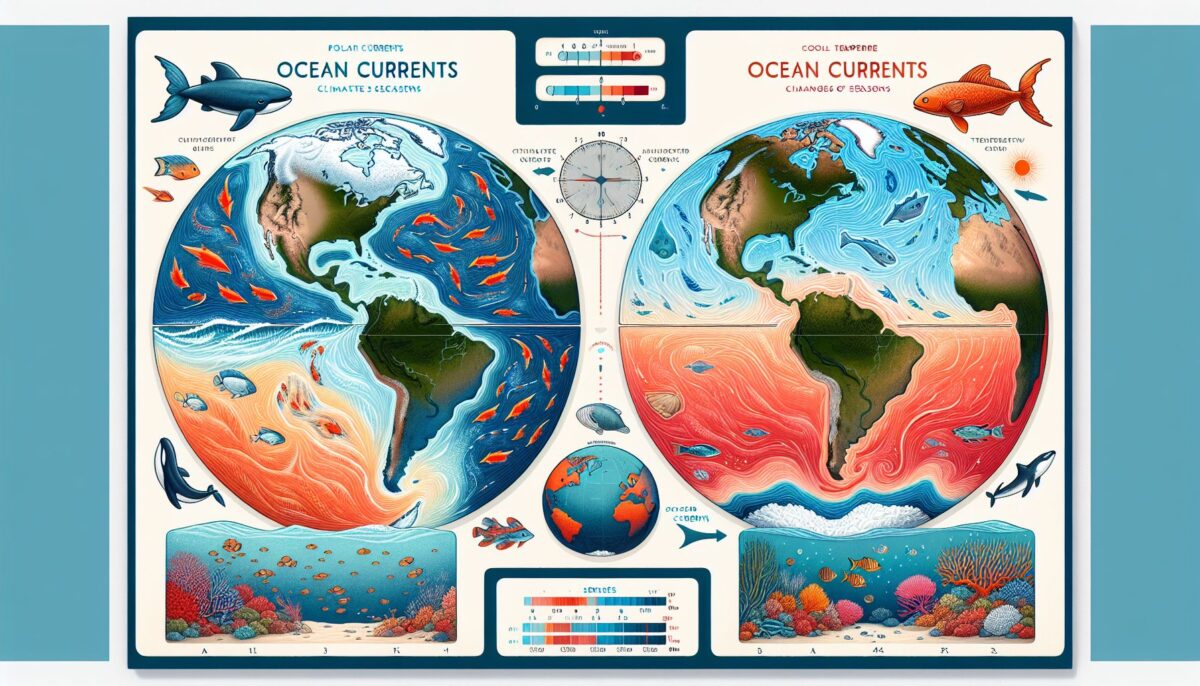
Ocean currents are continuous, directed movements of seawater generated by various factors, including wind, temperature, salinity, the Earth’s rotation, and the position of continents. Currents can flow for thousands of kilometers and reach great depths, influencing not just marine ecosystems but the global climate as well.

The Drivers of Ocean Currents

The primary drivers of ocean currents are:

  • Wind: Surface winds drive the surface currents, often following the Earth’s major wind patterns, such as the trade winds and westerlies.
  • Thermohaline Circulation: Differences in water density, caused by variations in temperature and salinity, lead to deep ocean currents. Warm, salty water is denser and sinks, while colder, fresher water tends to rise.
  • Coriolis Effect: The Earth’s rotation causes moving water to shift to the right in the Northern Hemisphere and to the left in the Southern Hemisphere, influencing the direction of current flow.
  • Landmasses: Continents and other landmasses impact ocean currents by blocking and redirecting flow patterns.

A Closer Look at Major Ocean Currents

Notable ocean currents include:

  • The Gulf Stream: A warm Atlantic ocean current emanating from the Gulf of Mexico, which keeps the climate of Northwest Europe milder than other regions at similar latitudes.
  • The Antarctic Circumpolar Current: The largest ocean current that flows from west to east around Antarctica, influencing global climate and nutrient upwelling.
  • The Kuroshio Current: A warm Pacific current flowing northeasterly off the coast of Japan, contributing to the temperate climate on land.

The Impacts of Ocean Currents on Climate

Ocean currents act as conveyor belts of heat and moisture around the globe:

  • Regulate Temperatures: Currents transport warm water from the equator toward the poles and bring cold water back toward the equator, which helps moderate regional climates.
  • Influence Weather Patterns: Currents can affect weather systems by interacting with atmospheric pressures, shaping rainfall and storm patterns.

Ocean Currents and Marine Life

The movement of currents also has profound effects on marine biodiversity:

  • Nutrient Distribution: Currents transport nutrients from the deep ocean to the surface, supporting the growth of phytoplankton, the base of the marine food web.
  • Migration Routes: Many marine species rely on currents for navigation and to find food during migration.

The Role of Currents in Human Activities

Ocean currents have historically been crucial for human enterprise:

  • Navigation and Shipping: From ancient mariners to modern ships, seafarers have harnessed currents for navigation and speed.
  • Fishing Industries: Fisheries often align their activities with currents to maximize their catch due to the abundance of marine life.
  • Climate Research: Understanding currents is key for predicting climate change and for modeling weather phenomena.

The Risks Associated with Ocean Currents

Despite their benefits, currents can also pose risks:

  • Marine Pollution: Currents can carry pollutants over vast distances, affecting marine ecosystems far from the source.
  • Spread of Invasive Species: Ships can unintentionally introduce non-native organisms to new areas, and currents can facilitate their distribution.
  • Climate Change Effects: Changes in currents due to global warming can drastically alter weather patterns and marine ecosystems.

Ocean Currents in the Age of Climate Change

Climate change is impacting ocean currents in ways that are not fully understood:

  • Shifting Patterns: Rising temperatures can lead to changes in current strength and direction, potentially disrupting climate systems.
  • Ocean Acidification: Increased CO2 levels from burning fossil fuels acidify seawater, affecting marine life and altering current flow.
  • Sea Level Rise: Melting polar ice affects ocean salinity and can lead to changes in thermohaline circulation.

The Scientific Study of Ocean Currents

Oceanography, the study of oceans, involves several disciplines to understand currents:

  • Hydrography: The measurement of physical characteristics of bodies of water, which is crucial for safe navigation.
  • Marine Geology: The study of seafloor structure and processes, helping predict shifts in currents.

Towards Sustainable Use of Ocean Currents

To maintain the benefits and mitigate the risks associated with ocean currents, actions are needed:

  • Marine Protected Areas: Establishing zones that limit human activity can preserve marine ecosystems.
  • Sustainable Fishing Practices: Regulations can help prevent overfishing and the destruction of habitats.
  • International Collaboration: Joint efforts are required to tackle issues such as marine pollution and climate change.

Conclusion

The silent but formidable force of ocean currents is a testament to the interconnectedness of our planet’s systems. As our understanding of these currents continues to evolve, so too must our strategies for coexisting with them. The need for sustainable interaction with our oceans has never been more acute, and in the balance hangs the health of our climate, the diversity of marine life, and the prosperity of human society.

Sources:

  1. National Geographic Society, “Ocean Currents and Climate,” https://www.nationalgeographic.org/encyclopedia/ocean-currents-and-climate/
  2. Woods Hole Oceanographic Institution, “The Ocean and its Role in the Earth’s Climate System,” https://www.whoi.edu/know-your-ocean/ocean-topics/ocean-circulation/the-ocean-and-its-role-in-the-earths-climate-system/
  3. National Oceanic and Atmospheric Administration, “How Currents Work,” https://oceanservice.noaa.gov/education/tutorial_currents/03currents1.html
The Rise of Marine Renewable Energy: Tapping into Tidal and Wave Power

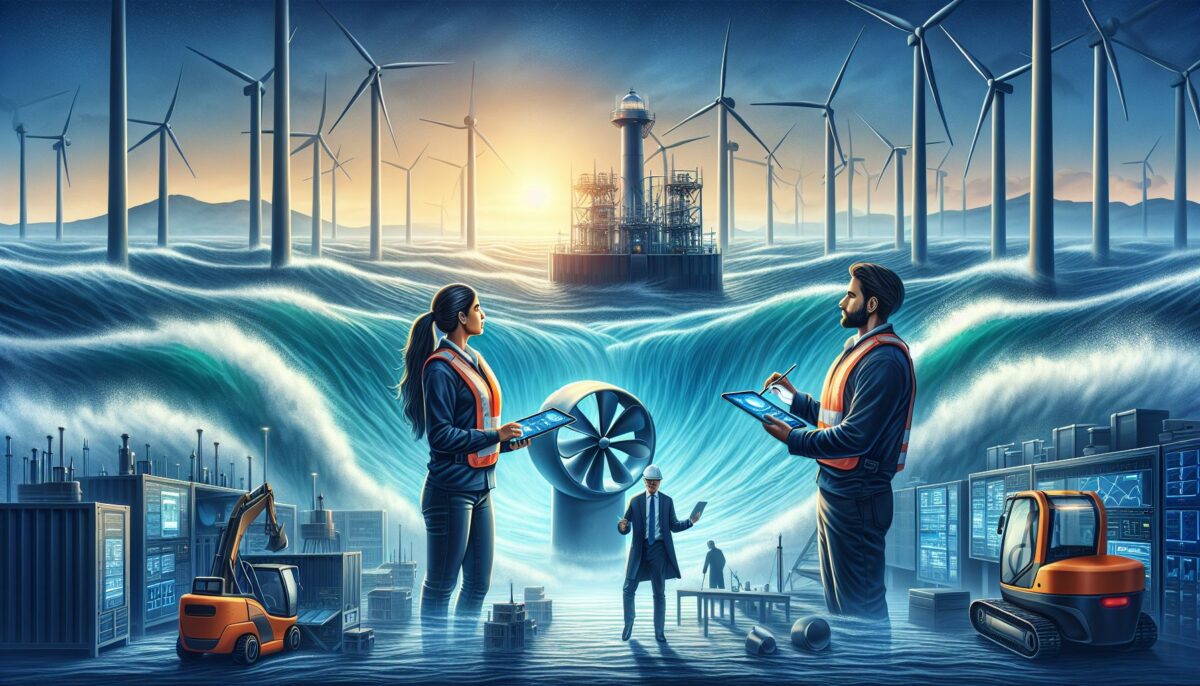
Marine renewable energy is rapidly emerging as a pivotal sector in the blue economy’s landscape, providing a sustainable and eco-friendly alternative to our traditional energy sources. Among the various forms of marine energy, tidal and wave power stand out as promising contenders, harnessing the immense and consistent energy produced by the natural movements of our oceans. In this comprehensive article, we dive into the fascinating world of tidal and wave energy, exploring the science behind these technologies, their potential, challenges, benefits, and the future they hold for a sustainable planet.


The Science of Tides and Waves

To fully understand how we can extract energy from the ocean, we must first delve into the science of tides and waves.

Tides: The Rhythmic Pulse of the Ocean

Tides are the long-period waves that move through the oceans in response to the gravitational pull of the moon and the sun. The vertical movement of the tides, affected by the geographical configurations of coastlines, leads to the periodic rise and fall of sea levels known as high tide and low tide.

Waves: Ocean’s Energy in Motion

Waves, on the other hand, are generated primarily by wind as it blows across the surface of the sea. The energy is transferred from the air to the water, creating the oscillating patterns we recognize as waves. This energy is influenced by wind speed, duration, and the distance over which the wind blows, known as the fetch.


Harnessing Tidal Energy

Tidal energy is captured through the movement of water caused by the tides. There are three primary methods of generating electricity from tidal movements:

  1. Tidal Streams: Devices similar to wind turbines are placed in fast-flowing tidal areas. The movement of the water turns the turbines, generating electricity.
  2. Tidal Barrages: Barrages are built across estuaries with a significant tidal range. As the tide moves in and out, water flows through turbines in the barrage, producing power.
  3. Tidal Lagoons: Enclosed off sections of the coast create an artificial lagoon, which can be used similarly to barrages but with potentially less environmental impact.

How Effective Are Tidal Power Stations?

The world’s first large-scale tidal power plant, La Rance Tidal Power Station in France, has been operational since 1966 and remains one of the most significant examples of tidal energy production. Developments in the UK, South Korea, and Canada continue to showcase tidal power’s massive potential.


Wave Energy: Ocean’s Untamed Force

Wave energy conversion devices capture the physical movement of waves and convert it into usable power. There are various wave energy devices, ranging from point absorbers, which move with the waves to generate electricity, to oscillating water columns and overtopping devices.

Innovative Wave Energy Converters

One of the most innovative wave energy converters is the point absorber buoy. It floats on the water’s surface and moves with the waves. This motion drives a generator inside the buoy, creating electricity. Companies like Pelamis Wave Power and Ocean Power Technologies are pioneering this field with their cutting-edge designs.


Environmental and Economic Benefits

Tidal and wave energy present several significant benefits:

  • Renewable Resource: The ocean’s movements are endless, making tide and wave energy infinitely renewable.

  • Environmentally Friendly: Unlike fossil fuels, tidal and wave energy produce no greenhouse gases or other pollutants.

  • Predictability: Tides are highly predictable, allowing for better grid management.

  • Job Creation: The burgeoning industry creates jobs in coastal regions.

  • Energy Security: Marine energy offers energy independence for coastal countries.


Challenges and Considerations

Despite the benefits, tidal and wave energy developments face challenges.

  • High Initial Costs: The cost of developing marine energy infrastructure can be significant, although costs are expected to decrease as technology advances.

  • Environmental Impact: There is concern about potential impacts on marine life and ecosystems.

  • Technical Hurdles: As relatively new technologies, wave and tidal energy systems are still evolving, and technical challenges must be overcome to maximize efficiency and durability.

  • Grid Integration: Integrating this intermittent energy source into the national power grid remains a technical challenge.


What’s on the Horizon?

Advancements in material science, engineering, and biotechnology are paving the way for second-generation tidal and wave energy converters that are more efficient, durable, and less invasive to marine environments.

Innovative Approaches to Harvesting Marine Energy

  • Researchers are exploring biomimicry, designing turbines and converters based on the movements of marine animals to improve efficiency.

  • Advances in computer modeling help identify optimal locations for wave and tidal energy farms.

  • Better energy storage solutions are being developed to store surplus energy generated during peak production times.


Case Studies and Examples

Around the world, several projects exemplify the potential of tidal and wave energy:

  1. Sihwa Lake Tidal Power Station, South Korea: The world’s largest tidal power installation, generating over 250 MW.

  2. Orkney Islands, Scotland: Home to the European Marine Energy Centre (EMEC), leading the research and development of wave and tidal energy.

  3. MeyGen Project, Scotland: The first large-scale tidal stream project aiming to deliver enough energy to power 175,000 homes.


The Role of Policy and Investment

Effective policies and investment are crucial to the growth of the tidal and wave energy sectors.

  • Incentives and Subsidies: Similar to wind and solar, governments can provide financial support to help the industry scale.

  • International Collaboration: Sharing research, best practices, and resources is essential for global development of marine energy.

  • Investment in Infrastructure: Modernizing ports and grids to accommodate marine energy technologies is a must.


Conclusion: The Tide is Turning

The potential for tidal and wave energy to contribute significantly to our clean energy future is immense. With continued innovation, collaboration, and supportive policies, we can look forward to a time where the world’s coastlines are powered by the very seas that surround them.


Sources

  1. European Marine Energy Centre (EMEC): http://www.emec.org.uk/
  2. International Renewable Energy Agency (IRENA): https://www.irena.org/
  3. Ocean Energy Systems (OES): https://www.ocean-energy-systems.org/

The information presented in this article is accurate as of the knowledge cutoff in March 2023.

Embracing the Blue Economy: Unlocking Ocean Wealth Sustainably

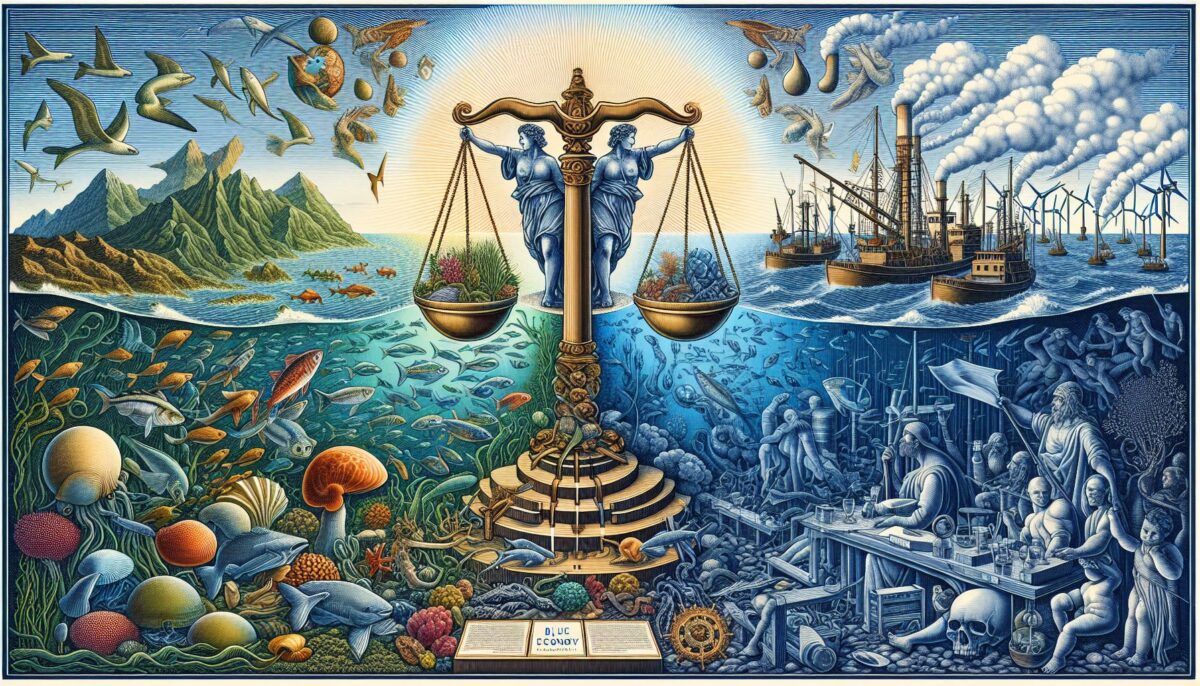
The world’s oceans cover more than 70% of our planet’s surface, yet their vast potential is only beginning to be tapped by what is known as the ‘Blue Economy.’ The term encapsulates the sustainable use of ocean resources for economic growth, improved livelihoods, and jobs while preserving the health of ocean ecosystems. From fisheries to tourism, shipping to renewable energy, the economic activities encompassed by the Blue Economy are diverse and far-reaching.

Understanding the Blue Economy

The concept of the Blue Economy emerged from the 2012 United Nations Conference on Sustainable Development (Rio+20). It seeks to promote economic growth, social inclusion, and the preservation or improvement of livelihoods while at the same time ensuring environmental sustainability of the oceans and coastal areas.

Key Sectors of the Blue Economy

  • Sustainable Marine Resources: Including sustainable fisheries, aquaculture, and seaweed farming.
  • Marine Renewable Energy: Exploiting wave energy, tidal energy, and offshore wind.
  • Maritime Trade and Shipping: Efficient and environmentally friendly sea transportation.
  • Coastal Tourism: Leveraging the beauty of coastal and marine environments in a sustainable manner.
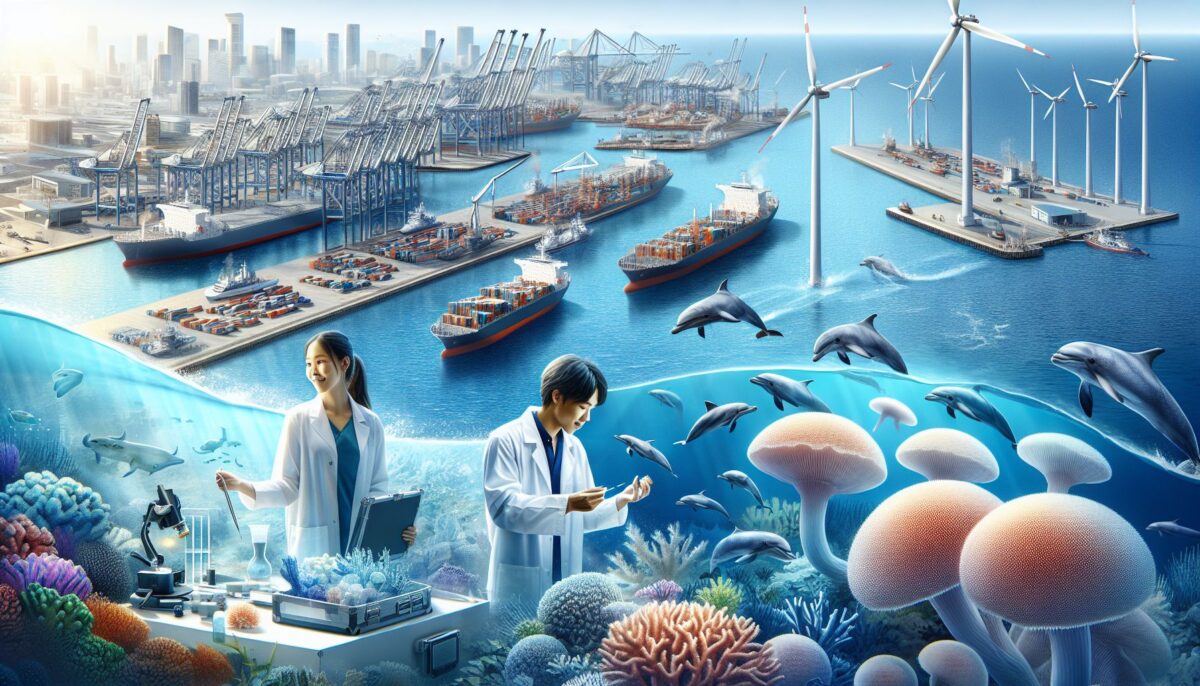
  • Marine Biotechnology: Exploring the ocean for natural compounds that could benefit health and industry.

The Pillars of Sustainability

To realize its full potential, the Blue Economy should be built on the principles of sustainability, which include:

  • Environmental Stewardship: Ensuring human activities at sea are well managed and do not harm ocean health.
  • Social Inclusion: Creating jobs and ensuring equitable access to the resources and benefits provided by the oceans.
  • Economic Diversity: Encouraging a range of sectors and activities that can help to spread risk and promote resilience.

Fisheries: Balancing Harvest and Habitat

Fish provide a vital source of protein to billions of people, but overfishing threatens many species and can damage marine habitats. Sustainable fisheries management is central to the Blue Economy. By implementing quotas, promoting sustainable aquaculture, and using less damaging fishing gear, we can protect marine biodiversity while ensuring a steady supply of fish.

Aquaculture: The Future of Fish Production?

Aquaculture, or fish farming, is the fastest-growing food sector and offers great potential for the Blue Economy. Done sustainably, it could provide a solution to overfishing and meet the growing global demand for seafood.

Renewable Ocean Energy: Powering the Future

The oceans are a massive untapped source of renewable energy. Harnessing this energy through wind, tidal, and wave technologies provides an opportunity to reduce dependency on fossil fuels and cut greenhouse gas emissions.

  • Wave and Tidal Energy: These energy sources are predictable and have the potential to supply a significant amount of electricity. They can also create jobs and foster innovation and technology development.
  • Offshore Wind Farms: Have already gained considerable traction in some parts of the world, offering a cleaner alternative to traditional energy sources.

Sustainable Shipping

Shipping is the lifeblood of global trade but also a significant source of pollution. The Blue Economy encourages the development of more efficient shipping lanes, cleaner fuel options, and better waste management on ships to reduce marine pollution and greenhouse gas emissions.

Coastal Tourism: Protecting Our Natural Capital

Coastal and marine tourism attract millions of visitors each year and are major components of the Blue Economy. The challenge is to manage these activities in a way that is environmentally sustainable, supports local communities, and conserves the cultural heritage.

Marine Biotechnology: Innovating for a Better World

The oceans host a vast array of life, much of which is yet to be discovered. Marine biotechnology involves exploring the ocean for organisms that can be used in pharmaceuticals, food, and industry. Proper regulation ensures this exploration does not harm ecosystems, while bioprospecting can provide income for coastal communities.

The Challenges Ahead

Despite its promise, the Blue Economy also faces significant challenges that must be addressed:

  • Marine Pollution: This includes plastic debris, oil spills, and other contaminants that threaten marine life and ecosystems.
  • Ocean Acidification: Caused by the absorption of CO2 from the atmosphere, acidification poses a serious threat to calcifying organisms like corals and shellfish.
  • Climate Change: Results in sea-level rise and extreme weather events that can have devastating impacts on coastal communities.

The Role of Governance

Effective governance is critical to the success of the Blue Economy. This involves national, regional, and international bodies working together to create policies that balance economic lust with ecological longevity. Marine Spatial Planning (MSP) is one tool that can help manage the multiple uses of ocean space effectively.

Case Studies of Success

There are numerous examples around the world where principles of the Blue Economy are being successfully applied:

  1. Seychelles’ Debt-for-Nature Swap: In 2018, Seychelles traded part of its national debt for a commitment to protect nearly one-third of its ocean territory.
  2. Norwegian Sustainable Fisheries: With one of the most modern and sustainable fishing fleets globally, Norway provides a model for balancing industry and environmental health.
  3. The Coral Triangle Initiative: A multilateral partnership that aims to protect marine biodiversity in a region that is considered the global center of marine life.

Encouraging Innovation and Investment

Innovation and investment are crucial to transitioning traditional ocean industries and creating new ones within the Blue Economy framework. This can include:

  • Start-Up Incubators: To encourage the development of new technologies and businesses focused on sustainability.
  • Green Bonds and Funds: To help finance projects that contribute to the health of the oceans and coastal economies.
  • Public-Private Partnerships (PPPs): To leverage both government and private-sector expertise and capital.

Conclusion

The Blue Economy represents a bold vision for the future, one where we harness the wealth of the oceans in a way that supports sustainable development, improves livelihoods, and protects the very ecosystems that our economies are built upon. It’s an approach that encourages us to look at the oceans not just as a means of extracting resources but as a critical part of a sustainable future for our planet.

As we work to foster a harmonious relationship between economies and the ecosystems they rely upon, the Blue Economy has the potential to provide solutions to some of our most pressing environmental and economic challenges. With careful planning, governance, and a commitment to sustainability, the Blue Economy can bring prosperity and well-being without sacrificing the health of the world’s most crucial natural resource – our oceans.

Sources

  • United Nations. (2012). The Future We Want. Rio de Janeiro: United Nations Conference on Sustainable Development (Rio+20).
  • The World Bank. (2017). What is the Blue Economy? Retrieved from: http://www.worldbank.org/en/news/infographic/2017/06/06/blue-economy
  • FAO. (2018). The State of World Fisheries and Aquaculture 2018 – Meeting the sustainable development goals. Rome: Food and Agriculture Organization of the United Nations.

Coastal Erosion: A Deep Dive into its Causes, Impacts, and Mitigation Strategies

Coastal erosion is a natural process where wind, water, and other environmental factors wear away coastal land. While it has always been a dynamic force in shaping coastlines, it has gained increasing importance due to the exacerbated effects of climate change, human activities, and sea level rise. As homes, businesses, and ecosystems face the consequences of erosion, understanding and mitigating its impacts has never been more crucial.

What is Coastal Erosion?

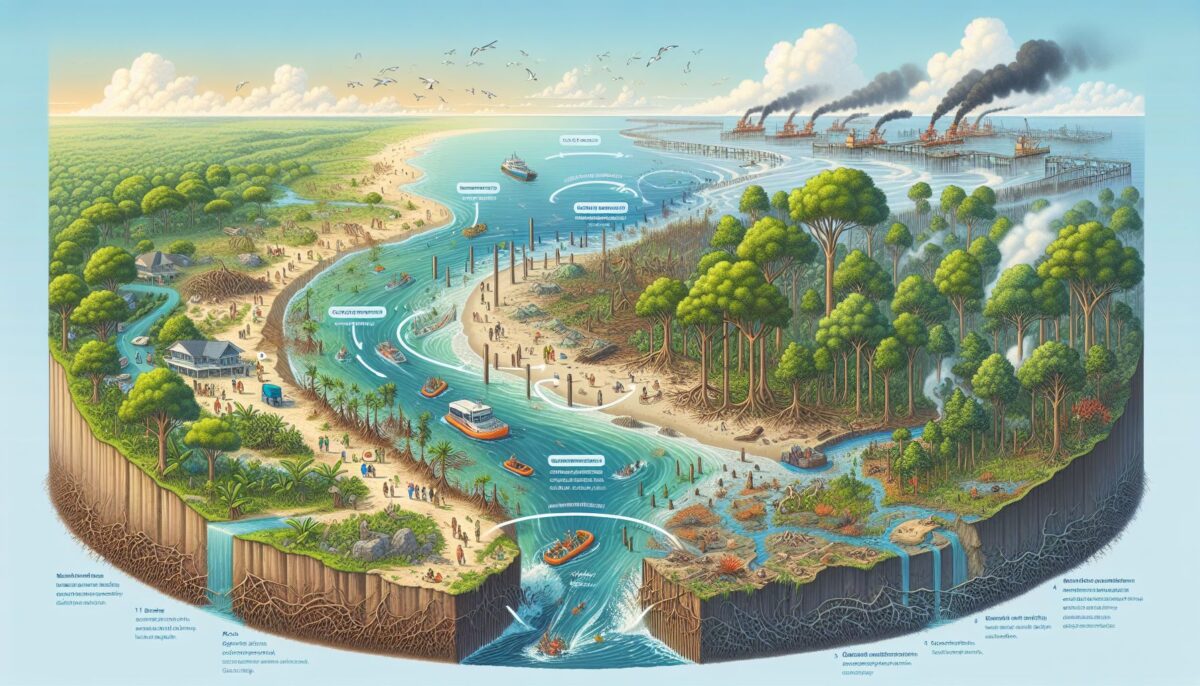
Coastal erosion is the removal and redistribution of soil or rock along coastlines by fluid mechanisms, primarily the action of waves, currents, and tides. This unstoppable natural system can sculpt beautiful landscapes but also possesses the power to destructively encroach upon human development and natural habitats.

The Science Behind the Process

Waves and Tides: Waves generated by the wind create a relentless pounding force against the shoreline. The energy and frequency of these waves can cause significant erosion, especially during storms. Tides, the periodic rise and fall of sea levels, also contribute to erosion by influencing the amount of water that slams into the coast.

Currents: These are continuous, directed movements of seawater generated by various factors, including wind, salinity differences, and the Coriolis effect. They can lead to coastal erosion by moving sand and rocks away from one part of the shore to another.

Sea Level Rise: With the increasing temperatures owing to global warming, sea levels are rising due to the melting of ice caps and the thermal expansion of water. Higher sea levels mean more powerful wave action and a higher potential for coastal erosion.

Human Activities: Coastal development, deforestation near the coastline, and alterations in coastal hydrology can exacerbate erosion. Structures like seawalls and jetties may protect certain areas but can also encourage erosion elsewhere by interrupting natural sediment flows.

Impact of Coastal Erosion

The effects of coastal erosion have far-reaching consequences. Here are some of its major impacts:

  • Loss of Land: Coastal erosion can lead to the loss of valuable land, often causing damage to properties and infrastructure.
  • Habitat Destruction: Natural habitats such as wetlands and sandy beaches can be devastated by erosion, impacting the species that rely on these places for survival.
  • Economic Toll: Tourism, real estate, and fishing industries can suffer economic losses due to the diminishing coastline.
  • Cultural Impact: Heritage sites and other cultural landmarks near the coast can be damaged or lost due to erosion.

Mitigation Strategies

Addressing coastal erosion requires a combination of soft and hard engineering strategies, along with policy and community involvement.

Soft Engineering Solutions

  • Beach Nourishment: This involves the addition of sand or sediment to beaches to combat erosion. It is often preferred because it maintains the natural appearance of the coastline.
  • Dune Regeneration: Enhancing the growth of dunes through vegetation plantation can help in stabilizing the sand and providing a barrier to erosion.
  • Wetland Restoration: Restoring wetlands can provide natural protection against the force of waves and help in absorbing storm surges.

Hard Engineering Solutions

  • Seawalls: These are structures constructed parallel to the shore to defend the coast from the direct impact of incoming waves.
  • Groynes: Installed perpendicular to the shore, groynes intercept the flow of sediments, preventing them from washing away.
  • Breakwaters: Often built offshore, breakwaters absorb the energy of waves, reducing erosion and protecting the coastline.

Policy and Community Measures

  • Integrated Coastal Zone Management (ICZM): Adapting ICZM can ensure the sustainable use of coastal resources while minimizing erosion.
  • Enforcement of Building Codes: Implementing and enforcing strict building codes in coastal areas can reduce damage from erosion.
  • Public Education: Increasing community awareness about erosion and its consequences can foster better public support for mitigation strategies.

Challenges in Managing Coastal Erosion

Despite the existence of various strategies to deal with coastal erosion, several challenges persist:

  1. Funding: Erosion mitigation projects can be expensive and may lack sufficient funding.
  2. Lack of Comprehensive Data: Understanding coastal dynamics requires extensive research, which can be hampered by inadequate data.
  3. Balancing Ecology and Economics: Sometimes environmental concerns must be weighed against economic interests, leading to difficult decision-making processes.
  4. Climate Change: As climate change accelerates, so does the challenge to manage the associated increase in coastal erosion rates.

The Way Forward

The key to tackling coastal erosion effectively lies in adaptability and integrated management. Developing dynamic strategies that respond to changing coastal environments while ensuring active community and policy engagement could pave the way for a sustainable future for our coastlines.

Sources

Understanding and combatting coastal erosion is not just a matter of preserving our shorelines; it’s about protecting communities, economies, and ecosystems for future generations. Through diligent research, strategic planning, and thoughtful implementation of both engineering and natural solutions, we can work to sustain the beauty and utility of our coastal environments while adapting to the natural and human-induced changes they face.

Ocean Acidification: The Other CO2 Problem

We often hear about the impact of carbon dioxide (CO2) on our atmosphere, global warming, and climate change. Yet, there is another, less discussed consequence of the increased levels of CO2: ocean acidification. It’s a phenomenon that poses a significant threat to marine life, entire ocean ecosystems, and the human communities depending on them.

Understanding Ocean Acidification

Ocean acidification refers to the process where the pH levels of the ocean become lower, which means it becomes more acidic. This occurs when the ocean absorbs CO2 from the atmosphere. When CO2 dissolves in seawater, it forms carbonic acid. This acid then releases hydrogen ions, which combine with carbonate ions to form bicarbonate, effectively reducing the ocean’s pH.

The Chemistry behind Ocean Acidification

The chemical reactions can be illustrated as follows:

CO2 (atmospheric) + H2O (water) ↔ H2CO3 (carbonic acid) ↔ H+ (hydrogen ion) + HCO3^- (bicarbonate ion)

Typically, carbonate ions are abundant in the ocean and are crucial in forming the shells and skeletons of many marine organisms, including corals, mollusks, and some species of plankton.

The Impact of Ocean Acidification on Marine Life

Coral Reefs

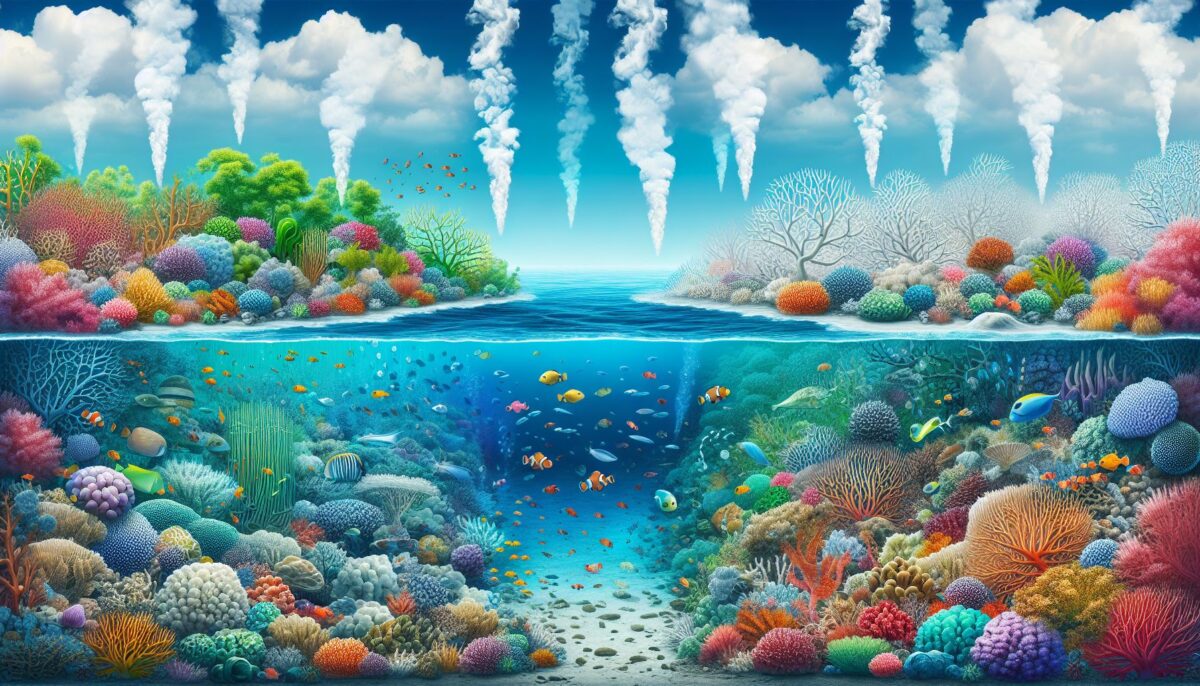
Coral reefs are often nicknamed the “rainforests of the sea” due to their richness in biodiversity. However, they are highly sensitive to changes in pH levels. Corals require carbonate ions to produce their skeletons. As ocean acidification progresses, the available carbonate ions decrease, and it becomes harder for corals to grow and repair their structures. This not only affects the corals themselves but also the plethora of species that rely on coral reefs for food and shelter.

Shellfish and Mollusks

Shellfish, such as mussels and clams, and mollusks like oysters, also see direct impacts from acidification. Their shells are composed mostly of calcium carbonate, and in more acidic waters, they struggle to maintain the integrity of their shells, leading to increased mortality rates.

Plankton

Plankton is at the base of the ocean food chain, and some species build shells from calcium carbonate. If these organisms are unable to survive in more acidic waters, it could cause a domino effect, impacting species up the food chain, including fish that serve as a primary protein source for billions of people.

Human Impact and Dependencies

Fisheries and Aquaculture

The seafood industry is highly vulnerable to the effects of ocean acidification. Shellfisheries are already experiencing the economic consequences as shellfish mortality rates increase. Aquaculture, relying on the cultivation of similar species, is also at risk.

Coastal Communities

Many coastal communities, particularly those in developing countries, rely heavily on the health of marine ecosystems for their livelihoods. They are directly affected by the reduced abundance of shellfish and altered fish stocks due to disrupted food chains.

The Broader Environmental Consequence

Ecosystem Imbalance

As a greater number of shell-forming organisms struggle to survive, there will be an imbalance in marine ecosystems. More aggressive algae growth can occur, leading to issues like harmful algal blooms (HABs) which can create toxins dangerous to marine and human life.

Biodiversity Loss

Ocean acidification threatens marine biodiversity. Unique species, some of which have yet to be studied or discovered, could be lost before we understand their roles in the ecosystem or their potential benefits to medical and scientific research.

Challenges in Addressing Ocean Acidification

Monitoring and Data Collection

Accurate monitoring and extensive data collection are essential to understand and address ocean acidification. Unfortunately, there is a lack of comprehensive data due to the vastness of the ocean and the complexity of its systems.

Awareness and Policy

Despite its significance, ocean acidification doesn’t receive as much attention as other environmental issues. This lack of awareness can lead to insufficient policy measures to mitigate the problem.

Mitigation and Adaptation Strategies

Reducing CO2 Emissions

The primary strategy to combat ocean acidification is to reduce CO2 emissions globally. This means transitioning to renewable energy sources and improving energy efficiency.

Protecting Marine Ecosystems

Establishing marine protected areas and minimizing other stressors like overfishing and pollution can help increase the resilience of marine life to acidification.

Research and Technology

Investment in research to understand the process of acidification and its impacts better, as well as in technologies such as selective breeding of resilient species, can be part of the solution.

Ocean Alkalinity Enhancement

There are geoengineering proposals like ocean alkalinity enhancement, which involves adding substances like olivine to seawater to increase carbonate ion concentration, thus counteracting ocean acidification.

Conclusion

Ocean acidification is a silent crisis that needs immediate attention. The actions we take now will determine the future health of our oceans and the survival of countless species, including our own.

Sources

  1. NOAA PMEL Carbon Program: Understanding Ocean Acidificationhttps://www.pmel.noaa.gov/co2/story/What+is+Ocean+Acidification%3F

  2. The Ocean Foundation: Ocean Acidificationhttps://oceanfdn.org/what-we-do/key-issues/ocean-acidification/

  3. IPCC Special Report on the Ocean and Cryosphere in a Changing Climate: https://www.ipcc.ch/srocc/home/

Remember, this article should be used as a starting point for understanding the complex issue of ocean acidification. Readers who want more in-depth scientific research and data should refer to the provided sources and seek out additional peer-reviewed studies.

The Blue Economy: Unlocking the Potential of Our Oceans

Our oceans cover over 70 percent of the Earth’s surface and are vital to the health of our planet. They regulate the climate, provide food and livelihoods to millions of people, and host an incredible array of biodiversity. Yet, despite their importance, the oceans are often the final frontier when thinking about economic development and sustainability. This is where the concept of the blue economy comes to the forefront as a crucial and sustainable approach.

The blue economy encompasses a diverse range of activities that include traditional sectors such as fisheries, tourism, and maritime transport, as well as emerging industries like offshore wind energy, marine biotechnology, and ocean mineral extraction. It also includes the essential ecosystem services the ocean provides, such as carbon sequestration and coastal protection.

Understanding the Blue Economy

The term “blue economy” was first coined to challenge the traditional concept of the “brown economy,” which fosters industrial development often without regard for environmental health or sustainability. In contrast, the blue economy seeks to promote economic growth, social inclusion, and the preservation or improvement of livelihoods while ensuring the environmental sustainability of oceans and coastal areas.

Economic Potential

The economic potential of the blue economy is vast. According to the World Bank, the value of the ocean’s riches rivals the size of the world economy. Fisheries and aquaculture directly or indirectly employ over 500 million people, mostly in developing countries. Tourism tied to the ocean generates billions of dollars annually, and shipping routes carry over 90 percent of international trade. The blue economy has the potential to be a major source of jobs, food, and economic growth, especially for small island developing states and coastal less-developed countries.

Sustainable Practices

A sustainable blue economy is founded on the careful management and use of ocean resources. Ocean resources must be used in ways that will regenerate, rather than deplete them. Responsible fishing practices, pollution control, habitat restoration, and the maintenance of marine biodiversity are all critical components. Investing in marine and coastal ecosystem services can offer economic benefits that far exceed those derived from unsustainable exploitation.

Innovation and Technology in the Blue Economy

Innovation and technology play a crucial role in unlocking the potential of the blue economy. Advancements in marine biotechnology could revolutionize the pharmaceutical industry with new medicines derived from sea life. Ocean thermal energy conversion (OTEC) and wave and tidal power offer renewable energy solutions that could mitigate climate change and provide power to millions. Furthermore, seabed mining for minerals such as cobalt, nickel, and other rare earth elements holds the potential to support the increasing demand for technology in a sustainable manner.

Maritime Trade and Shipping

Maritime trade and shipping are central components of the blue economy. The global shipping industry connects markets and supplies raw materials, goods, and energy. The challenge is to ensure that increased shipping does not lead to further environmental degradation through oil spills, shipwrecks, and the spread of invasive species via ballast water.

Ports and Harbors

Ports and harbors are cornerstones of the maritime trade and the blue economy. They serve as hubs for international trade, connecting the shipping routes to inland transportation. Sustainable port development and operations can reduce environmental impact and enhance efficiency.

Navigation and Hydrography

Navigation and hydrography are essential for the safety and efficiency of maritime trade. Advances in navigational technology, including precise GPS and electronic navigational charts, contribute to safer, cleaner shipping. Collaborative international hydrographic efforts map the seafloor to improve navigation, reveal potential resources, and support ocean governance.

Ocean and Marine Resources Management

Effective management is vital to ensure that ocean and marine resources are exploited sustainably. This includes:

Marine Protected Areas (MPAs)

MPAs are regions designated to protect and conserve marine environments and biodiversity. They can safeguard critical habitats, help fish stocks to recover, and ensure the preservation of valuable ecosystems.

Coastal Management and Marine Spatial Planning

Coastal management and marine spatial planning involve making informed decisions about the use of coastal and marine areas. These strategies account for the ecological, economic, social, and cultural importance of marine environments and aim to reduce conflicts between different uses.

Fisheries Management

Sustainable fisheries management is key to the health of the oceans. It includes setting quotas, reducing bycatch, eliminating illegal fishing, and protecting spawning and nursery areas.

Climate Change, Ocean Health, and the Blue Economy

Climate change presents significant challenges to the oceans and to the blue economy. Warming waters lead to coral bleaching, ocean acidification can disrupt marine food chains, and sea-level rise threatens low-lying coastal communities. The blue economy model recognizes that economic activities must be resilient to the impacts of climate change and, where possible, contribute to mitigation efforts.

Renewable Energy: Tidal and Wave Energy

In harnessing tidal and wave energy, the blue economy can contribute to a global shift toward renewable energy. These sources are abundant and consistent, making them attractive alternatives to fossil fuels.

Adapting to Sea-Level Rise and Coastal Erosion

Sea-level rise and coastal erosion are immediate threats to coastal communities and economic infrastructure. The blue economy emphasizes the importance of adapting to these changes through ecosystem-based approaches like mangrove restoration, which provide natural coastal defenses, or innovative engineering solutions.

Challenges and the Way Forward

While the blue economy offers a path toward sustainable economic growth, challenges remain. These include:

Overfishing and Resource Depletion

Overfishing and unsustainable practices can lead to resource depletion. Robust monitoring, control, and surveillance systems are essential to prevent over-exploitation.

Marine Pollution

Marine pollution from land-based sources, such as plastic waste and agricultural runoff, severely impacts marine life and human health. Better waste management and pollution control mechanisms are urgently needed.

Equity and Access

Ensuring that the benefits of the blue economy are shared equitably remains a challenge. It means providing access and opportunities to all stakeholders, particularly those in developing countries and indigenous communities.

Governance

Good governance is imperative to manage the resources of the oceans sustainably. This includes clear legal frameworks, effective enforcement, and international cooperation to tackle transboundary issues such as fishing rights, pollution, and the effects of climate change.

Conclusion

The blue economy can redefine our relationship with the oceans. By balancing development with sustainability, we can unlock immense economic potential while protecting the very ecosystems that life on Earth depends on. It requires international cooperation, robust governance, and a commitment to innovation and sustainability. As humanity faces the compounded challenges of climate change and resource scarcity, the blue economy offers not just an array of economic opportunities, but a beacon of hope for a sustainable future.

Sources

The Intricate Dance of Ocean Tides: An In-Depth Exploration

The ocean is a vast and enigmatic world, filled with wonders that both inspire and intimidate. Its rhythmic motion, governed by an intricate gravitational dance, shapes one of the most observable phenomena on Earth – the tides. Understanding the mechanisms behind tides is not only important for mariners and coastal residents but also for appreciating the broader influences on marine life and global ecosystems.

What Are Tides?

At the most fundamental level, tides are the rise and fall of sea levels caused by the gravitational pull of the Moon and the Sun on Earth’s oceans. This daily ebb and flow may seem simple, but the factors contributing to tidal movements create a complex system that has challenged and fascinated scientists for centuries.

The Gravitational Pull and Tidal Forces

The primary force behind tides is gravity. The Moon’s gravitational pull on Earth’s waters creates a bulge, known as the tidal force. Interestingly, there is also a bulge on the opposite side of Earth, due to the centrifugal force created as Earth and the Moon rotate around their common center of mass. Consequently, most coastal areas experience two high tides and two low tides within approximately 24 hours and 50 minutes – a lunar day.

The Role of the Sun

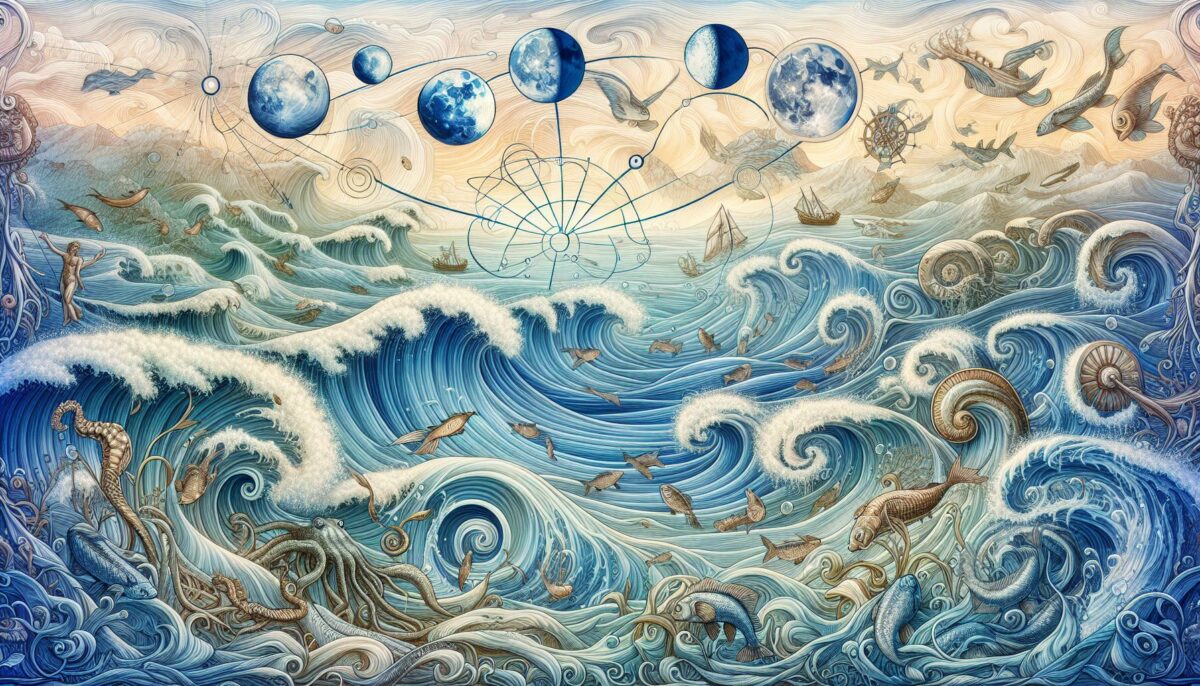
While the Moon is the chief architect of tides, the Sun also plays a significant role. When the Sun, Moon, and Earth align during full and new moons, the gravitational forces combine to create higher high tides and lower low tides, known as spring tides. Conversely, during the first and third quarters of the Moon, when Earth is at a right angle to the Sun and Moon, neap tides occur with less pronounced differences between high and low tides.

The Impact of Geography on Tides

Tides vary around the world, and their characteristics are deeply influenced by the geography of coastlines, ocean basins, and the seafloor. For instance, funnel-shaped bays and estuaries can amplify tides, leading to exceptionally high waters, as observed in the Bay of Fundy in Canada, where some of the highest tides on Earth occur.

Coastal Features and Resonance

Coastal features like bays, estuaries, and continental shelf widths also affect tidal ranges. In some cases, the natural period of oscillation of a bay or gulf can resonate with the frequency of the incoming tide, dramatically increasing the tidal range. This is known as tidal resonance.

Bathymetry’s Influence

The underwater topography, or bathymetry, can also affect tidal patterns. Generally, areas with steeply sloping seabeds or a rise in the seafloor see more significant tidal waves, while gradual slopes can result in diminished tides.

Tides and Marine Life

Marine life has adapted to the rhythm of the tides, and many species depend on tidal zones for feeding, mating, and spawning. Intertidal zones – areas between the high tide mark and the low tide mark – are particularly rich ecosystems that provide crucial habitats for a myriad of organisms.

The Tidal Life Cycle

Coastal creatures such as crabs, sea stars, and mollusks follow the tidal schedule to avoid predators and find food. Estuarine species often synchronize their life cycles with the tides, with events like the mass spawning of grunion fish taking place on specific tidal phases.

Migratory Pathways

Tides also create migratory pathways for fish and other marine animals. Salmon, for instance, use tidal currents to help them navigate and conserve energy on their journey to spawning grounds.

The Influence of Tides on Human Activity

Human civilization has long been tied to the rhythms of the tides. From ancient mariners to modern shipping industries, tides have been both a challenge to overcome and a resource to harness.

Navigation and Maritime Trade

Understanding tides is crucial for safe navigation and efficient maritime trade. Ports and harbors are often built considering local tidal conditions to ensure accessibility and safety for shipping traffic.

Tidal Energy

In recent years, tides have gained attention as a source of renewable energy. Tidal energy harnesses the kinetic energy of tidal currents or the potential energy of the difference in height between high and low tides. Prototypes and operational tidal power stations are being tested and implemented in various parts of the world, showing promise as an environmentally-friendly energy source.

The Future of Tides in a Changing World

Climate change and sea-level rise are altering tides and their associated ecosystems. As sea levels rise, tidal ranges and the intensity of tidal currents may change, impacting coastal communities and marine environments.

Coastal Erosion and Flooding

Rising sea levels can exacerbate coastal erosion and increase the risk of flooding during high tides, known as king tides. Low-lying areas are particularly vulnerable to these changes, prompting a need for adaptive coastal management strategies.

Effect on Estuaries and Wetlands

The delicate balance of estuaries and wetlands is also at risk from changing tidal patterns. These ecosystems serve as buffers against storms and as vital nurseries for marine species, so any disruption can have cascading effects on biodiversity and coastal resilience.

Conclusion

The tides are a reflection of the grand cosmic ballet that Earth, the Moon, and the Sun perform. They influence every aspect of life in and around the ocean, from the smallest plankton to the largest maritime trade routes. As we continue to grow and develop along our coasts, it is more important than ever to understand and respect the power and subtleties of these oceanic movements.

Sources

  1. National Oceanic and Atmospheric Administration (NOAA). “Tides and Water Levels.” https://oceanservice.noaa.gov/education/tutorial_tides/welcome.html
  2. United States Geological Survey (USGS). “Tides and Water Levels.” https://www.usgs.gov/special-topic/water-science-school/science/tides-and-water-levels?qt-science_center_objects=0#qt-science_center_objects
  3. International Renewable Energy Agency (IRENA). “Tidal Energy.” https://www.irena.org/ocean/Tidal-Energy

Unraveling the Complexities of Ocean Currents: A Deep Dive into Marine Science

The ocean is a vast, dynamic body that covers more than 70% of Earth’s surface. It is a critical component of our planet’s life support system, influencing weather patterns, climate, and supporting a rich diversity of life. The movements of ocean water, known as currents, are an integral part of these complex systems. Understanding ocean currents is crucial for navigating the waters of marine science and appreciating their role in environmental health, climate regulation, and the global economy.

What are Ocean Currents?

Ocean currents are continuous, directed movements of seawater generated by a variety of forces acting upon the water, including wind, the Coriolis effect, temperature, salinity differences, and tides. Currents can flow for thousands of kilometers and reach great depths, influencing the climate and marine life.They are the vast rivers within the sea, some warm and some cold, creating a global conveyor belt that circulates water throughout the world’s oceans.

The Forces Behind Currents

The primary force that drives surface ocean currents is the wind. Winds such as the trade winds and westerlies exert friction on the ocean’s surface, pushing water in consistent directions. However, the Earth’s rotation also affects these currents through the Coriolis effect, causing them to veer to the right in the Northern Hemisphere and to the left in the Southern Hemisphere.

Temperature and salinity also play a role by affecting water density. When water is denser due to cold temperatures or high salinity, it tends to sink, creating deep currents. Conversely, less dense water rises, leading to surface currents. This process is known as thermohaline circulation and involves both surface and deep-water currents.

Types of Currents

Ocean currents come in two primary types: surface currents and deep-water currents. Surface currents comprise about 10% of all the water in the ocean, and these are predominantly driven by the wind. Deep-water currents, also known as the global conveyor belt, move around the ocean basins driven by density differences.

Major World Currents

The Gulf Stream, located along the eastern coast of the United States, is one of the best-known ocean currents. This warm water current influences the climate of the eastern coast, making it milder than corresponding latitudes on the continent’s interior. Another significant current, the Antarctic Circumpolar Current, flows from west to east around Antarctica and influences global climate patterns by distributing cold water and interacting with other currents.

Significance of Ocean Currents

Ocean currents are vital for several aspects of the marine environment and human activities.

Climate Regulation

Currents play a significant role in regulating the world’s climate by distributing heat around the globe. Warm water carried from the equatorial regions towards the poles helps to moderate temperatures in those regions, while cold currents contribute to cooler coastal climates.

Marine Life Sustenance

Currents also transport nutrients from the deep ocean to surface waters, which supports the growth of phytoplankton, the foundation of the marine food web. This process, known as upwelling, is particularly pronounced along the western coasts of continents and sustains rich fishing grounds.

Navigation and Shipping

Throughout history, understanding and using ocean currents has been essential for navigation and trade. Ships can take advantage of currents to save fuel and time, making marine trade more efficient. Navigators and meteorologists study currents extensively to plot optimal shipping routes and forecast conditions at sea.

The Blue Economy

Ocean currents impact fisheries, renewable energy, and other aspects of the blue economy. The distribution of fish stocks, the potential for offshore wind farms, and the viability of tidal and wave energy all depend on the behavior of ocean currents.

Investigating the Depths: Ocean Current Research

Research into ocean currents is a vibrant field within oceanography. Scientists use satellites, floats, and deep-sea drones to map and measure currents. Advanced computer models simulate currents and predict changes due to global warming and other factors.

Sources:

  1. NOAA – Ocean Currents
  2. NASA – Ocean Motion and Surface Currents
  3. National Geographic – Ocean Currents and Climate

Challenges and Threats

While ocean currents are crucial for maintaining equilibrium in the Earth’s systems, they also face threats from human activities and climate change.

Climate Change

The patterns of ocean currents may alter as a result of global warming, which can destabilize the climate systems they help to regulate. Changes in the salinity and temperature of the ocean waters may disrupt the thermohaline circulation, with potentially severe climate consequences.

Marine Pollution

Marine pollution, including oil spills and plastic debris, is transported by ocean currents, spreading the environmental impact across vast distances. Its effects harm marine ecosystems and the species that depend on them, and can also infringe upon human health and economies.

Ocean Acidification

Increased levels of CO2 absorbed by the oceans lead to ocean acidification, which can weaken marine life, particularly organisms with calcium carbonate shells or skeletons, such as corals. Currents can spread the more acidic waters, affecting larger areas and more species.

Overfishing

Currents shape the distribution and abundance of fish stocks, and overfishing in critical areas can lead to the collapse of local fisheries. This, in turn, impacts the marine food chain and economies dependent on these resources.

Conclusion

Ocean currents are a driving force behind the complex web of life in our oceans. They shape climates, nourish ecosystems, and sustain human economies. As our climate changes, understanding and preserving the integrity of these currents become even more imperative. Continuous research and mindful stewardship of the oceans are essential to ensure the stability of these powerful currents for future generations.

Without a doubt, the ebb and flow of ocean currents hold answers to some of the most pressing environmental challenges. It’s up to marine scientists, policymakers, and the global community to work together in harnessing this knowledge as we chart a sustainable course for our shared blue planet.

Coastal Management: Safeguarding Our Shorelines for a Sustainable Future

Coastal areas are among the most dynamic and important regions on our planet, teeming with life and driving local and global economies. However, these areas face numerous threats ranging from natural processes like erosion and sea-level rise to human activities including overfishing, coastal development, and pollution. As about 40% of the world’s population lives within 100 kilometers of the coast, the imperative for effective coastal management cannot be overstated. In this comprehensive article, we’ll explore the challenges and strategies involved in safeguarding our coastlines, with a focus on sustainable practices and unity between natural preservation and human use.

What is Coastal Management?

Coastal management refers to the range of strategies and actions taken to protect and sustain coastal environments and communities. Effective management must consider ecological, economic, social, and cultural factors, ensuring that coastal regions remain resilient against environmental challenges and a valuable resource for future generations. These strategies often involve elements like coastal erosion control, habitat protection, pollution management, and sustainable development practices.

The Critical Challenges of Coastal Management

Sea Level Rise and Coastal Erosion

As the effects of climate change become ever more pronounced, sea level rise has emerged as one of the gravest concerns for coastal areas. The rising waters don’t just threaten to submerge low-lying regions but also exacerbate coastal erosion – the gradual removal of land as sea waves and currents cut into beaches and cliffs.

Storm Surges and Extreme Weather Events

Storm surges from hurricanes and tropical storms can cause temporary, but significant, increases in sea level, which can devastate coastal infrastructure and communities. These events are also becoming more frequent and intense due to climate change, adding an urgent dimension to the need for resilient coastal management.

Human Impacts: Development and Pollution

Coastal development may boost local economies but often comes at a steep environmental cost. Habitats can be destroyed, pollution can increase, and the natural defense mechanisms of coastlines can be weakened. Human-derived pollution, like oil spills and marine debris, adds to the burden on coastal ecosystems.

Strategies for Effective Coastal Management

Integrated Coastal Zone Management

Integrated Coastal Zone Management (ICZM) is a holistic approach that takes into account the various dimensions of coastal areas, including social, economic, and environmental aspects. ICZM encourages collaboration between governments, communities, and industries to create and implement comprehensive management plans.

Erosion Control Measures

To combat coastal erosion, a variety of methods are employed, including seawalls, groins, and breakwaters for physical defense, as well as beach nourishment projects where sand is added to eroding shores to rebuild beaches.

Marine Protected Areas and Habitat Restoration

Establishing Marine Protected Areas (MPAs) is a key conservation strategy, creating safe havens for marine biodiversity. Efforts to restore habitats, like mangrove replanting and coral reef rehabilitation, also form a crucial part of sustainable coastal management.

Pollution Reduction Initiatives

Tackling both point source pollution (from a single, identifiable source) and non-point source pollution (diffused sources, such as agricultural runoff) is essential to protect coastal waters. This includes stringent regulation of industrial discharge, better waste management, and community education programs.

Sustainable Development Planning

For coastal management to be sustainable, development must be planned with an eye on conserving natural resources and minimizing environmental impacts. This entails enforcing building codes, maintaining natural buffer zones, and promoting eco-friendly tourism.

Climate Change Adaptation

Communities and management bodies must adapt to the reality of climate change, incorporating sea-level rise forecasts and potential changes in weather patterns into their planning and resilience efforts.

Case Studies in Successful Coastal Management

The Dutch Approach to Coastal Defense

The Netherlands is well known for its advanced coastal defense systems, including the famous Delta Works project. Combining engineering, nature, and innovation, this approach has been immensely successful in protecting a country that sits largely below sea level.

Australia’s Great Barrier Reef Management Plan

Australia has taken significant steps to protect the iconic Great Barrier Reef through a comprehensive management plan that includes limiting pollution, boosting resilience to climate change, and conserving biodiversity. This plan is considered a benchmark of successful marine area management.

The Role of Science and Education

Oceanography and Marine Science

Accurate scientific data is the bedrock of effective coastal management. Disciplines like oceanography and marine geology provide insights into the workings of coastal systems, informing better decision-making and policy development.

Community Engagement and Education

Local communities play a vital role in successful coastal management. Education programs that raise awareness about the importance of coastal ecosystems and the impact of human activities can foster a culture of stewardship and sustainable use.

Building a Sustainable Future

As we move forward, the need to balance economic development with environmental protection becomes increasingly clear. It’s critical that coastal management isn’t seen as a barrier to progress but rather a means to ensure the sustained prosperity of both human and natural coastal environments.

Sources

  1. Nicholls, R. J., & Cazenave, A. (2010). Sea-Level Rise and Its Impact on Coastal Zones. Science, 328(5985), 1517-1520. doi: 10.1126/science.1185782
  2. The World Bank. (2021). Integrated Coastal Zone Management. Retrieved from https://www.worldbank.org/en/topic/environmentalpolicies/brief/integrated-coastal-zone-management
  3. Great Barrier Reef Marine Park Authority. (2019). Great Barrier Reef Outlook Report 2019. Retrieved from https://www.gbrmpa.gov.au/the-reef/reef-management/great-barrier-reef-outlook-report

Coastal management is a complex and multifaceted undertaking that involves a rich tapestry of techniques, strategies, and policies. By applying an integrated approach that respects and utilizes natural processes, and by prioritizing the preservation of the fragile beauty and essential functions of our coasts, we can work towards ensuring that these vital areas endure and thrive for generations to come.

The Blue Economy: Sustaining Our Oceans, Securing Our Future

In recent years, the term “Blue Economy” has emerged as a significant concept that highlights the importance of the oceans, seas, and coastal areas to our global economy. This term encompasses not only the direct economic activities such as fisheries and shipping but also recognizes the environmental services provided by marine ecosystems. In this in-depth article, we will explore what the Blue Economy is, its components, challenges, and why it’s crucial for our sustainable future.

Understanding the Blue Economy

The Blue Economy refers to the sustainable use of ocean resources for economic growth, improved livelihoods, and jobs while preserving the health of ocean ecosystem. Its scope covers a wide array of sectors, including established industries like fisheries, tourism, and maritime transport, as well as emerging sectors like renewable energy, aquaculture, and biotechnology.

Fisheries and Aquaculture

Fisheries and aquaculture represent a significant part of the Blue Economy, providing food and nutrition, employment, and export revenue. According to the Food and Agriculture Organization (FAO), fisheries and aquaculture support the livelihoods of 10-12 percent of the world’s population [^1]. However, these sectors face significant challenges, such as overfishing, habitat destruction, and climate change impacts that threaten their sustainability.

Maritime Trade and Shipping

Maritime trade and shipping are the lifelines of the global economy, with over 90% of the world’s trade carried by sea [^2]. Ports, shipping lanes, and the related logistics form a vast network that connects markets, supports economic growth, and facilitates international trade. Managing this network efficiently while minimizing environmental impact is a key aspect of the Blue Economy.

Renewable Energy

Ocean-based renewable energy, including tidal and wave energy, holds vast potential for contributing to the world’s energy mix. The exploitation of these resources can lead to reductions in greenhouse gas emissions and provide sustainable energy solutions. Recently, significant technological advancements have been made in harnessing tidal and wave energy, although these technologies are still in the early stages of development compared to wind and solar.

Marine Biotechnology

The ocean is a rich source of biodiversity and genetic resources, many of which have yet to be discovered or utilized. Marine biotechnology explores these resources for various applications, including pharmaceuticals, enzymes, cosmetics, and nutraceuticals. This field has the potential to lead to breakthroughs in medicine and industry while also promoting conservation of marine biodiversity.

Tourism and Recreation

Coastal and marine tourism, which includes beach holidays, diving, boating, and marine wildlife watching, is one of the largest and fastest-growing areas of the Blue Economy. This sector can significantly contribute to the economic development of coastal communities while fostering conservation efforts. However, balancing tourism growth with environmental sustainability is a challenge that needs to be addressed through careful planning and management.

Challenges in the Blue Economy

While the Blue Economy presents opportunities, it also faces several challenges.

Marine Pollution

Marine pollution from various sources, including land-based runoff, plastics, and shipping, threatens marine life and habitats. It is estimated that 8 million tons of plastic enter the ocean each year, causing severe impacts on marine ecosystems and the economy [^3].

Ocean Acidification and Climate Change

As the concentration of carbon dioxide in the atmosphere increases, more is absorbed by the oceans, leading to ocean acidification. This process threatens marine organisms, especially calcifying organisms like corals and shellfish. Additionally, climate change is resulting in rising sea levels and altered ocean currents, which can have profound effects on marine ecosystems and coastal communities.

Overfishing and Habitat Destruction

Overfishing and destructive fishing practices have led to the depletion of many fish stocks and damage to crucial habitats such as coral reefs and mangroves. Sustainable fisheries management and the creation of marine protected areas are essential to ensure the long-term health and productivity of marine ecosystems.

Inequitable Development

There are disparities in how the benefits of the Blue Economy are distributed, often leaving local communities, small-scale fishermen, and indigenous peoples behind. Ensuring that the Blue Economy leads to inclusive and equitable development is a significant challenge that must be addressed through policy, governance, and community engagement.

Marine Protected Areas and Conservation

A critical component of the Blue Economy is the establishment and management of marine protected areas (MPAs). MPAs are essential in safeguarding marine biodiversity, protecting endangered species, and maintaining ecosystems that provide crucial services such as carbon sequestration and coastal protection. These areas also provide opportunities for scientific research, education, and ecotourism.

Moving Forward: Policy and Governance

To fully realize the potential of the Blue Economy, strong policy frameworks and governance are needed at the local, national, and international levels. This includes:

  • Sustainable management of marine resources
  • Equitable distribution of benefits
  • Investment in marine science and technology
  • Combating illegal, unreported, and unregulated (IUU) fishing
  • Strengthening global cooperation on ocean governance

Conclusion

The Blue Economy is much more than just an economic concept—it is about ensuring the well-being of our planet and people. The oceans are a cornerstone of Earth’s life-support system, and by fostering a sustainable Blue Economy, we can unlock their potential while preserving their health for future generations.

[^1]: Food and Agriculture Organization of the United Nations (FAO): http://www.fao.org/fishery/en
[^2]: United Nations Conference on Trade and Development (UNCTAD): https://unctad.org/topic/transport-and-trade-logistics/maritime-transport
[^3]: Jambeck, Jenna R., et al. “Plastic waste inputs from land into the ocean.” Science 347.6223 (2015): 768-771.